Paul's Heart

Life As A Dad, And A Survivor

Archive for the category “The Heart”

Bedside Manners More Bedpan?

manners3

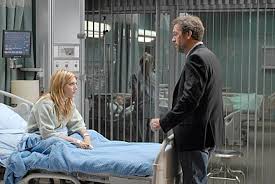
It really should not be all that much to ask, right?  You are dealing with a serious illness or injury.  All you want and expect is some empathy, some understanding, some patience for the patient.  But instead, you get snarkiness, robotic intonations of phrases, clockwatching, and no Q&A.  And if you are lucky, you might even catch the doctor give you a glance just to see if you are still paying attention to what you are being told.

Being a patient and caregiver, I have been on both sides of this issue.  So I feel that I can be fairly objective about this.  But please do not confuse my objectivity with acceptance or letting anyone off the hook.  As a patient, we have our own responsibility to ourselves also, to make sure that our needs are being met.  And when we are facing a difficult medical crisis, those needs also include emotional.  Without our emotional needs being met, we lose trust in the one person who is responsible for possibly saving our life.  And this attitude can have a definite impact on our survival.

PART_1413411433365_Image1413411433361

When faced with my own cancer, Hodgkin’s Lymphoma, I turned to the very first person that I ever knew to survive cancer, my grandmother.  She had been diagnosed with breast cancer in her early 70’s.  She had a mastectomy, and took some preventative chemo, and survived more than a decade.  She had been treated at a small-town hospital.  But she had survived.  It was a no-brainer, that I would choose her oncologist to treat me.  Dr. M had saved my grandmother.  I felt my chances would be great in my favor.

Dr. M was an older doctor, probably very close to retirement.  From what I figured, he was very set in his ways.  And it was his way, and only his way.  We clashed several times, but Dr. M soon learned that I was in charge of my care, and decisions were going to be made by me.  I still had trust and faith in how I was going to get through this, but it was going to be on my terms.

Well, I guessed wrong.  As soon as my lymphoma was gone (a result of my decisions), new disease was discovered.  This time Dr. M was not going to mess around.  I could no longer avoid chemo, a stereotypical terror I feared, and with good reason.  But it was his lack of bedside manner, while I was facing my biggest fears, and his reluctance to answer  two full pages of questions that I had in regards to chemotherapy treatment.  He took one look at my hands, saw the lists of questions and then said, “I don’t have time to answer that.”  And he walked away from me.

I was firm.  I had questions that needed to be answered before the first drip of poison was going into my veins.  And so I fired my oncologist, the same doctor that cured my grandmother.

I went next to my therapist and told them what I had done.  I was kind of surprised at his reaction in that I received part empathy, and part lecture.  It was the lecture that I got first.  I was made to understand, that oncologists deal with death.  Many of their patients do not survive.  Oncologists know this possibility exists with each patient that they take on, and for my requirement of an emotional attachment from my doctors, I was told, it probably was not going to happen.

However, then, I was told by my therapist that he would help me find another oncologist.  Surprisingly, it came from the same oncology group.  Dr. V was a younger man, an Army vet, but had a bit more of a personality, which I felt was important.  At least if my questions did not get answered, at least I might feel that he cared about whether I made it or not.  But who can argue with my decision?  I am here 25 years later because Dr. V earned my trust, which resulted in me fighting with a more positive and certain attitude.
manners2

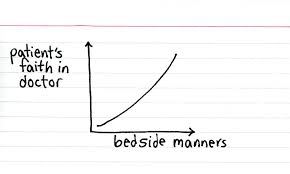
There is no doubt the impact of bedside manners of a doctor, can have on a patient.  That is not to say that a doctor does not have a right to be a jerk, or scold, or lecture.  Every doctor I have ever had since Dr. M, has scolded me, lectured me, one even yelled at me.  But I also know, they cared for me.  If I did something foolish, like eat a particular food, or as many Hodgkin’s patients know, drink any alcohol, as a patient, we paid the price.  And an oncologist would have every reason to want to lecture us.  They are trying to save us, and we give off the appearance that we do not have the respect for what they are trying to do for us, save our lives.  I once told one of my doctors that I “deserved” the amount of daily pain I deal with as my price for surviving cancer.  And when I say I got yelled at, even at my then age of 45, I GOT YELLED AT!  But I knew where he was coming from.  And I also made sure I never gave him a reason to do that again.

Does that mean that we should stop living?  Having fun?  Doing dangerous things?  Absolutely not.  But we need to keep things in perspective with our doctors.  Yes, they are busy.  They may have a lot on their minds, perhaps a patient who did not survive, maybe even something personal.

manners1

But if you have a doctor that you feel really has no bedside manner, or at not enough to meet your needs, you have a responsibility to yourself, to not accept that.  There are options available to you to deal with this from nurses, to therapists who will intercede on your behalf, or even your case worker.  But remember, if the “manner” is being brought on by your own behavior, then the responses are to be expected.

Words Of Understanding


undestanding

Personally speaking, I have been through a lot over the last 27 years.  While there are many issues of my life that I have chosen to make public, for the benefit of others, there are many, many other issues which I keep private.  I am like this for several reasons:  pride, protection of others, to inspire, to not instill panic or paranoia.  Simply put, since my diagnosis, I have had good days, and I have had bad days.

But being involved in the world of cancer as much as I am, I have learned so much.  I have learned about progress for newer cancer patients, which will some day mean a cure for all cancers.  But I have also learned of so many who struggle with survival.  Surviving cancer, or any serious illness of event in a life, is not just as simple as “just getting over it.”  I am a fairly positive minded person, but I cringe every time I hear someone either tell me, or suggest to someone to “just get over it.”

“Just get over it.”  Four of the most hurtful, selfish words someone can say to a person who is experiencing a level of pain, on that person can possibly know.  While I may have an understanding, given from my own experiences, I have know idea the level of the pain or the struggle being dealt with by an individual, even if the person explains it to me.

One of our list members on one of my Facebook pages is having one of those moments.  And it is quite serious.  I can recognize the pain, the frustration, the futility.  I can understand when a person asks, “how much more?”  The response to the original post was as is expected.  Nothing but 100% support by so many who have experienced similar sentiments.  Every member offered encouragement that most in the “outside” could not comprehend.

Then one of our members responded with a poem, which I believe echoes what many of us long term cancer survivors feel:

“This is living life after Hodgkin’s.
We will be sad.
And unhappy.
And have terrible pain.
And misery.…
And thats ok. And “normal”.
And deserves respect and deserves to be heard.
The fun will happen too.
But we won’t deceive ourselves.
Or so I think, at the moment.”

  • Dolly

The majority of cancer patients often make a statement that they will not let cancer define them.  But there is a difference between “defining” and “breaking”.

Thank you Dolly for sharing these words of  understanding.

A Need To Grieve


grief1

I am going to “wing” this post.  Admittedly, other than what I studied in college, I do not have a lot of experience with grief.  Do not get me wrong, I have had plenty of opportunities over the last few years especially to grieve.  I just do not grieve.

Once you understand that “grieving” has to do with recognizing and processing a loss, you can take the steps necessary to moving through the sorrow, and moving on with your life.

As I said, there are many reasons that we grieve, and it is more than just the obvious, the death of a loved one, or someone close to us.  Grieving is about loss.  It can be sudden, or it could be expected.  I will be the first to tell anyone, I do not handle grief well at all.  No, I do not sit and weep endlessly, I am quite the opposite.  I internalize my grief.  In other words, my losses and the feelings that come with them, never go away.  I never give them the chance.  And the irony is, that the process of grieving is not about making the feelings of loss go away, or forgotten.  Quite the contrary, going through the process of grieving allows you to re-build the memories in a positive light, happier times, which, when describing the loss of a loved one, is what the deceased would want.

Grieving is not just about death.  We all have lost something other than a loved one.  As a cancer patient, I lost my sense of immortality.  I lost control of my body and life.  Loss of employment for any reason, is just that, a loss that needs to be grieved.  Relationships that end should cause a need to grieve.  As  a pet owner, I have gone through many losses of fur friends.  Time that I am unable to see my children, that is a grieveable loss.  And of course, death, exposes us to the most emotionally painful of grief.

We grieve, because we have suffered a loss that was beyond our control.  Even if we prepare for a loss, expecting it, the pain and sorrow can often be overwhelming.  There is no limit to how long a person must grieve, days, years, the rest of a lifetime.  But once we are able to move through the initial hurt of the loss, gain even just a little bit of control of our emotions, we can begin to see exactly what the loss means to ourselves.

1443292776275

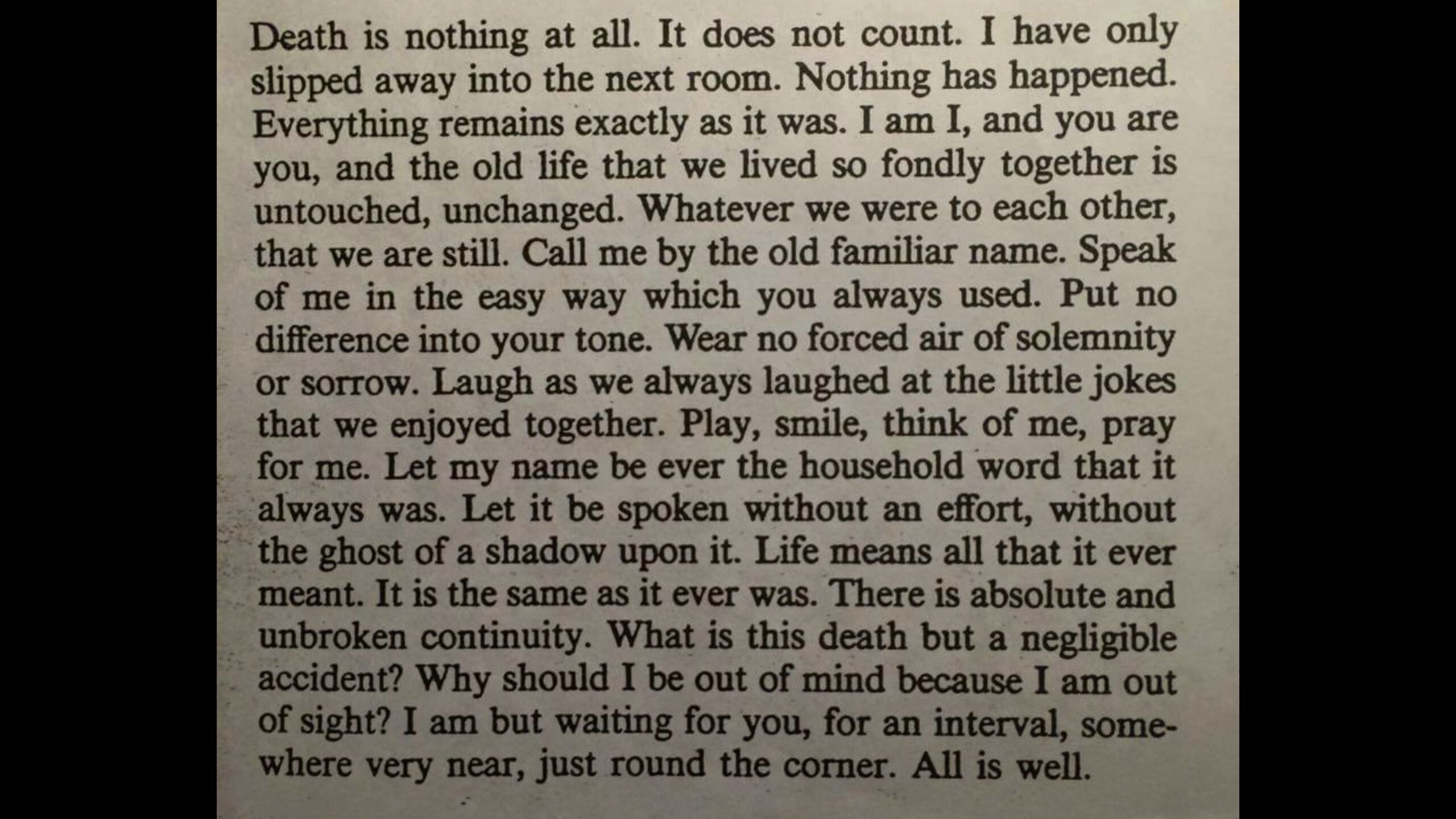
The above photo was posted on a former classmate’s Facebook wall, a writing by Henry Scott Holland (1847-1918), a professor at the University Of Oxford.  Very deep words expressing that the feelings of loss should only be temporary once you recognize what was lost, and what remains.  For someone like me, who internalizes his grief, I never get to this point.  And I will be the first to tell you, I know this is not healthy.  But this is how I have always been.  But because of how I handle grief, I am always there for someone else who may be suffering a loss.  And this then, is how I handle my grief.

In my 25 years of cancer survivorship, I have met thousands of other patients, not just of Hodgkin’s Lymphoma, and I know of many more, courtesy of the internet.  But my support of cancer patients does not stop at the patient themselves.  I often interact with family and friends, caregivers, and even some of their medical team.  This explains why I feel a need to grieve, sympathize, and empathize those who have passed, even if I have never met them.

When a patient, family member, friend, or caregiver reach out to me, there is a bond that is created.  Someone trusts me enough to know and understand their circumstances.  Whether or not I have any advice or counsel that I can offer, just giving someone an opportunity to speak into my ear, or across the internet can give someone hope, they are not alone.

Just a month ago, someone who had come into my life a few years ago, suddenly passed away.  I had never personally met her.  She had a sister who reached out to me, because she was concerned with health issues.  You see, the one who passed was a long term Hodgkin’s survivor like me.  And being a great sister (their family is very close to each other), the sister reached out to find help, and found me.  I spent the last few years corresponding with the sister, offering any information that might benefit her sister’s care.

Over time, it seemed as if things had calmed down.  And then, as I mentioned, a month ago, going in for what is a common and normally a routine procedure, something horrible went wrong, and she passed away.  Damage to the heart was too severe, and underestimated.  And now, the grieving hits, and it hits hard.  I remember reading the post on her wall, written by her husband, telling us that his wife had passed.

I have seen many photos of the family as well as the sisters together.  And these are very happy memories.  I admire how close they are, and the good times that they have shared.  Hopefully my friend as she reads this post, looks back at the photo pasted in this post, re-reads it again and somehow finds solace in it.

There will always be questions.  Why?  What could have been done differently?  Who missed what?  But the first step in grieving is realizing that it is okay to cry.  It is normal to remember the good times.  This is what helps you to move on, and not forget.

Post Navigation