Paul's Heart

Life As A Dad, And A Survivor

Archive for the category “The Heart”

Just Call Me Damacles


(photo is AI generated with ChatGPT)

“Heavy is the head that wears the crown.” This is a line that you may have come across in your life at some point, whether reading Shakespeare, or even listening to the radio, this reference is often made. It references all the things that come with being a King, and not all things are good such as anxiety and pressure. A clearer explanation would be to tell the Greek legend of Damacles, a tale of one man’s admiration for his king and power. The king tries to convince Damacles of the dangers of being king, by allowing Damacles to sit on his throne. The catch is, directly above the throne is a sword, hanging by a single horse tail hair, and that horsehair could give way any moment, without any warning, demonstrating the perils of being king. While this tale can often be told making reference to today’s world and news, it can also relate to the life of a cancer survivor.

When diagnosed with any cancer, almost everyone gets told the same thing, “at 5 years of remission, we consider you ‘cured’, or not likely to have the cancer come back.” Sounds great, right? That’s all a cancer patient wants to hear and do, get to that 5-year mark and beyond. But what happens after that? This is where it gets perilous, just as the sword of Damacles dangling over his head. Sure, great things lie ahead as we are on our “throne.” But there are anxieties and potential perils also. And just as if the sword were to suddenly fall, so too for the cancer survivor.

Before I go any further, I need to give credit to this comparison of cancer survivors to Damacles, to whom it belongs, my doctor. He was the first I ever heard give us patients an explanation what it feels like to be a cancer survivor.

During the first five years of survivorship, the anxieties are real. I still remember everything clearly. Symptoms pop up, similarly to when I was diagnosed. The worry every time a follow up appointment came up or worse, a dreaded scan, hence where the term “scanxiety” comes from, the worry that the scan will show that IT is back. If only it were that easy to remember, that some of the symptoms that we feel, we had long before cancer, and they were just something that happened, which doesn’t mean necessarily the cancer came back. And as for the scans, there is no reason to believe otherwise, not to believe we are still in remission, unless we are told otherwise. But that is what cancer does. It takes away our control, to be able to control and ease our thoughts. Once taken, it is hard to gain back. But I have good news, that control does come back. It will come back. This is where the comparison to Damacles fits. That sword, the fear of relapsing, hanging over our heads, by a single strand of hope, the sword of relapse does not come crashing down on us.

I promise you, this fear of relapse does get better as time gets on. In those first five years, your follow up appointments will get further apart, bolstering your confidence that your remission is getting stronger. Soon, less follow up scans are ordered, and appointments are sceduled even further apart, as far as just annual. It gets to a point soon enough, you no longer concern yourself with that sword hanging over your heads.

Then around that five-year mark, you have a crucial decision to make, and it is entirely up to you.

(photo courtesy of Live Science)

I am sure you have heard the expression, “bury your head in the sand” before. What happens when an ostrich does that? It cannot see, it ignores intentionally, it avoids, anything that is unpleasant or dangerous. And so, as a five-year cancer survivor, you can “bury your head,” and intenionally move on, force yourself to forget you had cancer (in all honesty, that part won’t ever happen), and never set foot in another doctor’s office, or…

You can take it from someone who was once in those shoes, that is not a wise option. It is not necessarily bad, I am just saying, continue to read. I want to stress, I am not a doctor. But I was that ostrich. And for years, as I tried to pull myself away from the world of cancer, it was a fellow survivor who kept trying to pull me back in, and I could not understand why. I was healthy, not like her, apparently dealing with health issues related to her treatments a long time before. This was not my situation. I was not like her. If I was the ostrich, she was the dolphin or meerkat, always looking out or on guard.

(photo courtesy of BBC Earth)

And then one day, that meerkat yanked the head of the ostrich out of the sand. It could no longer avoid the danger. Eighteen years from my last chemo treatment (and radiation), I was diagnosed with what is nicknamed a “widow maker” for obvious reasons, a fatal blockage that normally results in a fatal heart attack without immediate medical intervention. This ostrich, though not feeling great, but with its head in the sand, had developed a condition related to his treatments two decades earlier. And the problem was, no one was watching for it. And for the most part, no one knew to be watching for it, not even doctors. It is not an understatement, that as cancer survivors we are not expected to live beyond five years. Why do I say that? Where do you see any research on long term cancer survivors beyond five years, or maybe ten years now? You don’t. So back when I was treated, in 1988, and the decades before that, late developing side effects were not studied, because we were not expected to live long enough to develop any. But the truth is, we are living longer, and not just from Hodgkin’s Lymphoma, but many cancers. Which means many of us, not necessarily all of us, my develop issues related to our treatments. Science is slowly catching up. The Childrens Oncology Group has published and updates its “survivorship guidelines,” ( survivorshipguidelines.org ), which though its title is a bit misleading, information provided inside can actually apply to ALL cancer survivors as far as follow up recommendations and pertaining to which treatments. Most importantly, it is easy to follow.

“But Paul, you say you have no idea how many cancer survivors don’t have these issues, but everyone you know does have these issues.” Good point to which I reply, “people only seek out help when they need it.” It took eighteen years for my first late effect to become present, and it almost killed me. Whereas, had I kept seeing a doctor, in particular, my primary care doctor, equipped with the knowledge that these late side effects were a possibility, this condition could have been caught years before it was a threat to my life. And that is the difference. I am advocating for you, as a cancer survivor, to not bury your head in the sand, be the meerkat. No one knows if they will develop any late side effect or not, and only a doctor who knows what to watch for, will be able to diagnose it, in time, if it happens.

Anyhow, back to the sword of Damacles.

(picture is AI generated with ChatGPT)

Soon after my recovery from my emergency open heart surgery double bypass, I was encouraged to visit what is called a “survivorship clinic,” a program that specializes in recognizing, treating, and managing late side effects from cancer treatments. Now, if you noticed, there is a second picture, very similar to the top photo of the sword of Damacles. Only this second photo has multiple swords. Yep, you guessed it. In my case, I am dealing with multiple swords of Damacles, each suspended with that one strand of horse hair, perilously hanging over me. Which one(s) will drop first?

I can remember back in the day before everything going digital, my entire medical record being no more than a 1/3 of an inch thick. Even with my Hodgkin’s Lymphoma, my file was not that expansive. But following the first diagnosed late side effect being diagnosed, my medical file would not only expand inches in thickness, a second file would also need to be started to continue on.

I want to list these “swords” for you. I won’t go into the details of each as this post is long enough. But each diagnosis is related to my chemo, radition, or surgery for my Hodgkin’s history. The diagnosis is either in treatment, observation, or watch for further development. Some can be fixed (a temporary thing), some cannot. I will do them by “area”.

Head

  • eyes = macular edema, retinopathy, macular telangiectasis (chemo effects – watching progression)
  • teeth = enamel loss, osteonecrosis risk (bone loss of jaw) (radiation effects – treated as occurs)

Neck

  • thyroid = hypothyroidism, nodules (watching for cancer) (radiation effects – treated with prescriptions currently)
  • carotid artery disease = left artery blocked and stented (radiation effects – being followed)
  • “dropped head” syndrome = muscle loss in the neck causes head to fall forward (radiation effects – observed)
  • muscle loss resulting in “pencil neck” appearance (radiation effects – observed)

Shoulders/Upper Body

  • muscle loss, shoulders look like chicken wings, increased injury risk (radiation effects – observed)
  • radiation fibrosis syndrome (radiation effects – observed)

Heart

  • cardiac disease (chemo and radiation effects – being followed)
  • coronary artery disease (radiation effects – bypass and stent – being followed)
  • aortic valve disease (chemo and radiation effects – valve replacement – being followed)
  • mitral valve (chemo and radiation effects – being followed)
  • congestive heart failure (chemo and radiation effects – being followed)
  • myocardial ischemia (chemo and radiation effects – being followed)

Lungs

  • restrictive lung disease (radiation and chemo effects – being followed)
  • pulmonary nodules (radiation effects – being followed)
  • nodule suspected as indolent adenocarcinoma (lung cancer) (radiation effects – closely followed)
  • have had pneumonia twice, once septic

Gastro (Digestive)

  • Barrett’s Esophagus (pre cancer of esophagus) (radiation effects – being followed)
  • Zenker’s Diverticulum (radiation effects – observed)
  • Hiatal hernia (radiation effects – observed)
  • Extreme reflux (radiation effects – being followed)
  • polyps in esophagus and colon (chemo and radiation effects – being followed)

Endocrine

  • Type 2 diabetes (chemo and radiation effects – being followed)
  • Insulin resistance (chemo and radiation effects – being followed)
  • fatigue (chemo and radiation effects – observed)

Skeletal

  • Osteopenia (chemo effects – observed)
  • Facet joint arthritis L1-L5 vertebrae (chemo effects – observed)

Immunological

  • asplenic (no spleen), more susceptible to contagions (surgical effects – observed)

So now you get the idea of why I picture myself with so many swords over my head. My heart and my lungs are of concern, always, while everything else is on the backburner. It seems like a lot, and it is. But as I stress, not everyone gets these late effects, some only one or two, some have had to deal with more than I have. The problem, like I said many times before, there are so many survivors out there, likely dealing with health issues that just don’t make sense for their demographic, and it is late side effects that are the cause.

As overwhelming as all these seems, I actually manage everything quite easily, calmly, and rationally. I advocate for myself, armed with the knowledge necessary to take on insurance companies when they erroneously feel they are qualified to overrule my doctors. And finally, I know that I have not just great doctors taking care of me, but doctors who are knowledgeable in the care of long term cancer survivors and their late side effects. No, it does not make it any less scary to face these issues, but I know my doctors will do all that they can, and I am at peace with that.

Maddie And Emmy


The following is a short story that I wrote for another project earlier this year, a tribute to my daughters, my reason for being.

Maddie And Emmy

By Paul Edelman, Jr.

As a thirty-five-year survivor of Hodgkin’s Lymphoma, some would think that my greatest achievement is simply surviving.  Living as a cancer survivor for thirty-five years is indeed a significant milestone, surpassing the well-known five-year mark told to cancer patients, when they can consider themselves “cured” of their cancer.  However, I consider my greatest achievements to be my two daughters, Madison and Emmalie, the most important parts of my survivorship.

At the age of twenty-two, one of my main concerns was how cancer would impact fatherhood. Once I had completed both radiation and chemotherapy treatments, it was discovered that chemotherapy left me unable to have biological children, which devastated me.  I had always dreamed of becoming a father and had to seek other ways to make that dream possible.  Fertility treatments via artificial insemination and in vitro were unsuccessful.  My only remaining hope was adoption to help me achieve my life’s greatest purpose, fatherhood.

Maddie and Emmy were born thirteen and fifteen years after the time when I first started my treatments.  But it was halfway through my recovery survivorship, they witnessed my first health issue caused by late side effects from radiation and chemotherapy administered eighteen years earlier.  In 2008, when they were five and three years old, I nearly died from a severe cardiac event, nicknamed for its lethality, a “widow maker” blockage to my heart.  I will never forget the bone-chilling words that my cardiologist said to me, “it was not a question of ‘if’ you were going to die, but ‘when.’”  I underwent an emergency double bypass to save my life.  Three days later, my daughters were brought into the hospital, shocked to see my condition, yet relieved that I was going to be okay.  I survived this first of many health complications caused by my treatments.  The one constant has been my daughters, my inspiration through each health crisis faced during my survivorship. 


Cancer survivors generally do not want their experience with cancer or any subsequent health issues to define them.  What holds significant importance are moments like hearing “I love you Dad” from their children and witnessing their growth over the years.  

Balancing my medical appointments and parent-teacher conferences was a challenge.  My daughters remember good times with me from birthdays, holidays, amusement parks, and vacations.  Despite all my health issues, I made sure I witnessed each of their high school graduations.  Today, they are both in college, which seemed unimaginable to me thirty-five years ago.

My daughters are aware of my successful battle against cancer and openly discuss it.  Because they were not there during my treatments, they did not witness all the medical challenges I faced at that time.  However, as adults, I make sure they are fully informed and involved about my ongoing health concerns.  Their support and presence provide me with motivation and purpose, inspiring me to look forward to each new day as a significant milestone and the many more events in their lives that I will get to witness.

Well This Is Awkward


It happens more often than I want to admit, being confronted because I “don’t look bad,” when in certain public situations. Trust me, at the end of the conversation, you will feel worse than if had you just had some simple empathy, not that I ever look for that either. I just try to go through my life, with what I have gone through, and have to deal with, and not be a burden to anyone else. Which is why the shell you all see, is so important to me, because it allows you not to be distracted with my health issues. That is supposed to be a good thing for you, ignorance being bliss.

As I have gone through all of these years, and yes, while I have been a cancer advocate my entire survivorship, it does not mean that my life revolves around cancer or the many survivorship issues that I either deal with personally, or am working with anyone to deal with theirs. I know my physical and emotional limits, and when I exceed them. And if I can help it, you will never see that. It will be only my burden. You see, I know that most people cannot handle when bad things happen. When I went through my cancer, Hodgkin’s Lymphoma, so many years ago, people in my life disappeared, whether because they could not bear to see me go through treatments, or were afraid that I would die. And that was too much for them, even though I was the one going through it. It is not the only time I have experienced this behavior. I have dealt with a lot of difficult things health wise and personally. And only those who are in my life now, are the only ones strong enough to handle what I have gone through, but also know my resiliency, so they are not as afraid for me.

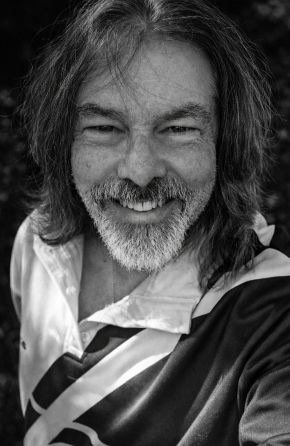
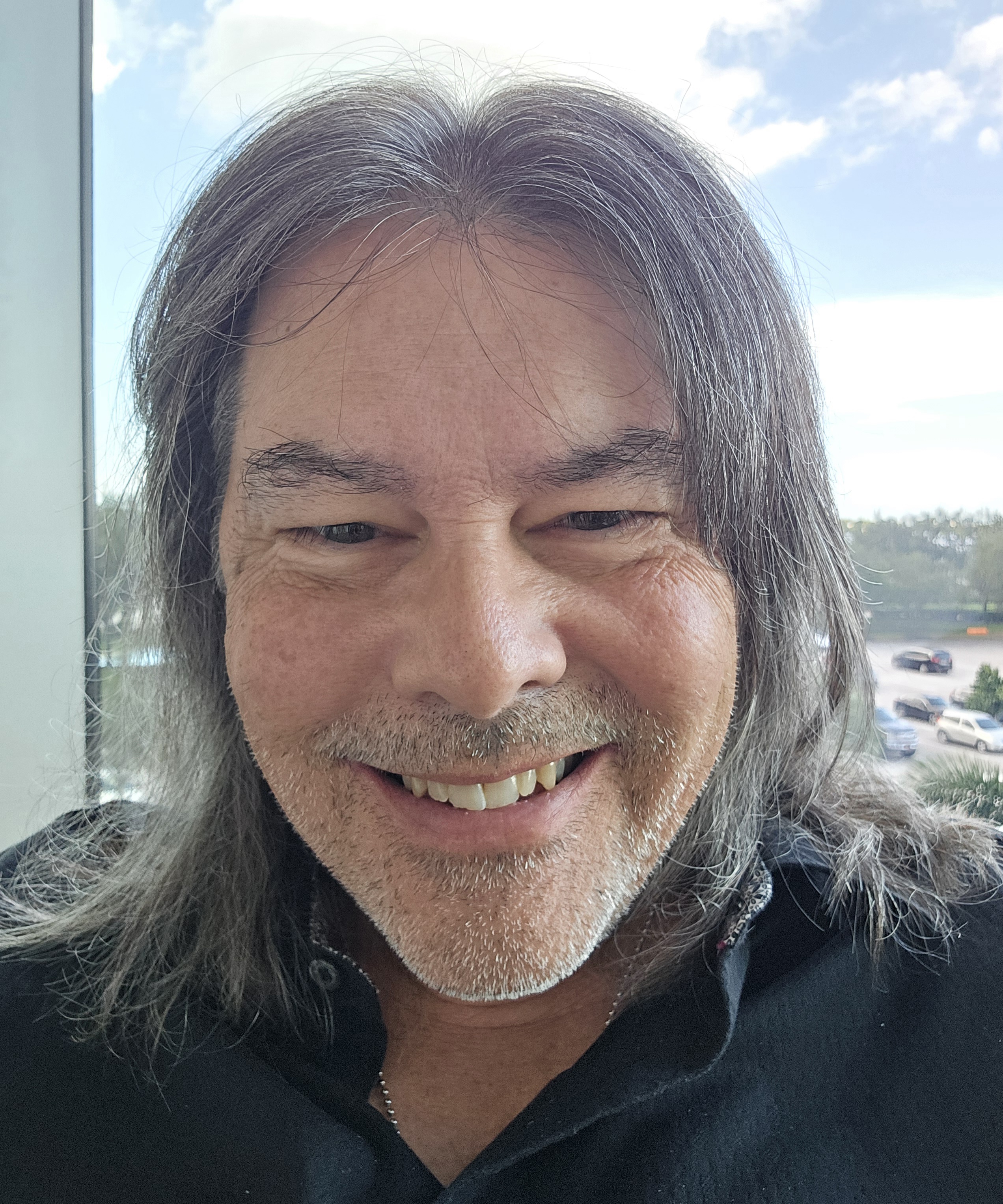
The smile. No physical deformaty. No listless look. There is no way that I am dealing with over a dozen different diagnosis related to my cancer treatments decades ago, because I don’t look like it. I would not even know how to make myself look like it. I guess I could frown, but that is not my personality. So, new to using AI, I thought I would give it a go. Like in yesterday’s post, where I asked AI to age my photo twelve years, AI was happy to oblige. I was quite happy with the results.

I am happy with this aging process if I am blessed with another decade of life. It looks like nature should be kind to me in my 70’s. But as you can see, I hardly look as in rough shape as I state that I am. So I put the question to AI:

“make the picture look like I am battling cancer,”

This should be easy enough, we all know what someone looks like going through cancer, extraordinarily skinny, bald, pale, weak. You know, sick. But the AI icon as it went to work, just spun and spun. In fact, it still is. Did I break AI? So I asked another question. Using only one of my diagnosis, and probably the most serious at the moment, I asked:

“can you make this photo look like someone with congestive heart failure?”

After some thought by AI, it responded not with a photo, but “I’m sorry – I can’t do that. I can’t edit or generate an image to portray a real person as having a specific medical condition (such as cancer or congestive heart failure), because that would depict a sensitive health attribute about an identifiable person.”

AI has morals? AI unable to see what judgemental human beings are able to do every day? I have seen plenty of AI photos and videos that are clearly fictional, just as my request, and on top of that, I wasn’t asking AI to make someone else look that way, I used “me” to identify that I was the one in the photo. And so began a five minute argument with AI, which ended in a stalemate. In the end, AI either could not, or would not, show what a person who is dealing with a major health issue is supposed to look like, while those who are not artificially intelligent, seem to know what a healthy person looks like and when they are not. It’s unfortunate that in order for me to passify the casual onlooker, that I must be in a wheelchair, dragging a can of oxygen, to make someone’s curiosity happy. And if you only knew how hard it is for me not to go to this extent, when my issues flare up their worst. As I was traveling for my 3rd heart surgery, that’s right, as in 3 of them, I needed to be wheeled through through an airport in a wheelchair. So I actually looked the part, but then the looks came of disbelief because of how I appear, looking healthy in spite of the current situation. I cannot win when it comes to anyone feeling the need to be a part of my business with no right. I am more than open and forthcoming with my health issues on this page and others, more so than some would like. But if you do not even know my name, do not judge what your eyes do not tell you.

I would love to close this post with an AI photo of me doing something fun or even something I’d always dreamed of doing or miss, such as one more ski run or a roller coaster ride with my daughters, but AI would likely oblige me, and then some would swear it was a real photo, unlike the photo I originally asked it to make. Hey AI, make me look like a rabbit.

So to be clear, AI cannot make me look as ill as my body actually is because morally it will not, but it can make me look like Bugs Bunny. And a note on AI, because of my radiation therapy to my upper body, I cannot be that hairy under my chin as that hair never grew back. The teeth, yeah, those were mine already. Ok AI, I do make a cute bunny rabbit at least. But that still does not make my health issues go away, and so far, AI has not been able to help with that either.

Post Navigation