Paul's Heart

Life As A Dad, And A Survivor

Archive for the category “Side Effects”

Still Miss My Dad


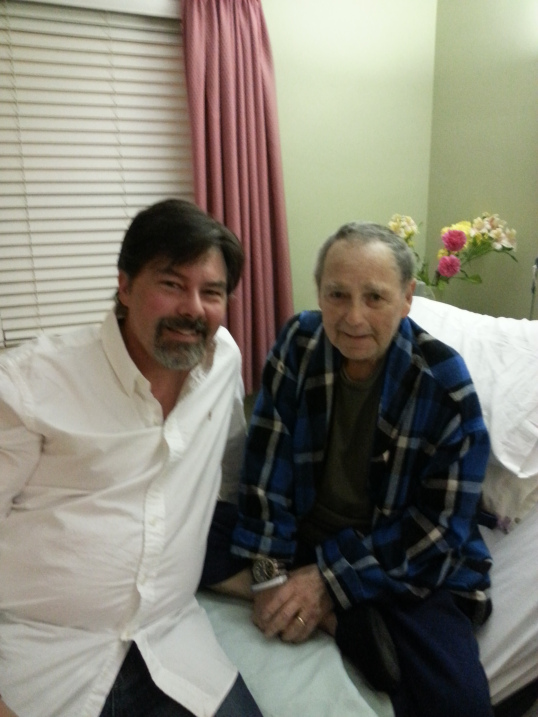
Today marks 4 years ago, my Dad lost his fight with lung cancer.  The loss of my father is no easier today than it was then.  I can make a lot of sense why things occurred the way that they did from a medical standpoint.  But like many others who have been or are in this situation, the struggle is with the fairness.

There are not many photos of me in my childhood with my dad.  Unlike today where everyone is obsessed with photos to post on social media, everyone wanting to share their life stories, pictures just were not that big of a deal back in the 1960’s.  And then came the divorce.

I no longer really talk about the divorce, because of how it affected the first half of my life, what it took away from me, away from us.  It was always something that he regretted.  Instead, when it comes to remembering my father, it will always be the second half of our relationship, that I would truly learn about my Dad.  I would finally have that relationship that I was prevented from having as a child, albeit in a wonderful way of my own.

My dad “grabbed the ring” for the second chance that he had been given with me, to be the grandfather of my daughters.  And they both loved my Dad.  Holidays which had always been a reminder of tragedies in years past, were once again a joyful thing to experience.  My daughters of course looked forward to the tasty treats awaiting them at “Pappy’s house.”

When my Dad would retire from his job, he had decided to drive a school bus, which at one point, I swear I would never have thought he would even think of.  But for the couple of years that he did drive, he shared so many stories of the many young children that he drove to and from school.  When we would visit with him, he seemed to have such an excitement about him that had increased since our last visit, he wanted to hear from his granddaughters the laughter and the stories from them, like the ones he had heard on the bus.

But I do still miss the friend, the talks, and the support.  I definitely appreciate everything my Dad did for me.  Most importantly, he showed me the importance when dealing with a difficult situation like divorce, and the impact it has on children.  To his last breath, we did not talk about details about the divorce.  And that was his choice, which I respected.  He made decisions when I was a child, decisions that he had to live with, whether I agreed with them back then or not.  But the decisions were what he felt was best.  He kept from talking about the divorce because he knew that a parent had no right, nor any business involving a child in the process.  And of many of the things that I look up to about my father, this is just one that is something I keep in mind every day.

By the time my father had passed, I had learned about my father, from him and from others, everything that would make him one of the people I will always admire most.  He was humble.  He was definitely stubborn.  He always believed in trying.  And he definitely loved his family.  The paternal side of my family is not known for their longevity, but in spite of everything he had gone through health-wise, he did reach his goal of the age of 70.  Still, there was so much more for my Dad and I to have done, for him to have experienced with his grandchildren.

I miss you Dad.

I always share a story that I wrote and dedicated to my father, “My Dad Was Just Like Me,” which you can find under the tab marked “Pages”.

A Matter Of Fairness


A recent post on one of my Hodgkin’s FB pages asked for the opinion about pursuing legal options because of a lingering and seemingly permanent side effect from their treatments.  The reasoning was understandable, it was not emphasized strongly enough about the potential for the issue to be permanent.

As a survivor, I think all will agree, we have enough on our plates without adding any additional stress and frustrations.  I am not saying we do not have a legitimate bitch, but unfortunately courts and society are not likely to agree.  I am aware of many situations where even at the most extreme ending, death, the legal system often does not support the patient.  You need to prove negligence, in other words, that the doctor was careless, or committed an act intentionally that caused the harm.  And to do that, unless you have proof, you are relying on getting into the head of the doctor at that moment, and that will almost always be a fight that is lost.

Here is one such example, coming from a fellow survivor, who unfortunately is no longer with us.  A known chemotherapy drug to cause heart damage, and if so, almost immediately spotted, supposedly has a protocol for following up with monthly echoes to monitor for any potential damage.  This is not mandatory, and in some cases, unknown.  Go one step further, if the damage is severe enough that extreme intervention is required, such as open heart surgery, you expect everything to be followed by the textbook and the supplies used to be the best quality.  But what happens if a doctor uses a device that has been recalled due to failure concerns?

So, try to follow.  These are two situations with the same patient.  The end result, the patient died.  The oncologist had only planned to do the echo at the conclusion of the entire treatment plan, and it was scheduled.  But according to research, often damage is discovered following the first dose, plenty of time to stop using the drug if this happens.  In this case, the patient, at the end of his treatment, completed it and proclaimed in remission, crashed with congestive heart failure.  How exactly can you prove negligence in this case?  Just because the doctor may not be aware of the better protocol or options, does not mean he was negligent.  Clearly, being aware of the newer research could have made a difference.

Going to the next issue, the patient required a heart pump to assist the heart to beat.  The patient being too soon from treatment not eligible for a heart transplant (was told would need to wait 5 years post treatment), the pump was the only option.  Being smaller than the average patient, the surgeon offered a newer device that would fit his smaller frame.  The device failed, and another surgery would be needed, but by then, too much damage was done to the body, and the patient passed away.  It would be later revealed that the newer style pump had been recalled earlier than when the surgery took place.  How do you confirm if the surgeon knew this or not, to prove negligence?  Yes, common sense tells us, someone had to know.  But without being able to prove 100% negligence…

Then if you feel you have a strong enough case, then you have to hope to find an attorney willing to dig in for the long and difficult fight.  And it most likely will need to be one that if it is going to consume the attorney’s time, it needs to be worth it to the attorney.  There is just so much stacked against the patient or family trying to make things right.  But you have to really consider the stress, heartache, and all the other emotions that will take a toll on your body as you just try to get through the day, which may be hard enough.  I am not saying to not pursue the legal option, I am just saying take all things into consideration – emotions, evidence, etc. before you decide.

Would I pursue legal reparations if given the chance?  I think about it every now and then.  And as I have discussed it with family and friends, I get mixed answers from definitely to being called an ingrate because the doctor saved my life 28 years ago.  But here is my reality.  I was treated with 4 times the lifetime maximum of radiation in a 30 day period.  People who work at nuclear power plants are exposed to less.  Several of the chemo drugs I got are now known to cause extreme side effects to two of the most important body systems, cardiac and pulmonary.  Yet, when I signed my treatment release, all that was said was this, “potential for a secondary cancer or pericarditis (inflammation of the heart).  Well, if you follow my blog, you know the doctors missed it by a mile.  But was it negligence?  I do not think so.  I did catch my oncologist doing something else, running phony blood work which I called him out for, not legally, but he was more than happy to honor my request to transfer me to another oncologist of my choice.

So then, if not the doctor, who would I go after?  The pharmaceutical company that made the drugs?  They should have known more.  Unfortunately, many cancer survivors were not expected to live past 5 years, so why bother late developing side effects as a patient would not live long enough to develop them, or so they thought.  How about the FDA?  They approved the treatments.

I am no so over the limit on pre-existing conditions, a definite high risk for any insurance.  It is not my fault these things have developed in me, or is it?  I chose to be treated and cured.  I should just be thankful and appreciative.  My situation could have ended up much worse had I not been treated.  Right or wrong, there is a legitimacy to that argument.

But at the end of the day, the only way that I find solace, as difficult as it is in my life to get insurance, afford medications, see the necessary doctors, if I added the extra stressors of a fight I had no guarantee of winning, I might not make it to hear the final bell.  I have many other things to deal with and care about while I deal with these issues.  Actually just two, my daughters.  Every breath I take now, is to be here another day for them.  My health has taken enough time away from them.  But this is my choice, and I am okay with that.  Just please, if you are considering legal options, remember, you are definitely not the only one going through this.  The fight in court will not be easy.

The Worst Thing You Can Say To Someone


Yesterday, news came across my FB feed, yet another long term survivor of Hodgkin’s Lymphoma passed away.  While I plan to do a tribute to her on a future post, as I have done for others here, I need to express something that I just do not feel is appropriate to include in such an expression.

Before I get to the bulk of this post, I need to state clearly, without any doubt, I am a very positive person.  But I am also someone who must deal with a harsh reality.  At no time however, does this change my outlook in life.  That said, there is no way for me, or many others to just “get over it.”

I am a long term survivor of Hodgkin’s Lymphoma.  And when I say long term, I am approaching my 30th year as the countdown clock on this page displays.  There is no set timeframe that declares you a long term survivor, though for the purposes of this post, I am basically going to refer to those of us who were treated prior to the turn of the century.  During this time, the majority of us were treated with either radiation or chemotherapy, or a combination of both.  I do not think there is any of us who would say it was a “cakewalk”.  We may have had different attitudes of dealing with all of the side effects and the treatments themselves, but it most certainly was not easy to get through.  And for those of us who did hear the word remission, we really were not expected to see past five years survivorship.  So medicine never really bothered to study the possible late developing side effects once we passed that milestone of five years of survivorship.  Instead, many of us were given very vague, and very minor possibilities of concern.  In my case, I was told about the possibility of a secondary cancer or pericarditis (inflammation of the heart).  But I was told, the chances were very slim.

This year, of the first 2 dozen survivors that I have personally met, the final survivor was diagnosed with a “widowmaker” heart blockage attributed directly to her cancer treatments (just as I dealt with in 2008).  So much for a small percentage, because now 100% of this small, yet unscientific group, was dealing with some form of extreme late effect from the treatments that “cured” them of Hodgkin’s.

So, the good news is this, as a result, over the last couple of decades, medicine decided that patients like us, need to be followed.  The problem was, most of us, once we hit our 5-year mark, disappeared from the care of the oncologist making communication and surveillance of health nearly impossible as no way to reach us… until… an event has occurred.  We “guinea pigs” are the reason that patients today are followed up “forever” (as long as the patient does not disconnect).  And for those of us who have had new events, if we are lucky, get enrolled into survivor clinics so that our new health issue is dealt with properly, but the rest of our health is also followed.

We do not just “get over it.”  We cannot, physically or emotionally.  And again, that does not make us negative thinking people.  We need to stay aware of the way our bodies have changed, and the special needs and care we need when something comes up.  This “Pandora’s Box” if you will is both a blessing and curse.  Because while the average healthy person who does not need to see a doctor on a regular basis, may just have to see a doctor, when a serious issue arises, and by then, measures to treat or cure may be extreme or too late, but at least that person was not worried every day.  In our case as survivors, this is our reality.  Our late developing side effects cannot be reversed.  They are progressive, and will continue, until the day we die.  But being followed in a survivorship clinic, or at least dealing with a doctor who has knowledge of these late effects, monitoring patients with annual testing, can watch as the issues progress until they get to a point, that concern outweighs the risks.  We can often get taken care of before an event takes place in other words.

Psychologically, this is Hell.  We still do everything we can on a daily basis.  We do not wake up wondering is today the day we drop dead.  We are still grateful for being able to spend time with our family and friends.  But in the back of our minds, we do know the reality.  Is our next scan going to show enough progression to require surgery?  Do the risks of doing nothing now outweigh the risks of correction?

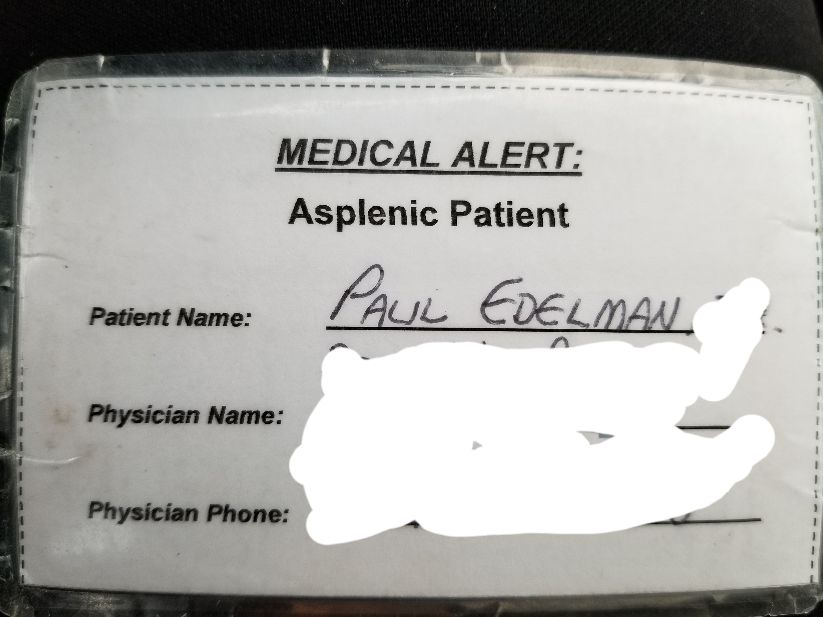
Many of my fellow survivors who have passed away, nearly a dozen just over the last 3 years, died as a direct result from late effects caused by their treatments decades ago.  Others, died from complications of corrective surgeries and lax follow up care due to doctors, nurses, PA’s assuming the procedure completion was routine.  Most common complications are either perforations, ruptures, and infections.  Our compromised physiologies cannot be treated like the average patient.  Once the first dose was administered, and in some cases, even some of the diagnostics (like splenectomies – spleen removal), everything internal has changed for us.  And for the rest, it is all of a sudden.

Except for you reading this post, the majority of my friends and family, 95%, have no idea what I am dealing with.  And the same can probably said for my other fellow survivors.  This is either by ignorance (do not want to know), or by protection (I do not feel you can handle knowing what I deal with).  So, I do my best to make sure that my outer shell, shows no signs, so that it does no interrupt anyone’s positive auras.  I cannot count the number of times I cringe when I hear “you look good,” especially by the doctors, because inside I feel like shit.

As I said in the beginning, I am a positive person.  I have to be.  I have two young daughters who want to spend a lot more time with me.

For the naysayers though who say, “yeah, well you didn’t seem to have any problem with your work assignments before until you were told you had all these other issues.”  And that is true, to a point.  I was raised with a mentality to give 100% to everything I do.  Show up to work sick as a dog.  Wait to go to a doctor until you pass out from the pain.  But from January 2008 until April 16th of 2008, I went through daily episodes, multiple times a day, experiencing a chest tightness.  The feeling would go away after a period and I would continue whatever I was doing.  I cannot remember, but there is a likelihood, that this went on way before January.  In any case, this tightness was actually a 90% blockage of the main artery to my heart, referred to as… drumroll… “a widowmaker.”  And they call it a widowmaker for a reason.  You do not survive the fatal heart attack.  My cardiologist told me, it was not a matter of “if” I was going to die, but “when.”  I had already worked over 120 days like this, how much longer could I have gone.

Anyhow, once the bypass was done, and revealed that I this damage due to radiation therapy, I was referred to a survivorship clinic.  But I also noticed something else, I was feeling other issues that had been masked by the pain in my chest tightness now.  And sure enough, I would be diagnosed with other issues as well, more than a dozen.  I finally had an answer to why I was not feeling fully recovered.  Once getting diagnosed, I needed either a treatment or management plan.  For the most part, once everything was diagnosed, it was a matter of management for everything.  Corrections to the diagnosis posed more of a risk for complications, so now I wait, year after year, watching the progression get worse until they have to do something.  In other words, wait for another type of “widowmaker” to develop.

My doctors were adamant, I needed to change my lifestyle, “slow the fuck down” (their words not mine).  I could no longer push myself the way that I had been doing, because while the issues could not be reversed, the progression process could be slowed down.  But my pushing myself physically day after day was not going to accomplish that.  I knew what they were getting at.  And in spite of having the protections of the Americans With Disabilities Act, upon my return to work, I went right back to the way I had always been, work long, work hard.  And I had gotten away with it too.  I went to my doctor appointments, got all my tests done, and while there was progression, I did not feel there was any concern.

Until the time period of March 2012 through February 2013, when I would make 5 trips to the emergency room, one by ambulance in critical condition.  My body could not take it anymore.  And so, I leaned hard on the ADA to protect my right to earn a paycheck.  I would still try to do what I could, but I definitely needed to change at this point.  My body was starting to die, cardiac, pulmonary, muscular, spinal, endocrine, gastro, everything was being affected.  My doctors continued to encourage me to retire on disability, I needed to change.  But my mind was not prepared to have me feel “worthless”.    Or as many often describe me today, as lazy.

Someone with my issues is a liability to an employer in several ways.  I am more likely to get hurt on the job.  God forbid I die on the company property, the insurance check that would come from them.  Lost time became an issue as did work restrictions of what I was and was not allowed to do, based on the abilities of my body, determined by my doctors.  But as long as I felt the guilt being aimed at me by both my co-workers and supervisors, I was always going to push myself, not accept what was happening to me.  I was going to die.

Today, the changes in my life, some voluntary, others not, I believe I have slowed the progression, though I cannot confirm it as I no longer have health insurance, and am therefore cut off from my survivorship clinic.  My body is a ticking time bomb waiting for its next event, and then it will be dealt with as I have done prior, as an emergency.  I still only let people “see” what I want or feel they can handle, I do what I am able now within my limits and I do not force myself.  But no longer having the pressure of meeting the expectations of anyone else, other than surviving, I feel I have the chance to experience what my doctors told me a long time ago.  “I want you to see your daughters graduate high school, college, get married, and to see you become a grandfather.”  I will never forget that reminder of just how close I have come, and the reality and fragility still exists as I am reminded when another fellow survivor passes away, of losing it all.

I do not care that my arms do not raise over my head.  I do not care that I cannot walk up stairways.  I do not care that I spend the majority of time indoors to deal with pulmonary issues.  I do not care that I cannot do some of the things I used to enjoy doing like playing ball.  I have learned to live with, accept, and adjust, what I need to do in my life.

Yes, I am a very positive person.  And I am driven to make sure that my doctors words come true.  And if family, friends, strangers want to refer to me as lazy, or because they cannot see with their own eyes the internal issues I deal with as “fake,” that is on them.  I am not the only survivor out there dealing with this challenge.  But I can make sure that I do what I can.  But I definitely cannot just “get over it.”


Post Navigation