Paul's Heart

Life As A Dad, And A Survivor

Archive for the category “Family and Friends”

When You Give A Girl A New Country


Today, I am welcoming a guest author today.  Though we have never met, we have a personal connection, which, when I saw her blog title, I knew that I wanted to share her thoughts with those in my personal circle.  You see… Haley is adopted from China.  I actually got to meet her parents when Haley’s family and I each adopted our second child (respectively) from China.  Haley’s younger sister, and my youngest daughter has a bond that will last forever.  Haley’s family and my family are connected forever.

There are already so many children who have been adopted from China, who have now reached adulthood.  As our children grow, because the majority of us in the adoption world are blended families culturally having those issues to deal with, there are also the needs, interests, and issues that the child will have to deal with themselves.  Well… who better than to reveal what goes on in the mind of someone who has been adopted, heading into adulthood, than someone who is there right now.

So, please allow me to introduce you to Haley, a senior in high school.

“When You Give A Girl A New Country”

In my family, we celebrate an extra holiday every year.

We call it my “Gotcha Day” because on September 12th, 1999, I met my parents for the first time. That day is the day we became a family.

I’m writing this article to answer some frequently asked questions about adoption that I have gotten over the years, currently get, and will continue to get throughout my life. I answer these questions on behalf of myself and many other adopted kids around the world; I’m sure they’ve received the same questions and can relate to my answers.

Growing up, being adopted has proven to be interesting. Some people try to avoid talking or asking about my adoption; many treat it like a sensitive topic. People view the notion of adoption as a tragedy—they treat talking about adoption like talking about a death. People tread very lightly when asking me about my adoption, and they always seem to be very uncomfortable and nervous.

The former has always confused me, because why should anyone feel uncomfortable to ask me about my loving family? Why is the very blessing that brought me to where I am today treated like a tragedy?

Probably the most frequent question I get asked is if I would want to meet my birth parents eventually. Being that the adoption was international and thus closed, we have very little information on either of my birth parents, so the idea of ever actually meeting them is very far out of reach. But even if I could, I don’t know why I’d want to. Meeting them wouldn’t be some magical moment like it would be in the movies. I wouldn’t feel any kind of special connection to them immediately or anything. Who’s to say I would even like them?

I think this is only a thing adopted kids truly understand, but having blood to blood relation doesn’t actually have anything to do with being a family. I have encountered the term “real” parents multiple times in my life, and I want to make it clear that my parents that I live with now are my real parents. They clothed me, fed me, cared for me, and raised me. They are the people that are responsible for the person that I am today, and they are the people that gave me the entire world. I don’t know about me, but it is them that deserve the title of “real” parents. They parented me, thus they are my real parents.

Another frequently asked question I receive is if I am upset or angry at my birth parents for giving me up.

Honestly, I’m not upset or angry at all, but instead, I am indescribably grateful for the decision that my birth parent(s) made to give me up for adoption. They chose the best option out of what I see was three: the first being adoption, the second being to kill me (wich is a common practice done to unwanted children in Asia), and the last being to keep me and try to raise me. Although I do not know the circumstances of my birth parent(s) situation, I can infer that because they indeed did give me up that they were not in the best position to keep me. If they tried to keep me, my life would’ve been a struggle.

I cannot express my gratitude towards my birth parent(s)’ knowledge of what my life would’ve been for me and instead of selfishly keeping me, deciding to give me up and give me opportunities they would’ve never been able to provide.

One of the most commonly asked questions that I’ve received throughout my life is if I believe my parents do not love me, or could not love me, as much as they would if I was their biological child. And this brings me back to a point that I made earlier: blood relationship does not define family.

My family has shown me more love and care than I could ever repay them for. They’ve given me the world and provided me with everything I could’ve wished for in the world. Without them, I would be nothing. They have loved and supported me as if I was their own, because honestly, I am their own.

Although I was not born of the two of them, they are still my parents and they will always be my parents. Biological relation is irrelevant in family. Family is about showing love, care, and support throughout a child’s entire life, and that’s what my family has given me.

 – Haley


Breaking Down The “New Normal”


I have written in the past, about getting back to life following treatment for cancer.  And as probably nearly every cancer survivor will tell you, there is nothing normal about getting back to life.  It is never the same.  Therefore, the phrase, “new normal” gets tossed around quite a bit.  On one of my support lists that I belong to, a post came through with a completely different explanation of what “new normal” meant to this individual writer.  And she did a great job probably explaining it in even more thorough detail.

I am always willing to share stories from other patients and survivors, especially when there is an opportunity to offer support and understanding.

I present to you, Brenda Denzler, from her daily personal journal, in her own words:

“Cancer treatment saves our lives-if we’re lucky.  But for those of us whose lives it saves, it doesn’t save ALL of our lives.  It saves bits and pieces of them.  The doctors call that partial life a happy, hopeful name: our “new normal.”

Most oncologists don’t pay a great deal of attention to this partial-life-left-to its quality or its features-among those of us (the majority) who are older when we get cancer. They are just beginning to pay real attention to it among those who were children when they got it.  Among the older set, they write off most of our comments and complaints about our
new limitations as the natural process of getting older, and they turn away without a thought given to the issue of how much older, how much faster. As if the only thing cancer treatment did to our bodies was rid them of cancer.
I just spent about 36 hours with my two grands.  It was a good visit.  I had prepared for it ahead of time, minimizing the amount of cooking and cleaning up of dishes I’d have to do. I took a nap with Sebastian on Saturday afternoon.  I propped my feet up and rested throughout.as much as having two small children around will allow.  And when they left, while I welcomed the chance to sit for 30 uninterrupted minutes, I was sad to see them go (as usual).
I quickly succumbed to a nap.  No surprise.  It lasted 4 hours.  That WAS a surprise.  I woke up from my nap feeling so fatigued I could hardly move, with that all-over body ache and tingling hands and feet that indicate I’ve overdone it big-time.  I oozed my way through the evening, trying hard to stay awake and not lapse into sleep again.  When a decent bedtime came, I allowed myself to succumb.  This time I slept for 11 more hours. And again, I have awoken feeling exhausted deep in every bone, every muscle fiber.
THIS is my “new normal.”
To hell with the “but you’re getting older” bromide.  I shouldn’t be THIS old, THIS soon.
Cancer treatment saves our lives, if we are lucky.  But not ALL of our lives.  It just saves bits and pieces of them.”

A Farewell… Lisa Will Never Be Forgotten


This one is tough.  I do not grieve well at all.  I generally keep stiff, silent, and strong.  Since my Hodgkin’s diagnosis, I have said goodbye to many patients and survivors, too many.  And like everyone before, there is a mark that Lisa will leave on me, forever.

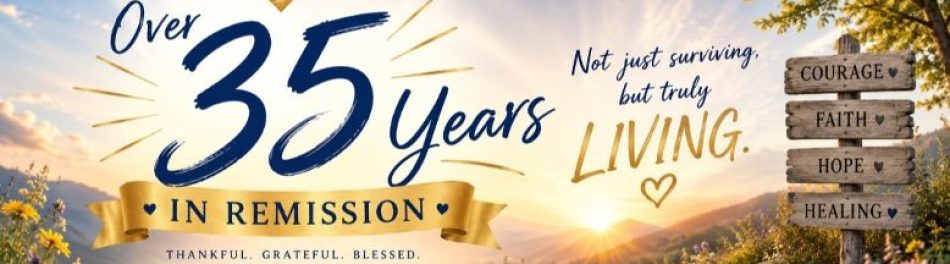
In 1988, I was diagnosed with Hodgkin’s Lymphoma.  In March of 1990, I was declared in remission.  In 1997, I discovered the internet after years of just chugging along on my own.  I found internet support groups consisting of other people who had Hodgkin’s Lymphoma and were living beyond their treatments.  One such list, was found on ACOR (Association Of Cancer Online Resources).  ACOR had a list for nearly every type of cancer, including the rarely diagnosed, Hodgkin’s Lymphoma.  One member on the Hodgkin’s email list, Linda (whom I wrote previously about in another tribute following her passing), had encouraged me to join a list for “long term survivors”.  I was only in remission seven years at that point.  And from what I saw on the list, it was not necessarily about longevity, but the people on this list had a lot of things wrong with them, seemingly because of their treatments that they were exposed to.

I would find myself signing on and off of this list, mainly to announce another remission anniversary, still with no other issues.  I did not feel it was appropriate for me to be on this list really.

Then in 2008, nine years ago this past Monday, I had open heart surgery due to damage developed over time from radiation and chemotherapy damage.  I could not get back onto the ACOR list soon enough for answers to the many questions I now had.

Linda was still there, but so was Lisa.  Lisa was diagnosed and treated for Hodgkin’s in 1984.  She went through similar chemotherapy and radiation therapy as I did, but she also had to undergo a bone marrow transplant along with additional chemotherapies due to the difficulty of achieving remission.  She had late term effects, as well as battling a second cancer.

I was introduced to the concept of a “survivorship clinic.”  Though Lisa lived in Texas, and I was living in Pennsylvania, she mentioned such a clinic, specializing in late effects from cancer treatments, at Memorial Sloan Kettering Cancer Center in Manhattan.  She mentioned a specific doctor who was there, who happened to originally be her doctor in Texas.  She urged me to go to MSKCC, especially to see this doctor.  I would get to see this doctor, who would be key, and still is to this day, in dealing with the nearly dozen late effect issues that have developed since my treatment days.  These issues are progressive, and irreversible.

But it did not stop there.  Lisa would be there repeatedly for me with information, or guidance.  The amazing thing was, she too was facing her own late effects at the same time.  I have never personally met Lisa, but we had talked several times over the telephone, via email and private messenger.  At no time, would she ever let on, when she was overwhelmed herself when she was not only guiding me, but helping anyone.  The only time most of us would be aware that Lisa had her own issues, was when she posted about herself.  This was who Lisa was.  The truth is, there are lots of “Lisa’s” on various internet support groups.

There were many times, when I was so scared about prognosis, side effects from procedures, and of course, the unknown of our futures.  While she dealt with her own health issues, she had a compassion about her which clearly came from her skills and knowledge as a nurse.

We never really got to discuss personal things, but I know she loved her husband John, and her family.  Like many survivors, she tried to do with her life what she could and was able to do, all the while balancing her life along with her family.  Oh, and helping us other cancer survivors.

Over the last year, things got more difficult for Lisa.  As with me, Lisa had her own cardiac issues, and she had developed congestive heart failure as a result of her treatments years ago.  Her only hope, would be a heart transplant.  But just as our late effects often mystify the medical community, these same late effects often played a role in such critical and life/death situations, as it did this time for Lisa.  Sadly, though a heart transplant was her only hope, she had been denied twice.  One reason given was that her body may not have been able to handle the side effects of the anti-rejection drugs due to her other issues.  Her body had come so far, only to be betrayed by the risks of post surgery.  So many of us, friends and fellow survivors reached out to Lisa to advocate for Lisa and find someone willing to due the heart transplant.

I last heard from her mid-March.  She was tired.  She knew that a transplant was not going to happen in time, even if approved.  The news of Lisa’s rapidly failing health culminated in the announcement that she had passed away this past Monday.  Lisa touched so many survivors with her care, empathy, information, guidance.  Her passing will leave a huge void for all of us who turned to her, when we could not find and answer anywhere else.

I promised Lisa that I would tell of her struggles to get this transplant, and that will be another post.  But for now, to her husband John, her brother Roger, the rest of her family, friends, and fellow survivors, my deepest sympathies and prayers to you all.

In closing, this was the last post that I saw from Lisa:

“My heart is breaking because I did not qualify for a new heart at UTSWMC.  I’m so grateful to everyone for all the kind thoughts and prayers. My words are limited right now. Still trying to process this disappointment. I really felt it was meant to be for me to have a new heart. Most of all I wanted this for myself, but in the meantime I thought how encouraging it would be for other survivors that may face this challenge someday and how I could help them. Praying daily for a renewed strength emotionally and physically.
Love,
Lisa”

Lisa, I promise you, you have encouraged so many of us.  Having spoken with the doctor that we both had taking care of us, I know that he will also continue his work to make treatment for us long term survivors more successful.  And so many of us, your fellow survivors, will continue as we have followed your efforts, to help others who struggle with getting the late term care so many need.

Post Navigation