Paul's Heart

Life As A Dad, And A Survivor

Archive for the category “Cancer”

What Do You Want For Christmas?


“What do you want for Christmas?”, or since my birthday falls a week before the big day, “what would you like for your birthday?” In my childhood days, I had no problem rattling off things that I would like to have for both occasions. In my adulthood however, nearly all of it, my answer has always been simple to me, frustrating to others, time.
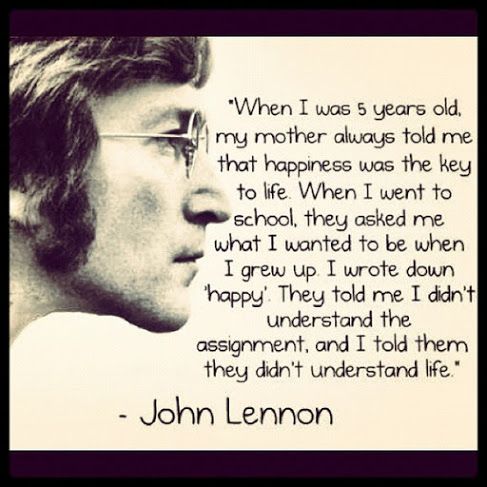
I love this quote from John Lennon. Asked what he wanted to be when he grew up, Lennon answered simply, “happy.” When I get asked what gifts I would like for either a holiday or my birthday, I answer “time.” Happiness was important to Lennon. Time is important to me.

I stopped longing for material things at the age of 22, when I was diagnosed with Hodgkin’s Lymphoma. Things no longer mattered to me. All I wanted was simple, more time. All I knew about cancer, was that people died from it. As I reached remission, my feelings never changed. Survivorship became about making a magical “5 year survival mark” as if any time after that did not matter, because it rarely got discussed.

But as my survivorship term increased, now by the decades, there is also a reality, and only reaffirms the only thing I want for these special occasions. Treatments that I went through to put my cancer into remission, over time, have caused, and continue to cause cumulative damage. I have had three heart surgeries, a surgery to repair my carotid artery, and two episodes of aspiration pneumonia that went septic. That makes six, SIX other events in my life, besides my cancer that have put my life at risk.

Since my cancer days, these six events put me in a position, that I was not prepared for, nor thought I had the ability, or the fortune, to survive. The reality, is there will be likely more of these events.

Over my years of survivorship as a peer to peer counselor (I counsel fellow cancer patients and survivors), there have been many survivors whose bodies had gone through so much trauma, their bodies could take no more. They had run out of time. As I write this post, I mourn yet another one of those survivors, a special one to me, as she was one of the first I met, way before Facebook, and on the other side of the country. I will share my tribute with her as her own post, as she deserves. She, like so many others, were also younger than me. Time. I wish she, they, could have had more. There was so much more for them to experience.

So yes, when I get asked, “what do you want for Christmas?” or “what do you want for your birthday?”, I respond, “time, more of it.” If there is one thing I have learned about cancer and its survivorship, I have no control over what happens, and I live each day with the purpose of enjoying it. But as my daughters prepare to enter the next stage of their lives, adulthood, I want to see more. And that means, that I need more time. Everything else will take care of itself.

But It Can Help


If there is one thing that drives me bonkers as a health advocate who believes in universal health care for all, it is knowing the benefits of certain welfare decisions in recovery from procedures, especially when involving the heart.

Think about it, you have surgery to your heart. I purposely did not use the word major, because any surgery to the heart is major, and traumatic. Yet, when it comes to the aftercare, a patient will fall into one of two categories, and there really should be only one. Should a patient undergo cardiac rehab after a heart surgery? Does a patient really need cardiac rehab?

It really should not be that hard. The answer to both questions should be “yes.” And yet, many patients get told they do not need cardiac rehab, or will not benefit from cardiac rehab. An almost automatic pass on cardiac rehab will come based on “youthfulness.” Having gone through cardiac rehab three times (yes, I have had three heart surgeries, qualifying for cardiac rehab each time), I can confirm with 100% certainty, I did not fit in with the demographic of other participants, averaging the age of 70 to 75 years old.

I was definitely told “no” following my open heart surgery back in 2008. And it was clearly laid on my youthful age of 42. I did what I do best, and advocated for myself, and was able to participate in cardiac rehab. My other periods of rehab following my other two heart surgeries were approved easily.

Here is why cardiac rehab is so important. First, you need to understand, any procedure to your heart, whether bypass, stent, valve replacement, or even transplant, is TRAUMATIC! While the issue may have been repaired, the heart is still fragile as a patient recovers. A patient should not expect or attempt to just return to normal activities, especially when it comes to working out. But if you are young, chances are pretty good, that will be the only reason you are not referred to cardiac rehab.

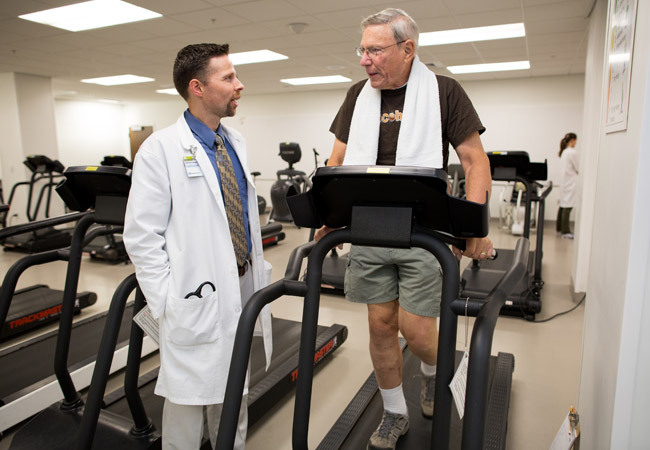
In cardiac rehab, the patient is connected to a heart monitor, where a nurse follows your heart and vitals on a screen while you work out on several pieces of equipment over a time period. A trainer, supervises you and creates a beginning work out plan, and over time, and depending on the results on the monitor, increases your efforts to help you restore physical fitness. And a nurse also walks around, at least once during the session, taking your blood pressure to relay back to the nurse behind the monitor screen. At least my last two rounds of cardiac rehab, I have had three people not only making sure that I recovered at a safe and healthy pace, but that my body was accepting the efforts as well. I have personally witnessed a patient being told to stop, because something on the monitor indicated something was wrong with him. And he was taken to the hospital. You do not get this kind of care, if you are left to your own efforts. And if you push too hard too fast, the end result could be tragic.

As far as I am concerned, there is only one reason not to do cardiac rehab. As it is expensive, of course, insurance is definitely helpful to be able to afford it. But then, this is where I believe in universal medical care for all. Everyone should have this critical recovery option available.

Best Advocate Versus Worst Enemy


If you are lucky enough to be healthy, it is likely you have never had to worry about doctors more than perhaps an annual physical, treatment for a cold, or a vaccination. Chances are, if this is your situation, you would be more likely to go to the appointment with the relationship established as you being just the patient, and the doctor or nurse are the ones who know what is best, and you just accept whatever it is that they recommend. With the exception of the one little blip I had over 32 years ago with Hodgkin’s Lymphoma, I was rarely any challenge for my family doctor except for a seasonal allergy shot.

Once you cross over however to one of the more complex health issues such as severe injuries or chronic illnesses, there are two paths you face, and depending on the severity, it might just make a difference.

For examples, you suffer a broken arm, the doctor tells you that he will set it, and put it in a cast. Pretty cut and dry. You are the patient. You believe what the doctor is saying. And that is that.

Even when faced with something as serious as a diagnosis of cancer, the patient will always put their trust in the doctor. After all, we expect that with them having those important initials after their name. As long as we remain text book, we get diagnosed, treated, and recover.

But what happens when a page gets ripped out of the text book, and the doctor makes decisions based on everything, minus that one page, only to become a “likely” possibility as opposed to a firm diagnosis. Worse, when the situation is so unusual, and everything checks out, especially for someone “your age,” and there is nothing more that can be done, you are still adamant that something is wrong. You are no longer just a patient. You must become an advocate, your own advocate.

What does “advocate” mean? Coincidentally, a memory just popped up today in fact, and it is a great example.

This was a post I wrote nine years to the day. By this time, I had become well aware of the various health issues I face from my cancer treatments for Hodgkin’s Lymphoma. I was dealing with my second case of pneumonia, this time “double”, just nine months after a previous case of septic pneumonia. I am aware of a frequency among Hodgkin’s survivors, that those who develop pneumonia, develop multiple cases. But it only made sense to want to make sure I was at least mostly cured before releasing me from the hospital.

The hospital did release me the next day. I went straight to my family doctor who confirmed that I did still have pneumonia and took over my care from there, but agreed I would have recovered more quickly and thoroughly receiving the high dose antibiotics necessary through IV.

Advocating. It means sticking up for yourself when you think, feel, or know something is not right, and fighting for yourself. Have your ever heard a comment about a “bricklayer versus an engineer?” The engineer is assumed to be the smarter one with all the college experience and knowledge, yet it is the brick layer who has the hands on experience and knowledge. Which is more valuable? The engineer has no problem telling you that he does. The brick layer does not even give it a thought, just does what he must.

I have several causes that I advocate for, in general, adoption, health care, and cancer and survivorship. I advocate for myself, and for others. I am lucky that I have the teams of caregivers that I do, that I do not need to express myself as much, and why? Because I am included in the discussions that involve my care. But talk to me as if I am only a patient and have no say, we are going to have a problem.

However, with some of my issues, sometimes my advocacy, can make me go from my own best advocate, to my own worst enemy, especially when it comes to any of my multiple cardiac issues. I count on my doctors to explain to me clearly, everything that is at stake. I count on my doctors to make sure that if they have not gotten through to me, try again. Hopefully, time does not run out. And fortunately, this situation does not happen often, though admittedly it has on a few occasions.

As a certified “peer to peer” counselor in cancer for over 30 years, I have never given medical advice to a patient. No doubt, I have learned a lot about cancer, the different experiences, but the one thing I have never done, is told a patient what to do, especially override what a doctor wants to do. There is a huge difference between being an advocate for yourself, and delaying a decision that could cost you your life. In situations like this, time is often of the most importance. But if you find yourself in a difficult health crisis, and time does allow, then you can advocate yourself, to learn as much as you can about your situation whether it be by research or a second opinion. As long as it does not result in a negative outcome because of the efforts, then that was a good thing. That is what being your own advocate is about.

Post Navigation