Paul's Heart

Life As A Dad, And A Survivor

Archive for the category “Cancer”

Dr. (Insert Your Name Here)


My last post, dealt with how long term survivors of cancer, in particular, Hodgkin’s Lymphoma, look at their survival longevity, or rather, the shortening of their mortality, due to the late developing side effects from the treatments that gave them remission. Though I would not normally like to do two “heavy” posts pertaining to survival in a row, I need to publish this post, while my memory is hot.

I was attending a Zoom conference yesterday, as I often do. The guest speaker was an oncologist who was going to speak about long term side effects. I must admit, I did not pay attention to the details of the speaker prior to the Zoom, just the topic. In just moments, I learned that I had a lot in common with the good doctor, most notable, he was a long term survivor of Hodgkin’s Lymphoma himself. Compared with other Zoom conferences I have attended, this was the first time in a long time that I can recall anyway, hearing of an oncologist speaking from personal experience. If I am being honest, I really do not know any doctors personally who have had to deal with cancer, or at least admit it. I was anxious to hear what he was going to say.

The doctor continued his introduction. Turned out, we had other factors in common with each other, especially when it came to Hodgkin’s Lymphoma. He was treated back in 1989, the same as me. He was a few years younger than I was, which would still make him a few years younger than me now (though you would not be able to tell that from looking at both of us). We were both survivors of over 33 years. Our treatments were similar in that we both had radiation treatments, but his chemotherapy regimen was partially different than mine, he getting only half of the chemo drugs that I got. There were other facts of similarity, but you get the idea. We had a lot in common.

About half-way through, the doctor finally got into long term survival issues. Again, he spoke of things that I was already aware of from particular body systems and the risks faced for complications and secondary issues. And then he dropped this bomb on all of us attending:

“You need to advocate for your own care.”

If you have followed “Paul’s Heart,” even just recently, you know my efforts to bring attention to the need for survivorship care for those of us treated twenty, thirty, forty, even fifty years ago. Some of us have been lucky enough to find doctors who have learned how to care for our particular issues, others sadly have not. But as each day passes, all of us hope that we get one step closer to a universal recognition of, and protocol for, dealing with late side effects caused by treatments, radiation and/or chemotherapy, for Hodgkin’s Lymphoma. And as one who has access to the specialized care necessary, I want to believe, that there will come a time, that oncologists all over, will finally be honest and open with their cancer patients, and tell them the truth, “yes, we can get you into remission, but you are going to need to be followed up for the rest of your life, not just to make sure that your cancer stays in remission, but should you develop any late side effect, it can be dealt with sooner than later.” Sure, not everyone develops these issues, but enough do so to warrant the protocol for lifetime follow-ups. There are enough of us long term survivors to prove this need.

As if stuck in a time loop, I “heard” in my head, the doctor repeat and repeat, “you need to advocate for your own care.”
Nope, even though it was just a phrase now stuck in my head, no matter how many times it played, it never got better hearing it.

Now, there are some in our survivor/patient peer social media groups who have been on the receiving end of me urging them to “advocate” for themselves in pushing for a more urgent response, or quicker scheduling, or to find an answer for what is creating a health issue, not typically found in someone of a certain age with no other attributing factors. Don’t let the doctor tell you they have no idea. Make them figure it out, or at least point you in a different direction to help you find an answer. Typically, I encourage fellow survivors, a primary care doctor is likely going to be a good advocate for their patient, as they know the patient best. And when it comes scheduling, you try to schedule a nuclear stress test versus having the doctor make the call instead. See who gets scheduled sooner. I will give you a hint. The only reason I am alive today, is because my primary doctor of now nearly forty years, made that call, fifteen years ago, second week of April, that three days later, surgeons were saving my life performing emergency open heart surgery, because of late effects I had no knowledge I had. If I were to have made that call, at the young age of 42, that test would not have been scheduled at best, until three months later, or longer if I had to go through the appeal process, because that test made no sense for someone my age. But you get the idea.

“You need to advocate for your own care.”

The doctor went on to explain what he meant, exactly what we survivors have been doing for decades. We, the patients, have had to learn the potential side effects that can come up on our own, and then push doctors to take our word for it, get the tests ordered that will discover the issue, and get it fixed if possible. The reality of the possibility of walking into a doctor’s office, complaining of shortness of breath, as an adult in their forties, and have a doctor only do an EKG in his office, and then tell you “everything seems okay” except for the fact, you don’t feel okay, is all too common. You need to advocate for yourself, especially after reading this post, and the next one to follow (likely in a week or so – I am waiting for news on a particular web site), and use the information that is available to you, and find a doctor who will listen to you.

But why is a patient being put in this position? If there are so many of us survivors dealing with these issues, and clearly there are some doctors and facilities out there who can take care of us, why isn’t this type of care more common? The doctor offered his answer.

“Because we are going backwards in our healthcare.” Whether it is because of meddling insurance companies (or as I refer to them as greedy pen pushers) or medicine being privatized or incorporated, there is either just no interest or not enough profit to care beyond the “cure” for cancer. Things get too complicated with our conditions, and answers are just too costly with all of the tests that often need to be run on us survivors. Though I have not run a tally for all of my surgeries and emergency room visits, and the dozens of tests I have gone through over the years, I know if I just take the big things I have gone through, those alone would total well over a million dollars spent caring for my medicine induced health issues. I would not be surprised if I were in the three million dollar range at this point.

That’s right. And we end up right back where we started, with the doctor’s quote, “you have to advocate for your own care.”

I heard from several survivors after my last post and this Zoom, all saying the same thing, “is our survivorship all in vain? Is being treated successfully for cancer the only objective only to be left with these late side effects, that no one understands or can figure out? The rest is on the patient?” I do and I do not believe that. I do think this is where we are at in medicine these days. Gone are the times when doctors took their own initiatives, followed their guts, cared more about their patients than profits and what higher-ups expected of them.

I am long enough in the tooth to remember times, when doctors were allowed to care about their patients, and did. I have had my current primary care doctor nearly forty years. I have watched her take over my prior doctor’s practice, then take on a couple of practicing partners (including her husband). Then came the big take over by a hospital network, and little by little every year, this incorporation has taken over more and more of her practice. It is barely recognizable anymore if you just casually walked in for the first time. But when I get to see her, I can still see the same doctor who has given me the best care she can possibly give, regardless if her hands now appeared tied by corporate (she is not even allowed to have her kids and grandchild’s photos and school artwork hanging anymore – talk about a sterile looking office). All this time, she has been my greatest advocate. Sadly, a time will come, she is a few years older than me, and she will step away, and I will have to continue to fight this battle on my own.

There is no reason not to want to be cured of cancer. There is no reason not to want to move on and live life after hearing the words, “you are in remission.” But it is a totally different thing, to be aware of the fact, that what treated you, has the potential, not guaranteed, but potential, to cause problems later down the road of remission. You have two choices, and both are the right ones. Go ahead, push onward, forget that cancer was ever a part of your life. Avoid doctors because you feel great, and you do not want the negativity, or the reminders, of your past. Forget that you know, the risks are there. You know they are there because you are either reading this, or you know someone else who has dealt with these late effects. If you choose this path, and you end up being an “unlucky” one who faces something unexplainable for your demographic, all I ask, is remember what you know, what you have been told. We will be here to help support you, guide you, and advocate for you, should you end up having a late effect.

To be honest, this is exactly what happened with me. Upon learning my main artery to my heart, and valves were impacted by radiation eighteen years after my treatments, and my current cardiologist and surgeon really not schooled on this issue, I remembered fellow survivors who had gone before me, and I went running to them, for help in finding the care for these treatment related issues that I was now going to need, the rest of my life.

Or, your second choice, you will have regular follow-ups with your oncologist. The appointments will likely be every three months for the first couple of years, then every four months, every six months, and then annual. And you will reach that five year magical mark you have heard everyone talk about. And your oncologist will likely tell you, there is nothing really more to do. But you have read this post, and other posts, and instead of waiting to be told you have a major condition that has been building for years, and you are about to die, you learn about the treatments that you have gone through, research the potential (not guaranteed) side effects, and encourage your primary care doctor, “just to keep a look out for these things.” Living your survivorship this way, does not mean you are still carrying the specter of cancer on your shoulders. Not at all. If nothing shows up during these long term follow-ups, then those appointments give you peace of mind that all is well. But if something is discovered, it is found sooner than later, giving the best chance for corrective actions. Seriously, who do you think has it better? Me, who has a regular cardiologist, constantly watching all my numbers, and making decisions when things progress? Or somebody who does not see a doctor regular, but is walking up steps at a baseball game, and collapses from a heart attack that he had no idea his heart was in that bad a shape?

I get it. The stigma of continuing to be cared for as if doing so will actually manifest issues, is real. But in the end…

“You need to advocate for your own care.”

There will be a final part to this unintended series. And it will benefit all cancer survivors, not just Hodgkin’s Lymphoma survivors. I am waiting on a particular announcement, but the post is ready to publish as soon as I hear it, hopefully in a week or two.

When The Quiet Part Gets Said Out Loud


A message from me… I actually wrote this post a couple of weeks ago. But events kept happening, making me feel it would be inappropriate to publish this post at that particular moment. As it turns out, the timing could not be any more relevant to understand the reality of a long term Hodgkin’s Lymphoma survivor. As this is being posted, my thoughts are with many survivors who are struggling with their survivorship as their bodies are forced to endure even more trauma. One survivor has spent more than 200 days between hospitals and long term care facilities recovering from his heart surgery. One survivor has spent more than two months in the ICU recovering from his heart surgery. Another survivor is heading into her third week recovering from her heart surgery, still hospitalized. And just yesterday, a fellow survivor was rushed to the hospital, in critical condition, a situation, just like the other three survivors, all created by the treatments for Hodgkin’s Lymphoma that we were exposed to decades ago. This post is about our reality. This post is about not being all Pollyannic with denials of “you don’t know that for sure,” or blanket “you’ll be fine if you just don’t think about it.”

I always say that if my words reach even just one person, then my efforts have been worth it. So, I hope you read this post, and come away with understanding, just how some of us long term survivors of Hodgkin’s Lymphoma, struggle with, and deal with, what we know, and many accept. We have to. Otherwise there is so much we would miss.

There is an expression, “saying the quiet part out loud,” used by Mr. Burns in an episode of the Simpsons (“A Star Is Burns”). This is a reference to revealing one’s thoughts currently in the head, that should be kept there, instead, spoken for anyone within ear shot to hear. You hear the phrase used quite often today, especially in politics, when a particular political party representative, in discussing policy, accidently reveals their true intentions, admitting either their knowledge or attitudes toward a particular agenda.

But in the world of long term cancer survivorship, “saying the quiet part out loud” has a different meaning. It is something that rarely if ever gets talked about, recognizing our increased mortality. I want to caution you, while the subject infers something quite uncomfortable, something normally kept quiet, unsaid, as a recent event showed me, it really is not all that bad. I want to stress, this has nothing do with manifesting anything to happen, or shouldering any bad juju.

I was participating in a Zoom session, with the guest speaker having been a fellow long term survivor, offering her perspective of survivorship. There are so many of us living decades after completing our treatments, and I know many of them over thirty of my thirty-three years of survivorship. We all have different experiences. In this case, the guest speaker said something, I can say I at least think of every now and then, though I do not recall ever hearing it out loud. As I heard it, I felt a powerful wave of relief come over me. For the first time, I knew someone felt as I did, that my feelings were normal. I had just never heard it before from someone else.

I am paraphrasing, “I know that my life expectancy is going to be less than I hoped, and I am okay with that.” The speaker was making reference to the fact, just as I an other long term survivors of Hodgkin’s Lymphoma, that she had developed late side effects from the treatments that gave her remission. The body can only handle so much trauma. She, others, and myself, have gone through similar and different experiences, many severe, many life threatening. And each issue, the risks of complications and mortality increase.

Anyone who has ever heard me talk about this, usually responds with the typical, “you don’t know that” or “you’re fine, you’re going to live a long life.” Exposing myself, I risk being ridiculed with, “don’t be a negative ‘Nelly'”. The worst comment you can make to me, “you’re living your life in fear, how awful.”

To be clear, I am not talking about dying, or actively dying. You have likely heard at some point in your life, “smoking cuts so many years off of your life,” or “too much cholesterol can result in less years,” etc. No one every really questions statements like that because of where that information and support comes from. But when you receive forty times the lifetime maximum exposure of radiation, or the most toxic of chemotherapy drugs (especially a drug that was used to kill thousands of people by Sadaam Hussein during the Iraq War), it only makes sense, that these treatments will have an impact on longevity.

In my 33 years of survival, I have met so many fellow survivors, some in person, and some through the digital world. Now I should preface the rest of this post. I honestly do not know many long term survivors of Hodgkin’s who are not dealing with late developing side effects. And there are two potential explanations. The first, people only reach out for help or answers, when something is wrong. If you do not know you have these issues, then you have no reason to look for others like myself. The second possibility, a survivor might actually be someone who has not developed any late side effects, or at least associated the unusual and unexplainable ailment they might be facing. And this is an important acknowledgement in my post. Here is why.

Twenty or so years ago, when I first came on to social media, the majority of my time spent on line, pertained to helping patients who had been going currently going through treatments for Hodgkin’s, not so much long term survivors. A reminder, I myself, did not know I had been developing late side effects yet at that time. Following the first crisis event of my survivorship, my emergency open heart surgery in 2008, I turned my attention to long term survivorship care and knowledge, while sharing time with current patients.

I had remained in communication with many patients who had “moved on” with their lives, against my advice, after hitting the “magic 5 year mark,” and saying good-bye to the cancer world forever. As years passed, it became more apparent to me, just how prominent these issues really were in survivorship. But for those who chose to move on, I kept my conflicted emotions to myself as those survivors shared their “new life” experiences, many exploring places that they, or I, had ever seen.

Then, I would see a post come through for a page, not from the survivor, but a family member. Someone had died. They were out doing one of their nature hikes, as they had done often before, and had a heart attack. In the example I am setting, which really happened, he was only in his 30’s, younger than me when I had my first heart surgery. But he was fit, active, and too young to die. There was never an answer as to what may have contributed to his passing, but those of us who have been in this survivor world, know the likely contribution, was the high and toxic doses of cancer treatments, unmonitored.

Another situation that increases our risks of long term survival, are spontaneous events, such as a car accident, or dare I say it, a pandemic. Those of us exposed to such toxicities, need to realize our bodies have been traumatized, leaving ourselves as able to fight and recover from any particular situation, even as simple as a stumble and fall, the way someone who had not been exposed to cancer treatments. One survivor I knew, had been in a car accident, suffered a head injury, with bleeding. She had actually recovered enough to be ordered released from the hospital, only to suffer something else that had occurred during the recovery, and died.

Then of course, there are the procedures after procedures that many of us endure. If we survive long enough after a particular correction (such as a heart valve replacement), to need it done again, the risks become even more complicated, making recovery more difficult. What would normally be a few days in the hospital recovering, could end up months between multiple facilities healing, hopefully. It is hard going through any surgery for a long term survivor once, let alone again, and again. And if we are dealing with doctors who are unfamiliar with our situations, the risks skyrocket.

Finally, there comes a time for many of my fellow survivors, their bodies just simply have enough. The trauma to the bodies over the years, just too much to handle anymore.

Many of my fellow survivors share a “memorial” page, where we have photos of those long term survivors who have come into our lives, and passed. Their passings could have been due to complications of procedures, spontaneous non-cancer related occurrences, or simply, their bodies just had enough. It is a beautiful page, with wonderful photos of a special time, showing how in spite of all that they were going through, they enjoyed every day that they could.

I know this post has been hard to read. But this is the life my fellow cancer survivors and I live. And with that, comes the acceptance part, that we know that we may not live as long as we once thought. We do what we can to take care of our issues that come up, and we hope for the best. We do not spend our days, waiting for the end. I have things that I still want to experience in life, mostly with my two young daughters. I do not put the pressure of long term goals on myself, but I go to bed each night, with the intention that I will have tomorrow, not worried that I might not see tomorrow, the cliche “one day at a time.”

It is the acceptance that I have found, that allows me to not live my life in fear. And that is why, it is actually hurtful, when I get told “you don’t know you will die sooner” or the denial “oh, you’re fine.” Though clearly I wish things were different, I am actually in a good place, comfortable with my fate, and what I have been able to experience in over 33 years, that had I not opted to go through the treatments, I definitely would not be writing these posts today. But that is why, it is oh so important, that you accept how I feel, not try to talk me out of. Do not feel sad or worried for me, because that is not my intention for writing this post. But I do want you there, for all that I still am able to experience in life.

The Day I Became A Dad (For The First Time)


Next to losing hair, the most upsetting thing about going through cancer treatments for many patients, is the ability to have children. Being able to have biological children going through the cancer experience can be affected in multiple ways. Stress alone has the potential to drive down the body’s ability to produce what it needs for its part in the procreation process. And of course, there is the toxicity of the treatments, chemotherapy or radiation, that can play the ultimate role in whether or not, biological child rearing is possible.

A separate issue of course, is when someone is already pregnant, and the decisions that need to be made as far as continuing treatments, beginning treatments, stopping treatments, or if necessary, aborting the pregnancy.

For the purposes of this post, I am referring to the male situation, post treatments.

Prior to beginning my treatments, I submitted to fertility testing. I was encouraged to do this, as I was only twenty-two years old at the time, too young to really know what I wanted in my life other than beating cancer, but this step could be critical depending on side effects from my treatments. Unfortunately, fertility testing back in the late 1980’s was fairly “plain and simple” in methods, but came back, that I had no amountable sperm worth making storage worthwhile. Spoiler alert, had I known what would happen after my treatments were completed, I would have paid whatever I had to, just to store a single sperm. Hindsight is always 20/20.

Though I did not have the internet to rely on, I did hear stories of other survivors who had gone through similar treatments, and were still able to have biological children. I was told not to give up.

But it was soon after I completed my 8th cycle of chemotherapy, a study had been made public. One of the drugs in my chemotherapy cocktail, was a main culprit of sterility, Mustargen. This drug is highly toxic, but crucial when it came to treating Hodgkin’s Lymphoma at the time. To give you an idea badass this drug is, one of its alternative uses, when synthesized in gas form, was used in World War I as a chemical warfare agent. Though it was banned, that did not prevent former dictator Sadaam Hussein from using Mustard Gas on his own people during the Iraq War. As deadly as that derivative is, it played a vital role in saving lives as well.

The study revealed that male sterility was not only affected by Mustargen, but it would depend likely on how many doses received. I received 8 cycles of the drug. The study confirmed sterility likely at that amount. The study also confirmed that fertility could be spared with six cycles or less. Just my luck, I was only supposed to have six cycles, but it was recommended to ensure my remission, that I go through two more cycles of preventative chemo. According to the study, that was probably what sealed my fate of ever having biological children.

I struggled emotionally with sterility, as I really wanted to be a Dad. I would try other scientific means to have either of my wives (I am twice divorced), get pregnant, also to no avail.

An information meeting on international adoption is what convinced me, how I was meant, and going to be, a Father. A mother had just returned back from China, with her newly adopted daughter, “Lily.” She was such a precious and sweet child, and considering the ordeal of travelling from the only world she had ever known, it was clear that she had adapted to her life in the United States, and clearly loved her mother.

International adoption was the path that I chose to pursue. There would be too many hurdles going through the domestic path especially with my health, and with lawyers wanting to make their paydays. Adoption I would soon realize would help to make my dream come true, becoming a Dad. I would also recognize, that it was not the actual birthing process that was most important to me, but rather becoming a Father. Until that moment arrived, I did not know there was as difference.

Going through China, it did not matter that I had gone through cancer more than a decade earlier. All that mattered to China, was that I was expected to live a long, natural life. Up until that point, nothing was evident to the contrary, at least not for another five years and the creation of “Paul’s Heart.”

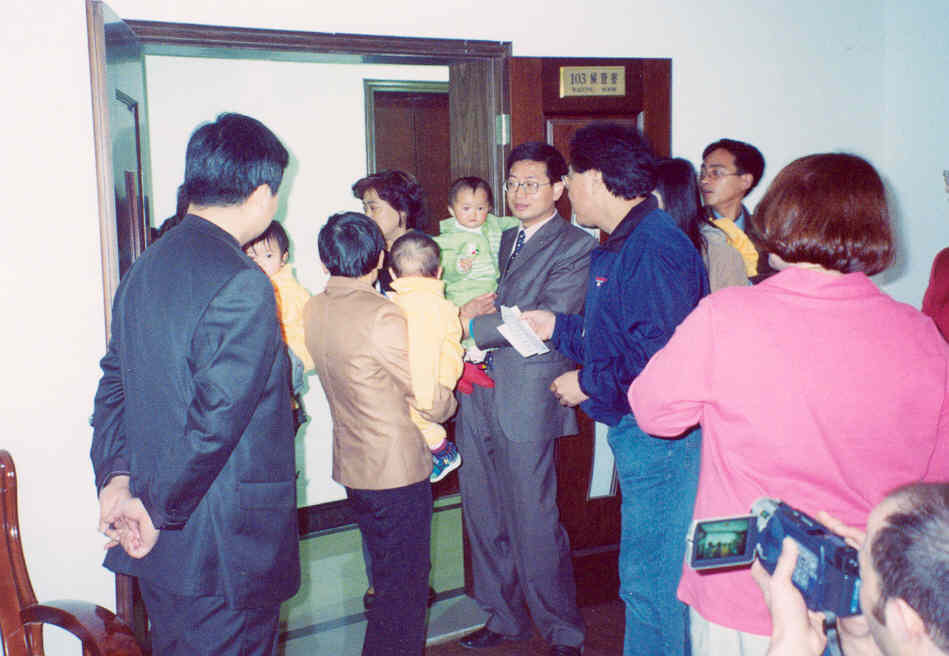
But there I was, in a crowded room, with nine other families that I had just met within the prior forty-eight hours. All of us were checking our cameras. Some paced the small area. All of us were waiting for that moment. And then it came. We could hear it, the sound of babies. Soon, ten families would be “born” or at least grow in size. This picture is the actual director of the orphanage where my daughter came from, and she is in his arms. I have to admit, this is not my photo, but one taken by another parent. But it shows the first moment, that I laid eyes on my oldest daughter.

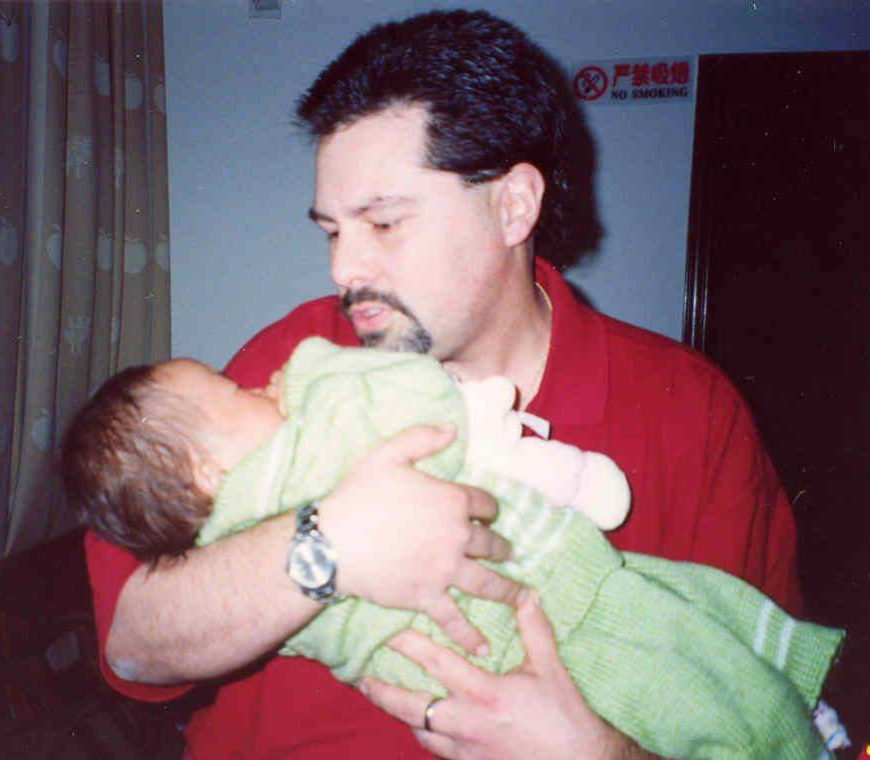
And then, she was placed in my arms. For the first time in my life, I was holding a child, a baby in my arms, not just any baby, my daughter. I was a Dad.

Now, if you are able to feel my emotions at this point, this, this is the moment that I had referred to earlier in my post, the moment of becoming a parent. While I cannot express what it is like to experience or witness actual childbirth, I feel pretty sure, that the emotional realization of the moment that you become a parent, either through childbirth, or adoption, the emotions are the same. The whole experience of the journey to China and back is an entirely full story on its own. But it was soon after my daughter was placed in my arms, I wanted to give my daughter a sister. I would return two years later and go through the process again.

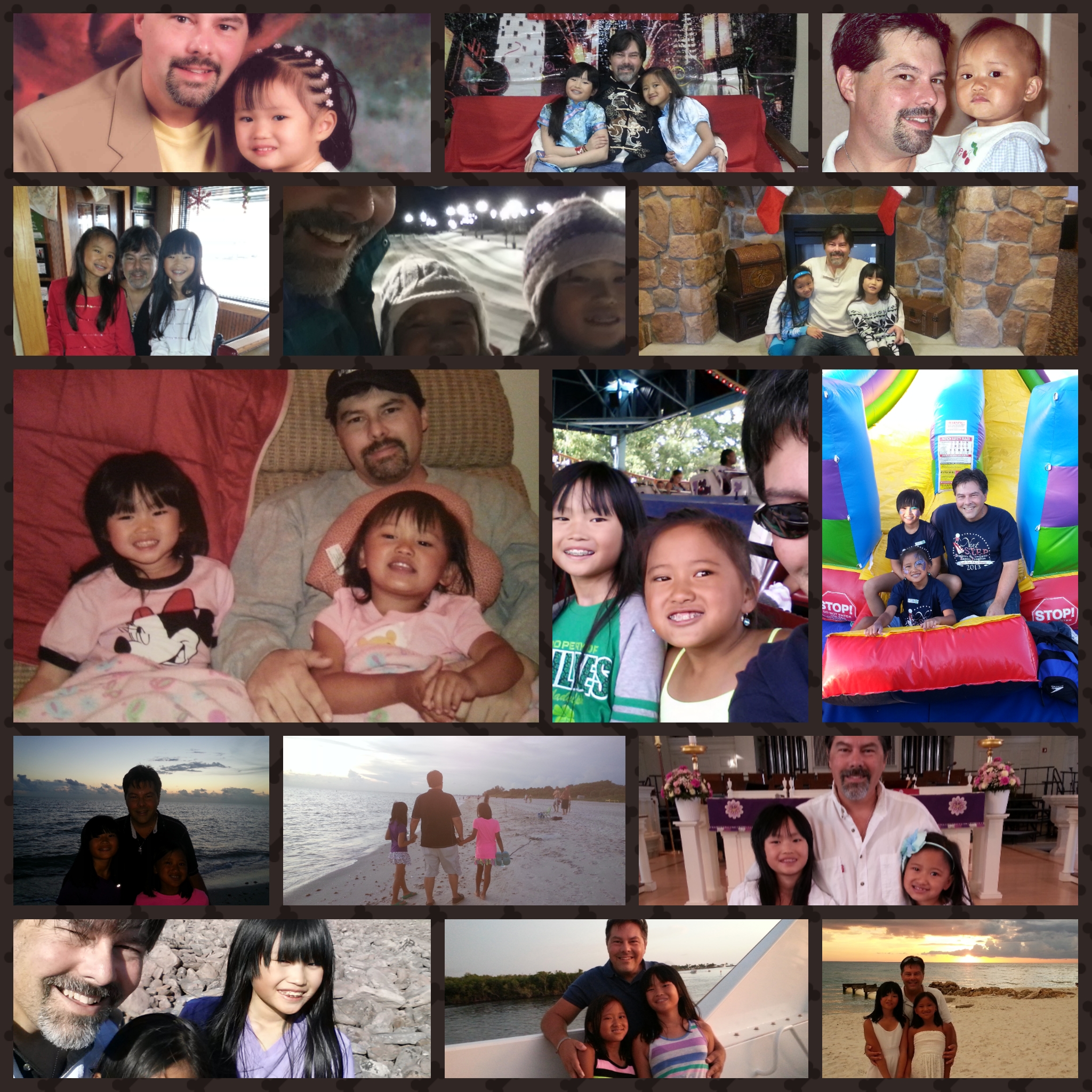
And so, my life went from being told I had a disease that had the potential to kill me to going full circle, not only surviving Hodgkin’s Lymphoma, but, becoming a Father, twice. And though I struggle with my health today, my daughters are my driving force to keep on fighting, no matter what gets thrown at me. No matter WHAT gets thrown at me.

Neither of my daughters were around during my Hodgkin’s days, but they have heard stories, and they have met two very important people in that part of my life, that they can now relate to what it took to get here today, my oncology nurse and my counselor who I leaned on so many times when I was at my emotionally weakest moments.

Today has several important recognitions to me in my personal life. But most importantly, my life changed forever on this date, almost two decades ago, the day I became a Father, for the first time. What a great ride it has been, and what I hope will be many more years to come.

Post Navigation