Paul's Heart

Life As A Dad, And A Survivor

Archive for the category “Cancer”

A Smile Has Left…


1485890456594

It seem like that last year and half, the world of music has just been devastated by losses of talent, influence, and just great music.  Again, music has lost another great musician, John Wetton, most notably of the 80’s super group, Asia.  He was just 67 years old, but had battled several serious issues late in his life from alcohol abuse, cardiac disease, and ultimately, it would be cancer that would take his life.

I can relate to Wetton on many things.  I was a huge fan of Asia, one of a handful of bands that I possess every recording, and not just their “hits” years of the early 1980’s.  And when it came to vocals, I honestly believe my voice is quite similar, if not identical to Wetton’s.  I had enough practice singing his lyrics in the indoor arena known as my car.  Although I was one of millions who thought Asia was going to be around forever, not many were like me, that there was a lot of inspiration and experience that made up this group.  Members of the band came from other great groups such as Emerson, Lake, and Palmer, Uriah Heep, King Crimson, Yes, and the Buggles (“Video Killed The Radio Star”).  I actually got to hear Wetton sing Downes’ “Video Killed the Radio Star” during Asia’s original lineup reunion.  I went from growing up thinking there were just two types of music, pop and country to learning that with FM radio, there were actually different forms of rock, including this type of progressive rock of Asia.

Over the last year, I have been saddened by all the passings of such great musicians like Glen Frey of the Eagles, David Bowie, Prince, George Michael and so on.

But it is not just because of the music of Asia, now being silenced (although surviving band member and co-founder Geoff Downes has stated Asia will go on), but other connections to Wetton that I have.

Though details are not discussed, Wetton had heart surgery.  I know that very well myself, that surviving a diagnosis of heart disease, can result in a re-birth if you will, of life.  And it seemed lyrically, on many of Wetton’s many band projects, not just Asia, but collaboration Icon partner Geoff Downes, and Wetton’s own solo work, religion seemed to find its way into many of the songs.

But it was colon cancer, that turned out to be too much for Wetton.  He had been battling it for a couple of years, after discovering a 1 kilogram tumor.  A quote in an interview following his diagnosis was advice from Wetton, for everyone to get checked.  It is a known fact, that your chances of surviving colon cancer, is to get it taken care of sooner than later.  And often times, pre-cancerous polyps are discovered during colonoscopies and removed, before they get the chance to turn into cancer.  And that should be a good thing.

So, why do not more people get colonoscopies done?  As a long term cancer survivor myself of nearly 28 years, I have to get colonoscopies every 2-3 years, while those without pre-existing conditions often only need to get them done once every 10 years once they hit 50 years of age.  Again, if polyps are found, they get removed before they turn into cancer.  And if they are cancerous, the cancer is treated sooner, than after severe symptoms reveal themselves (such as 1 kilo tumor).

There are a couple reasons I know of why some refuse to get colonoscopies.  One makes absolutely no sense, and is generally only considered by men.  The other, is generally agreed upon by both genders.

It is hard to believe that men often avoid colonoscopies, because they are afraid of “being turned gay.”  Because of how the procedure is performed, there are absolutely some men, who are afraid that they will develop homosexual tendencies.  Nothing could be further from the truth.  And I know from talking to some who expressed this irrational fear, expressed an embarrassment for feeling this way, following their colonoscopy.

For the rest, many complain about prepping for the colonoscopy, because of the amount of fluid that must be consumed to help “clean out” the body.  Feelings of bloating and nausea can be overwhelming.  And once you have gone through one, of course you know what to expect in upcoming colonoscopies, seemingly enough of a deterrent to not go through another colonoscopy.

But the fact is, colonoscopies save lives.  And though it did not make national headlines, the late John Wetton of Asia, made it clear, the importance of getting screened.

Because of my love for music, I do have a tendency to take the deaths of musician a bit more hard especially compared to other celebrities or athletes.  But because of a connection I felt to Wetton, musically, cardiac, and cancer, his death is hitting me a bit harder.
Chemo Cat


chemo-cat

*** author’s note***  Each year, I compose two stories to be submitted to Visible Ink, a writing program through Memorial Sloan Kettering.  The stories are published in an annual anthology consisting of other stories as told by other cancer patients and survivors from MSKCC.  Each other in general gets one story published per year.  I will post the other story when the book is published, but for now, here is the story that was 2nd place for me.

Emotional support comes in all forms when faced with a serious illness like cancer. When it comes to humans, that support has its flaws. People can be moody. Some can be “two-faced”. Co-workers often express jealousy as if the cancer patient is receiving favors for their battle with life. Family members may find themselves distancing from their loved one.

Animals on the other hand, offer unconditional support. Many times, fur friends may be aware that you are not feeling well, long before you do. It is this type of companionship that led to the concept of “therapy pets.”

Even on our worst days, when we come home from a long day, a dog more likely than not, will approach you excitedly with tail wagging, not even an accusational glare as to where you had been that entire time. And cats also, will snuggle up to you if they so choose.

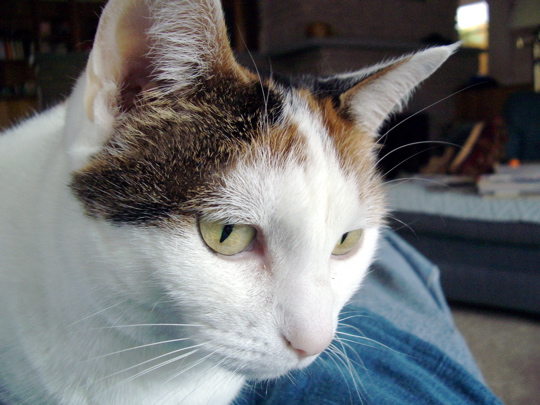
Shortly after I had been diagnosed with Hodgkin’s Lymphoma, besides selecting my medical care and direction, I made the decision that “pet therapy” would be a part of my cure. I lived in an apartment. Dogs were not allowed, but for a $25 fee, I could have a cat. I went to the local animal shelter, adopted “Pebbles,” a white female calico.

During the initial days of my diagnosis, she spent a lot of time on my lap, as I tried to gather my thoughts about the next days.

But it was not until I returned from my honeymoon, that new disease had been discovered, I would have to undergo chemotherapy. My wife went with me for the first chemo appointment. It was a 25 minute ride, which ended up being a critical detail to keep in mind. This was the amount of time that I had, to get home, get up three flights of stairs, race to the toilet, when nausea would finally make its presence known. That first day, I did not make it. My wife had driven too slow. There were too many traffic lights.

For the next fifteen treatments, I would be on my own. Knowing that nausea would hit me while driving, I ignored speed limit signs, accelerated at yellow traffic signals. Each appointment, I was consistent in getting to my apartment building, racing up the stairs, opening my apartment door, zoom past Pebbles, flip the seat of the toilet up, my body did the rest. After the first wretch, each time, I would glance over to the left, and there was Pebbles, just sitting in the doorway, watching me. She did not greet me as she normally would have on any other day, rubbing against my legs as I stood in the doorway. Pebbles knew my current situation was not normal.

Approximately a half an hour later, after I was certain that my nausea had ended, I had definitely hoped so because I was exhausted, I stood up, closed the toilet lid, washed my hands, my face, and brushed my teeth. I crawled into my bed, and passed out. I would wake up several hours later, upon my wife entering the apartment. Each time that I awoke, I looked over to my wife’s pillow, there was Pebbles, curled up and asleep also, clearly had been watching me when I crawled up into bed. My “chemo cat”, as I often referred to her from that point on, had actually been watching over me, keeping me company until my wife had come home from work.

Decades later, I would have several more pets, as I was challenged once again with severe health issues, pets were there for me every time. My biggest fear however was following heart surgery, with a freshly repaired breast bone, being greeted by my 100-pound Golden Retriever. It was not uncommon for him to stand up on his hind legs to greet me. This time, as if he sensed my fragility, simply sat right by my side, waiting for me to pet him. That is where he would stay as I recovered at home.

Today it is very common to see pets in chemotherapy suites and hospitals. The emotional healing power of pet therapy has been proven to lift the spirits of people who are ill or hospitalized. In two recent hospitalizations that I experienced, I had numerous visits from furry friends. After missing my own fur friend at home, my spirits were definitely lifted.

When my father went through his own battle with lung cancer, the very first day of treatment, he was greeted by a Goldendoodle, who simply rested his head on my dad’s lap. This was just one of the new changes in the atmosphere of a chemotherapy suite, which definitely has an impact on the psyche when dealing with such a difficult time period.

If My Survivorship Will Mean Anything… Part 3


What I am about to begin discussing is not conjecture, it is fact.  It is scientifically proven.  Only recently has medicine realized that closer follow-ups need to be made regular protocol to prevent damage not just from anthracyclenes, but any treatments.

In my time of treatment, there was not follow-ups other than bloodwork during my treatments.  If my counts were too low, the treatment was either reduced, or delayed.  But that was it, just bloodwork.  No other testing of any critical systems of my body.  And once I reached the magical 5 year mark, I basically vanished from the world of oncology until I was diagnosed with a “widowmaker” heart blockage caused by my treatments 18 years earlier.

At least in major cancer centers, today, patients are getting the “baseline” studies done prior to treatments, and depending on the drug being used, follow-up studies during treatments, and of course annual follow-ups following the conclusion of treatments.  And this is for life.  Finally, after realizing that Hodgkin’s survivors were living long enough to develop late effects, medicine finally had to learn how to not only recognize us, but how to treat us.  Sure, treatments have gotten better and a bit safer, but there is still a long way to go.

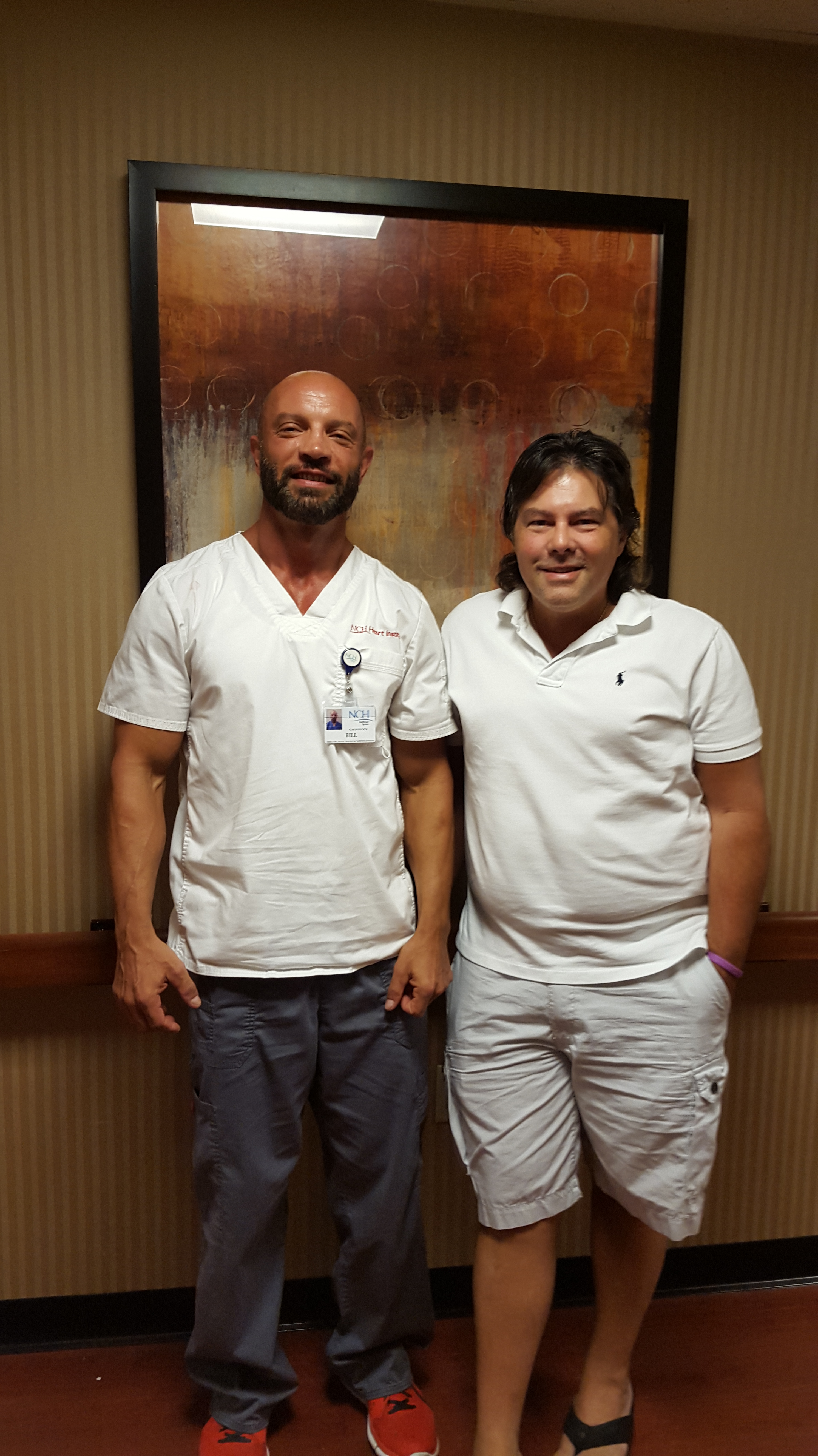
Now, I would like to introduce you to Bill Shirkey.  I got to meet Bill shortly after Michael had passed away.  Bill is the director of cardiodiagnostics and cardiac imaging at the Naples Community Hospital Heart Institute, associated with the Mayo Clinic.

20151001_123217

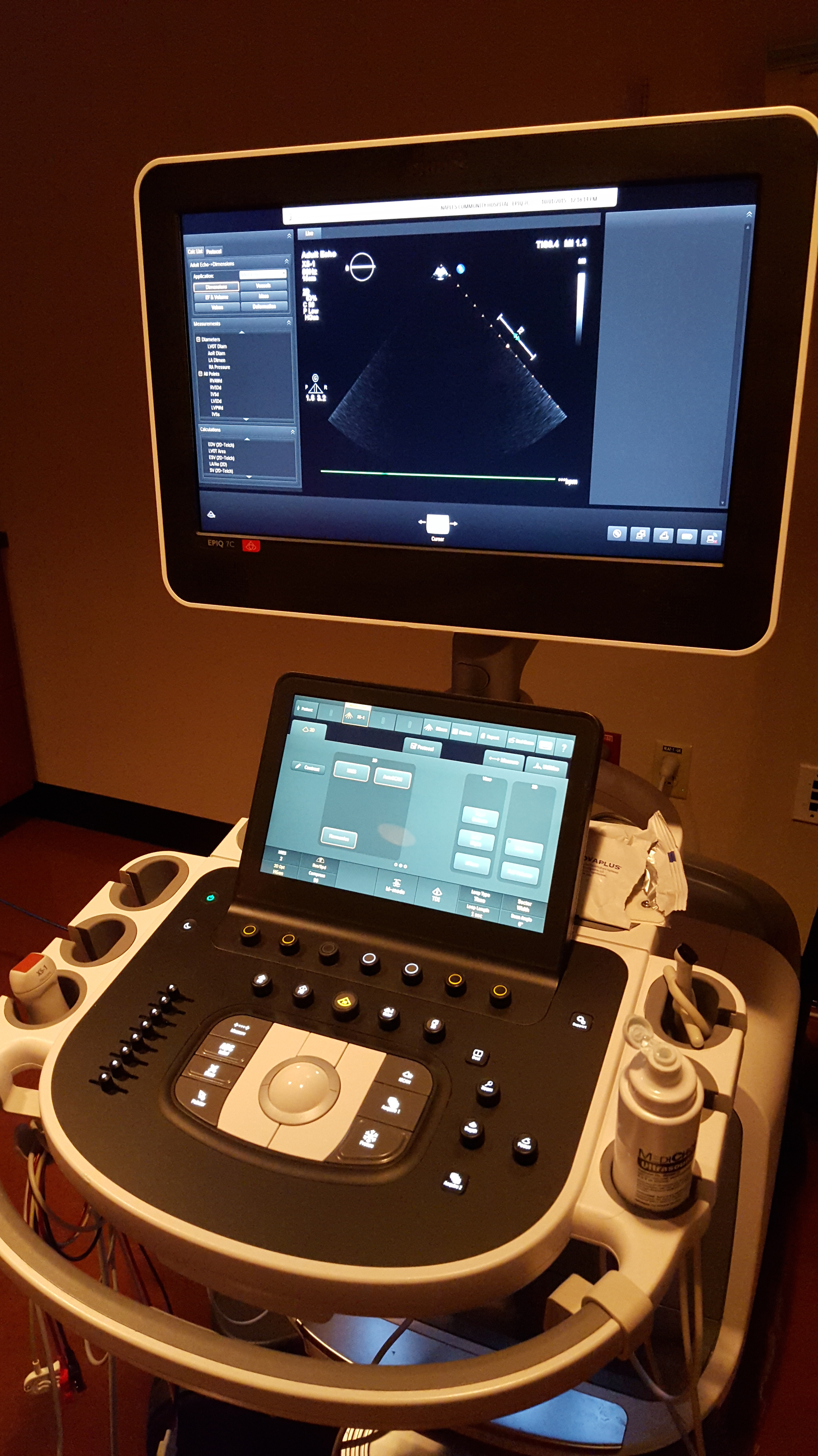
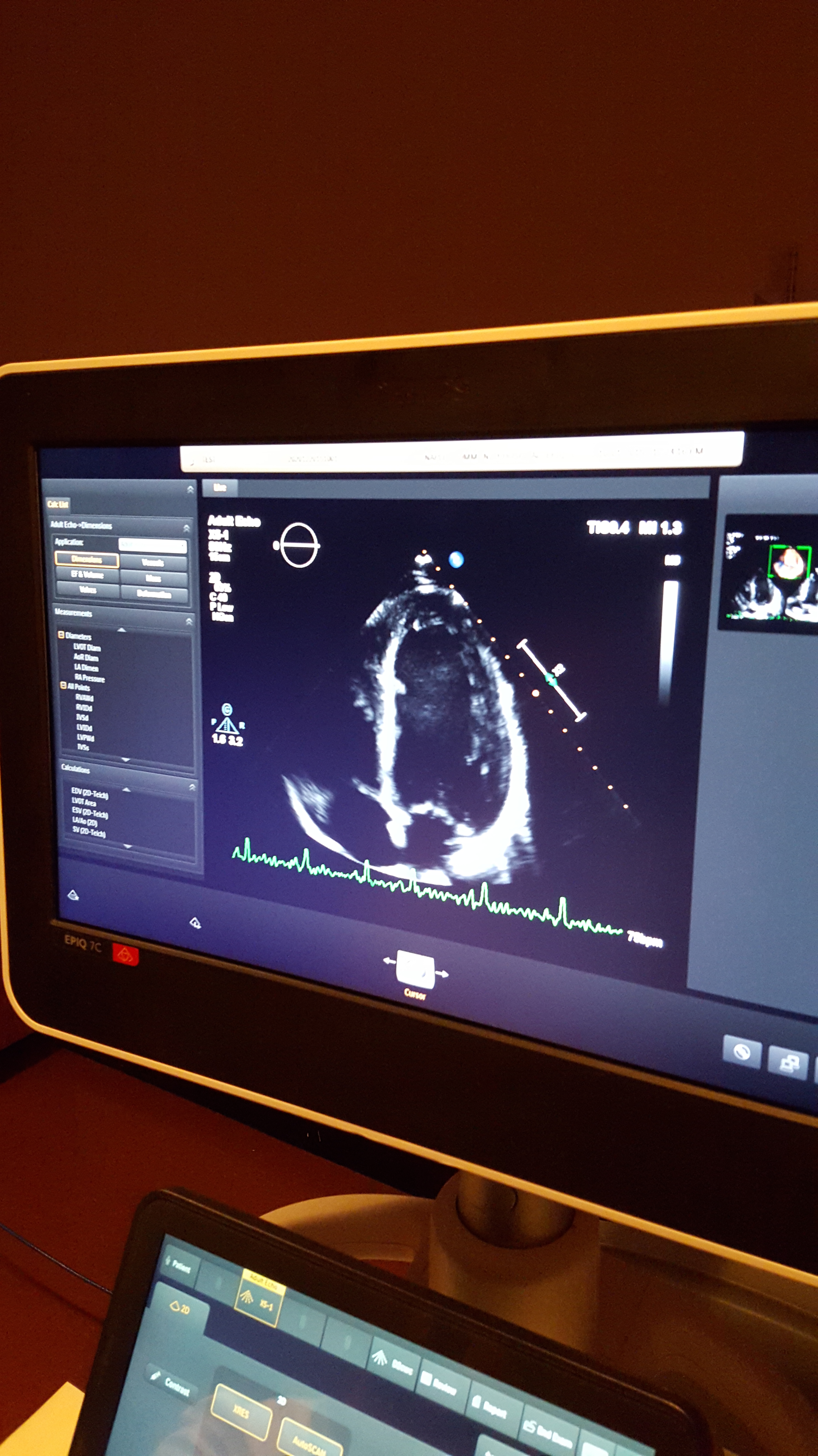
I sat down with Bill to discuss the exciting and lifesaving technology that he has studied and uses to help prevent issues such as damage from cardiotoxicity from chemotherapy as well as other health issues.  I am also going to try and upload the video of demonstrations that he gave of the equipment used, and how it works.  If I cannot do it in this format, it will be uploaded to the “Paul’s Heart” Facebook page.

Paul:  What was the result of your studies?

Bill:  The development of a protocol for oncology patients receiving cardio-toxic chemotherapy drugs.

Paul:  Please describe the equipment you use and its accuracy.

Bill:  The Phillips EPIQ 7.  There is a high degree of sensitivity.  It is the top machine for this type of work on the market.

20151001_121846 20151001_121939_001 20151001_122448 20151001_123057

Paul:  What are the benefits of this technology?

Bill:  We can predict cardiotoxicity in the early stages before there is permanent damage, and can help guide therapy modifications or changes.

Paul:  How soon can damage be recognized with this technology?

Bill:  A few months after therapy starts.  In some cases, as early as following the first dose in the case of anthracyclene drugs like Adriamycin.  The damage to the heart muscle can be seen as soon as the first or second treatment, and dealt with before the danage to the heart is too severe or permanent.

Paul:  While this is a definite benefit to current or new patients, is there a benefit for long term cancer survivors who are decades out in remission?

Bill:  Yes.  3D echo would give an accurate size and ejection fraction.  Strain would indicate myocardial performance.  It would help guide therapy if needed or establish if patient is clear cardiac-wise.

Paul:  Who else is using this technology?

Bill:  We are the only site in Naples using this technology.  Only some oncologists are aware of this technology.

Paul:  How expensive of a test is this?

Bill:  Generally around $1500-$2000 which is much better than the cost of medical intervention for severe heart damage.

Paul:  Are there any harmful effects of the test itself?  How long does it take?

Bill:  There are no harmful side effects of the test itself.  Baseline testing takes approximately 30-35 minutes with follow-up testing around 20 minutes.

(it should be noted, Bill actually demonstrated the machine for me on himself to show how it worked)

The videos of demonstrations and interviews cannot be uploaded on this blog.  I will post them on “Paul’s Heart” on Facebook so that you can see these for yourself.

Please, “share” this post.  With Adriamycin being used to treat not only Hodgkin’s Lymphoma, but also breast cancer, this information and knowledge is crucial.


Post Navigation