The Disappearing Phenomenon
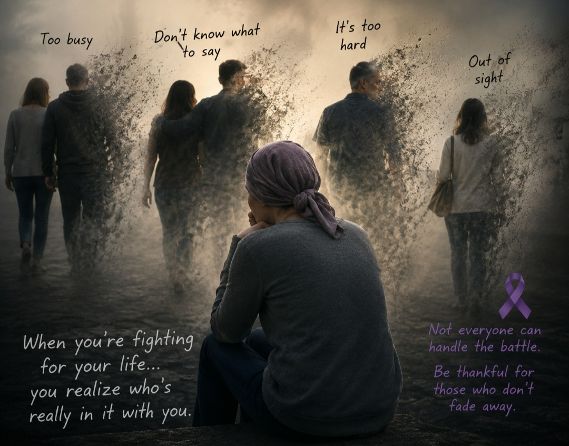
Illness doesn’t just reveal the strength within you – it reveals the strength, or absence of it, in the people around you. That realization can be painful, but it often leads people to build deeper, more authentic relationships with those who choose to stay.
So where does everybody go? Why do those around us, we consider our close friends and family, disappear when we face extreme health challenges such as cancer and other serious health issues?
There isn’t one universally accepted psychological term for this behavior because people leave for many different reasons. Depending on the reason, different concepts may apply. Social withdrawal because they feel uncomfortable, overwhelmed, or don’t know what to say. Avoidance coping, avoiding situations that cause them emotional distress, such as someone else’s cancer. Compassion fatigue which is common among caregivers or healthcare professionals who simply get emotionally exhausted. Emotional avoidance because being around someone seriously ill evokes fear, sadness or thoughts of mortality. Relationship attrition where the relationship just gradually fades over time, accelerated by the illness. Stigma or illness-related stigma when people distance themselves because of misconceptions (like cancer being contagious), fear or discomfort. And disenfranchised support when someone doesn’t receive the emotional support they reasonably expected.
Among cancer survivors, this experience is often described more simply as “the disappearing friends phenomenon,” or social abandonment during illness. These are not a formal diagnosis, but widely recognized experiences in survivorship communities.
Illness has a painful way of revealing who cannot walk through the storm, but it also reveals the rare souls who never let go of your hand. Hold tightly to them, for they are your true family and friends.
In most cases, it isn’t that anyone stops caring. Quite the opposite. Having to hear that someone they know or are close to is facing a life and death challenge, is something they will never forget. It is that serious illness changes relationships in ways most people are unprepared for.
When your world grows quiet and the crowd disappears, don’t mistake their absence for your worth. Some people leave because the road is hard, not because you are unworthy.
Some people disappear because they are afraid. They don’t know what to say, so they say nothing, and that is actually a good thing. They worry that they will say the wrong thing, remind you too often of your illness, or have to confront the possibility that something similar could happen to them. And then there are the thoughts and fears, that the one they care about so much, may not survive.
The people who walk away during your darkest days don’t define your value. The ones who stay remind you of it.
Others disappear because illness is inconvenient. Yes, I know, but you are the one going through it. When life becomes centered on appointments, treatments, fatigue, and uncertainty, relationships that were built around fun or convenience may not survive. Crisis reveals which relationships were deep and which were mostly circumstantial, and finding out what you thought were most dependable, and not after all, can be devastating (such as a marriage).
Cancer doesn’t just test the body, it tests relationships. Some will fade away, but those who remain will become the light that helps guide you through the darkness.
Some people are overwhelmed by their own lives. They intend to call or visit, but days become weeks, and eventually guilt keeps them away even longer.
You may lose people you thought would never leave, but you will also discover people you never knew would stay. Sometimes the greatest gift hidden inside hardship is learning who truly belongs in your life.
There are also people who simply cannot tolerate suffering. Seeing someone they care about in pain forces them to face their own fears about mortality, aging, and loss. Distancing themselves becomes a way of protecting themselves emotionally.
One of the cruelest side effects of serious illness is discovering that not everyone has the strength to stand beside you. But one of its greatest gifts is discovering those who do. Treasure them, they are the people who love you for who you are, not just when life is easy.
There are those who will surprise you. Sometimes a casual acquaintance, a coworker, a neighbor, or even a stranger becomes one of your strongest supporters. Illness has a way of revealing character more than history.
Many survivors talk about this as one of the hidden losses of cancer. They expected to fight the disease, they did not expect to grieve friendships. The loneliness after the diagnosis and sometimes after treatment ends can be as difficult as the physical side effects.
Paradoxically, illness can also make your world smaller, but richer. While the number of people around you may decrease, those who remain often become more authentic. You learn who will answer the phone at 2am, who will sit beside you in silence, and who loves you without having to be healthy.
For many survivors, this realization changes them permanently. They become less interested in superficial relationships and more protective of their time and emotional energy. That is one reason people often speak about “the new normal.” The illness doesn’t just change the body, it changes your understanding of friendship, family, priorities, and what love really looks like. Serious illnesses don’t necessarily change the people around us, but they often reveal who those people already were.
And no doubt, while that revelation can be heartbreaking, it can also be freeing. It allows you to invest in the people who stay, welcome the unexpected people who step forward, and let go of relationships that existed only when life was easy.
For many of us cancer survivors, the question eventually changes from “where did everybody go” to “who walked with me when I needed them most?” Those are often the people who become family in the deepest sense of the word.
Perhaps the most important thing to remember is this, that the behavior is usually more about the other person’s ability to cope than about the worth of the person who is ill. Some people genuinely just don’t know how to face suffering, while others step forward in remarkable ways. Just as there is no training for developing a serious illness such as cancer, there is no training for being a caregiver either. We are both thrown into these rolls. The realization can be painful but it often leads people to build deeper, more authentic relationships with those who choose to stay.

