Paul's Heart

Life As A Dad, And A Survivor

Archive for the category “The Heart”

A Question That Just Won’t Go Away


“Has anyone gone through, or known anyone who has gone through, ‘natural’ treatments and beaten Hodgkin’s Lymphoma?” Across the many social media pages that I follow, this question comes up at least once a month. It is an innocent enough and understandable question to ask, and is likely asked to the patient’s oncologist directly.

But stereotypes, stories, and misinformation, only add to the desire to find something easier to tolerate or be treated with than “what we’ve heard.”

The answer, simply, anecdotally, and scientifically, is “NO.” Before I explain, I want to preface my position. I support the use of anything supplemental or “alternative,” if approved by the treating oncologist. But because of possible interactions with the treatments, strict adherence to the advice of the oncologist is necessary to produce the best chance at long term remission.

I also need to state, I have several friends who study Chinese medicine and other holistic means of treatments for various maladies. Some of the things they have come up with, do provide benefits for their patients. The problem, through no fault of their own, there is no large amount of data to support their efforts as those results from NIH backed studies. That is not to say they do not work. The numbers just are not there to support the risk.

I was diagnosed with Hodgkin’s Lymphoma 35 years ago this month (called Hodgkin’s Disease back then). Over these four decades of my survival, Hodgkin’s has been celebrated for having one of the higher remission rates for any cancer, ranging between 86% to 92%, but with scientifically proven treatments. Chemotherapy, radiation, or both, are the best options for remission of Hodgkin’s Lymphoma. End of discussion.

The question came across my feed yesterday, but also had another qualification, the patient in question was stage 4, the worst stage for any cancer. But across all of the pages that I participate in, I have never heard one person try to be treated 100% “natural” or “alternative” for Hodgkin’s Lymphoma, or even survive. I am not saying that it cannot happen. But as I have said, I have been at this a long time, and I know of thousands of survivors around the world over all of these years. Not one has done it by “natural” or “alternative” treatments alone.

Now while 86%-92% still means that 8%-14% do not survive even from standard treatments, it is more than likely there were other circumstances complicating the treatments.

So what happens if someone decides to ignore a likely 99.9% advice response to take the oncologist’s opinion to proceed with chemo, radiation, or both? One factor that has not been discussed yet in this post, is “time.” It may be cliche, but when it comes to treating any cancer, especially Hodgkin’s, “timing is everything.”

With the exception of yours truly, and the delays I caused by my denial (you can read about it in my book “Paul’s Heart – Life As A Dad And A 35-Year Cancer Survivor”, hopefully being published soon), doctors do not waste any time getting diagnosed, staged, and beginning treatments. Doctors know the importance of getting the treatments started as soon as possible.

So, let’s say, this person will be the first person I am aware of to ignore the unanimous advice to go the standard treatment method, and go “natural” or “alternative.” What follow ups and protocols are being used to determine any progress because likely, if you are not going through standard treatments, insurance will not pay for the monitoring that is typically done? I will play Devil’s advocate, and say that all monitoring will be the same as with standard treatments, just because. But the one factor that cannot be guessed upon, is will it work. And unless there is a major study somewhere, and I am not talking about the conspiracy and false information sites that are out there, there is not likely to be success. How much time will have been wasted, trying a futile “treatment?” And now, how much further or worse has the cancer grown? Likely, a lot.

Look, if you happen to be in the 8%-14% that do not respond to the treatments and you want to try any other means possible, then of course you go for it. But when the numbers are that overwhelming, you need to go with what has been proven and works.

No, chemotherapy and radiation are not easy to go through. I have no problem stating this fact, my treatments are no longer used today because medicine found that they could still have the great results of remission, by using less than what I was treated with. And there are survivors in remission longer than me, who went through worse treatment than I did. But patients have something today that my fellow long term survivors and I did not have back then, mitigation for the side effects to make the treatments more tolerable, and social media for support.

Of course, then the next situation that comes up, being told you are in remission and still have more treatments to go. What do you do? But that is for the next post.

Takes A Licking


A few stories came across my feed this morning from pages that I support in regard to heart surgery survivors. Though it has been over fifteen years since my emergency open heart surgery to perform a double bypass, I recall every detail as it if happened only yesterday (much to the dismay of those in my life frustrated by my inability to remember five minutes ago).

The first deals with aftercare, as in one of the first things upon discharge, or just before discharge. There is a huge scar in the middle of the chest now, protected by a bandage or sometimes called a dressing. Under normal conditions, when a patient returns home, there is most likely going to be a visiting nurse for the first week, just to make sure the incision is healing properly, and vitals (blood pressure, pulse) are still doing well.

This particular survivor’s dressing had not been removed prior to departing the hospital, so it was planned to be removed with the visiting nurse’s first visit. The nurse never came. And as most wounds heal, they have a tendency to itch, and the survivor became an impatient patient, wanting to remove the bandage on her own.

To many, this would seem an easy thing to resolve, but to someone recently dealing with the recent trauma of heart surgery, we look for either reassurance or direction. There is a reason a health professional should be the one to remove the dressing, and that is mainly, to examine the incision. While a patient looking out their chest wound may feel confident that all looks fine, a trained professional should be the one to make that call. The last thing that needs to happen is to have an infection develop, which would only lead to things worse than the heart surgery itself.

For me it was simple, make a call to the surgeon’s office, or cardiologist, and make them aware of the “no show” nurse. While the doctor may feel it is okay to remove the bandage yourself, there is still the need for the patient to be seen while recovering at home.

As we recover from heart surgery, there are many adjustments that need to be made, some immediately, like sleeping positions, and some over time, such as diet and activities. The next two situations deal with this.

One patient who is seven weeks post surgery, has thoughts on the upcoming Winter holiday season, which will mean a lengthy drive, both ways for them. While this is still two months away, comfort of the chest and overall comfort can still be a legitimate concern.

My ride home from the hospital was an hour long, bumpy and shaky ride. I often felt like riding in a covered wagon on a dirt road would have been a smoother ride. But travelling a couple months, while might still involve comfort, tolerance by the rest of the body could be an issue. Full recovery from open heart surgery, is not usually considered until three months, and that is when it is followed by cardiac rehab, possibly physical rehab. And honestly, you do not need to have gone through heart surgery to experience the fatigue of not just a two hour drive one way, but a two hour drive back, all in the same day.

There is a fairly good chance, that the patient will be fine, perhaps nothing more than a bit more tired, and then hopefully be allowed the opportunity to get the additional rest needed. But there is also a chance, that this kind of trip might still be too much to handle. I did make the recommendation that if they can, use the “heart” pillow they were given, to place it between the seatbelt and their chest to provide some cushion. Ultimately, it might even be a gameday decision whether or not to make that trip, and under no circumstances should they feel guilty if that morning they decide, it is just too much.

The final story is a bit more extreme, and unfortunate. While I disagree with the way the patient/survivor is acting, I do feel that his care team should have done more at least in the beginning.

When anyone undergoes a major lifesaving surgery, regardless what it is, it often gets referred to as a second chance at life. For some of us, we may need third, fourth, fifth or more, depending on the circumstances. Regardless, following this surgery, it is supposed to be about appreciation for something almost taken away, a desire to do things differently, a “want” to live.

The writer expressed that her husband had just passed seven years from a quadruple bypass. In spite of this effort to save his life, he chose not to give up smoking, drinking, and refused to take any of the medications given to aid his recovery and help his longevity. The day before she wrote, he was in bad enough pain, that he “dropped to his knees.” He uses a nitro “spray” at least twice a week and has been exhibiting other symptoms. These things alone are concerning enough to go to the ER for attention.

Instead, she was focused on a “Pandora’s Box” question, how long the bypass would hold up, and was told by the doctor that likely ten years. To be honest, doctors generally will not give a time frame, at least not exact, because every situation is different. Mine for instance was over fifteen years ago, and is still quite patent, meaning I have many more years yet. But his health is bad enough, that she is concerned with his lack of compliance to do what was in his best interest, might he actually have less than ten years. He refuses to be seen by doctors. Some of the replies she is getting are quite harsh, not what she needs to be hearing, though truthful, his seeming lack of appreciation for a second shot at life.

There is a key component to his case. I see no mention of any emotional support. And as anyone who has undergone open heart surgery, the emotional issues that arise, in nearly everyone, need to be addressed on some level at some point. And it is clear that his were not. And it is unfortunate that he simply chooses to have his wife and caregiver suffer emotionally as well. His outlook clearly is not good.

It has been over 15 years since my first heart surgery. It was four years ago since my second heart surgery, and tomorrow marks the 2nd anniversary of my third heart surgery, to replace my aortic valve.

If I lived my life by “how long” each surgery will last, I had already passed the first surgery, and have six years for the second, and five years for the third. But here is the thing. I am not throwing away the chances given to me to live as long as I can. There are so many counting on me, and they mean everything to me and I would never want to hurt them by not giving a damn. That is not to say, that even doing the right things is guaranteed to get me the maximum time, then again, it could get me longer. But it starts with me, having an appreciation for the efforts made, on multiple times, to save my life.

A Child’s Grief


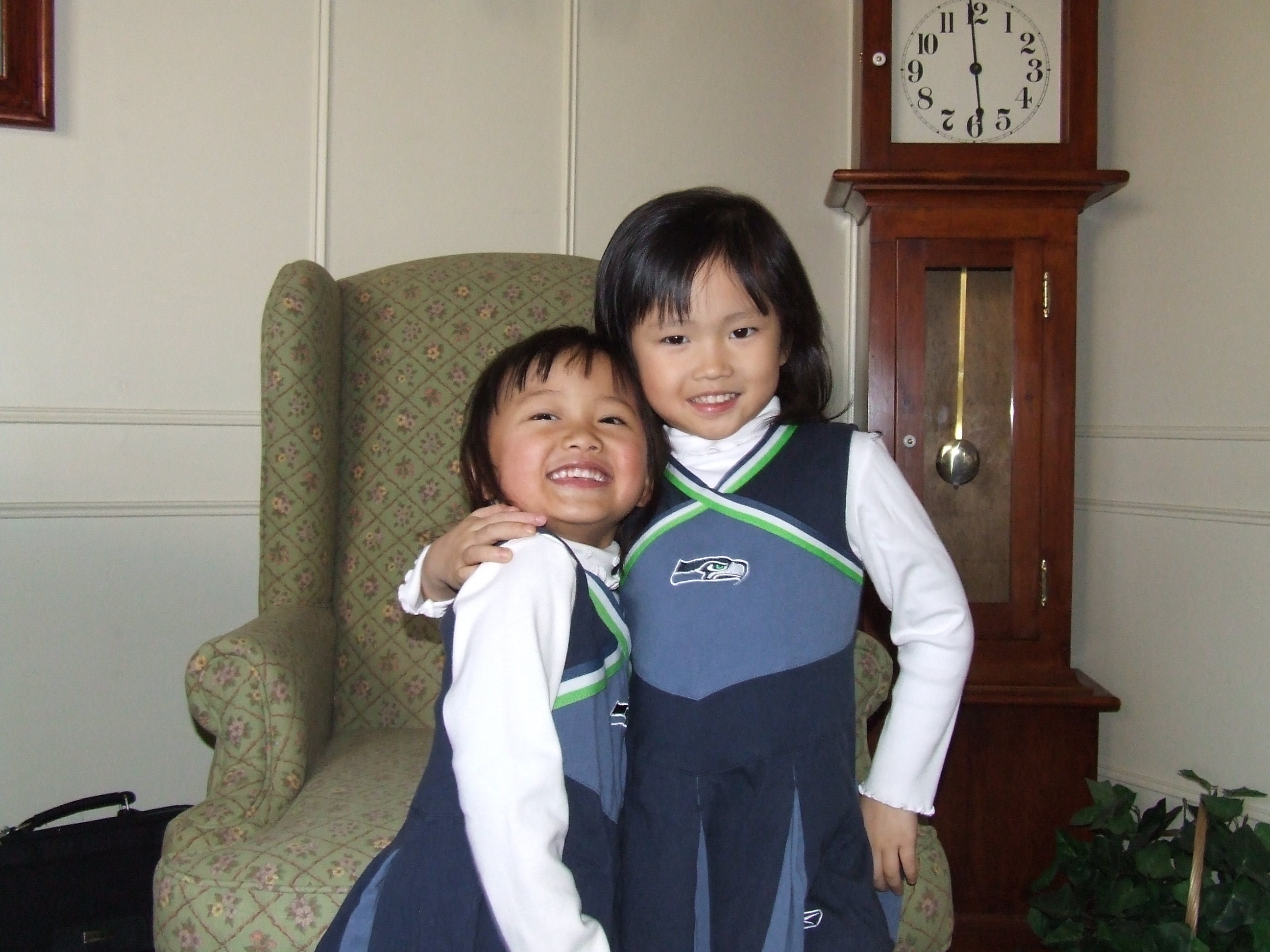
Sad news came less than a week ago. A close friend of mine, more like a brother to me, passed away. He was sixty-three years old. As the picture above, from over fifteen years ago suggests, he was clearly too young. He had been diagnosed with ALS, Lou Gehrig’s Disease earlier in the year, which progressed rapidly. It is difficult to feel anything less than relief for someone who’s fight against ALS comes to an end, because the progression and results of the disease are just so cruel. Nonetheless, all who knew him, and care about his loved ones, are devastated by the loss.

This is actually the fourth time in less than twelve years that I have lost someone close to me from ALS, and the second time for my daughters. They lost their Uncle Mike, my brother-in-law back in 2012 to ALS. The two others that had passed away were friends, a co-worker, and a school board campaign running mate. Three out of the four, all had young children or barely adult age, when their fathers passed away.

All of these men left wives behind, again, three of them to not only grieve the loss of their soul mates and best friends, but also to provide support for their young, grieving children. My brother-in-law’s daughter was in her mid teens, my campaign running mates children were not even teenagers, and the small children pictured above are now in their early twenties.

For me personally, I had not experienced the loss of a parent until nine years ago with the passing of my father from lung cancer. I was in my later forties at the time. I know the loss that I still carry today following our unique history with each other, with me wishing I could have had more time to make up for time lost in my childhood.

My daughters do not know this level of grief. However, both of them do have several friends throughout their childhood who have experienced a parent’s death, whether suddenly or following an illness. My children have been taught empathy and always gave that whenever any circumstance came up that was hard for one of their friends. And as I said, their Uncle Mike passed away before they were ten, so they do not recall how difficult it had been for him in his fight against ALS.

But for Chris, there is a special bond with my one daughter, though both of my daughters have always been treated equally as family by he and his wife. My older daughter had been adopted together with their younger daughter, as we travelled together. And I made sure that my children stayed in touch with them throughout their childhood, through visits and reunions. The picture above is just one memory of many that my daughters are able to remember him during a time that was much happier.

It cannot be helped however, that my mind retreats to a very dark place every time someone in my life passes away, especially when there are young children involved. My health has been a struggle for years, with one health crisis after another, life threatening, two near fatal events. As I dealt with the first one, a “widow maker” heart blockage, that resulted in the statement from my cardiologist, “it wasn’t a question if you were going to die, but when,” referencing the imminent fatal heart attack that could have happened. My main thought used to be at one time, “what would my employer do without me? They need me,” trying to stall or prevent the corrective surgery. Following that emergency bypass surgery, I found out. They carried on without me. And when I recovered, and returned to work, it was business as usual. But clearly, they had done without me.

Reality had set in however, when told that I was that close to death. Work may have been able to get on without me, but my daughters were five and three years old at the time. That is when it sunk in, the pain that they would have had to endure, without me in their lives. Unfortunately, this scenario has played out so many times now, and fortunately my daughters still do not have to deal with that type of loss. And as my friends are now dealing with the loss of her husband, their father, I know my daughters are thinking of all of them, while at the same time realizing how serious their father’s health is, and not to take any time for granted.

I have had many over the years tell me that I am depress them thinking about death all of the time. That I “could be killed tomorrow crossing the street.” I am sure you have heard that expression. And while that possibility may be true, there is one main difference. A person that says that, does not have someone “pushing them into the path of the car,” making reference to the conditions of my body, being so compromised from the cancer treatments I went through years ago.

Studies have shown, survivors of Hodgkin’s Lymphoma treated decades ago, like me, have bodies that are internally artificially accelerated in age, by twenty to thirty years. To put that into perspective, I am sure you have heard comments like “smoking takes away so many years” or “eating a diet high in fat decreases life expectancy”. My cancer survival is the same way.

The fate of my fellow survivors occurs one in three ways. The first, those who have no idea what is causing their unusual health issues, because they were never told of their likely late side effects. The second, those who faced one corrective surgery after another, and then one too many, impossible to overcome complications. And the third, those whose bodies simply had enough. This just recently happened with one of my fellow survivors I just wrote about. Though she dealt with several issues, she had not felt anything imminent, and proceeded on a vacation, when she suddenly passed away. I am not in the first category, and so far, I have gotten through all of my surgical procedures and health events. Which can only leave me wondering, if I might be in that third possibility.

So that brings me back to my friend, and those others who passed from ALS. There was a time, I honestly thought I would have outlived them. And they would then be comforting my daughters.

Getting back to the comment about me “thinking about death all the time.” No, I don’t. I think about living, all the time. In order to do that, I need to do two things. The first, I need to listen to my doctors treating all of these issues, and follow their recommendations. The second thing, I have goals driving me, and of course they are associated with my daughters. It has not been easy getting to each, but I have done so, and there are so many more that I want to be around for. So no, I don’t think about death all of the time. I think about living. I live for my daughters because I am arrogant to believe that I can prevent them from the hurt of grief, though I know I have no control of my fate. That much is clear.

My heart is heavy not only for my friend’s wife, but for his two daughters. The hurt I have for my father I am sure pales in comparison to what they are feeling this evening, having only such a short time with their father, and so much more to experience in their lives. I wish there were more than just words to help them during this difficult time. But as one comment that I have made to them, there are just so many great memories and stories that I have of my friend, that while his passing was indeed tragic, it will not be the end that dominates our hearts as time goes on, but rather all the good times we shared.

But you will definitely be missed my friend.

Post Navigation