September is a busy month for raising awareness of certain cancers; blood cancer, ovarian cancer, prostate cancer, thyroid cancer, leukemia and lymphomas – often referred to as “childhood cancer” though clearly strike at any age.
If you have followed this page, followed me even before I began “Paul’s Heart,” I have been involved with the world of cancer over 36 years as a patient, survivor, and advocate. I was diagnosed with Hodgkin’s Lymphoma (actually called Hodgkin’s Disease) back in 1988. I was treated with levels of radation therapy and a chemotherapy cocktail I was not expected to survive, let alone barely tolerate.
Today, I deal with late side effects from both of those treatment regimens that were used to save my life, creating situations almost as fatal as the cancer itself. If you look at the list of “I know”s pictured above, I experience each and every one of them to this day, thirty-six years later. In fact, just today, I learned of a friend who passed from a different cancer, not even a year after diagnosis.
I continue to write, record TikToks and YouTube videos, give speeches, and my most important role as a survivor, advocate and be a voice for others who feel voiceless or without knowledge because it has been the only way for me to give back. My body is so damage from those treatments, I cannot give blood or donate my organs. The only way I can help others is with my experiences. And it is my plan to continue to do so, always with the mentality “if my posts help just one”, though I know my words have reached so many more, until I can do it no more.
I am at the point now, approaching a major milestone, the age of 60 at the end of the year, something I definitely never thought I would see. My survivor’s guilt never takes a break as I say goodbye to one survivor after another, from the same cancer as me, either from the cancer, or the late effects. And even harder for me to deal with, outliving those in my life who have not had to deal with health adversities, something I struggle with constantly.
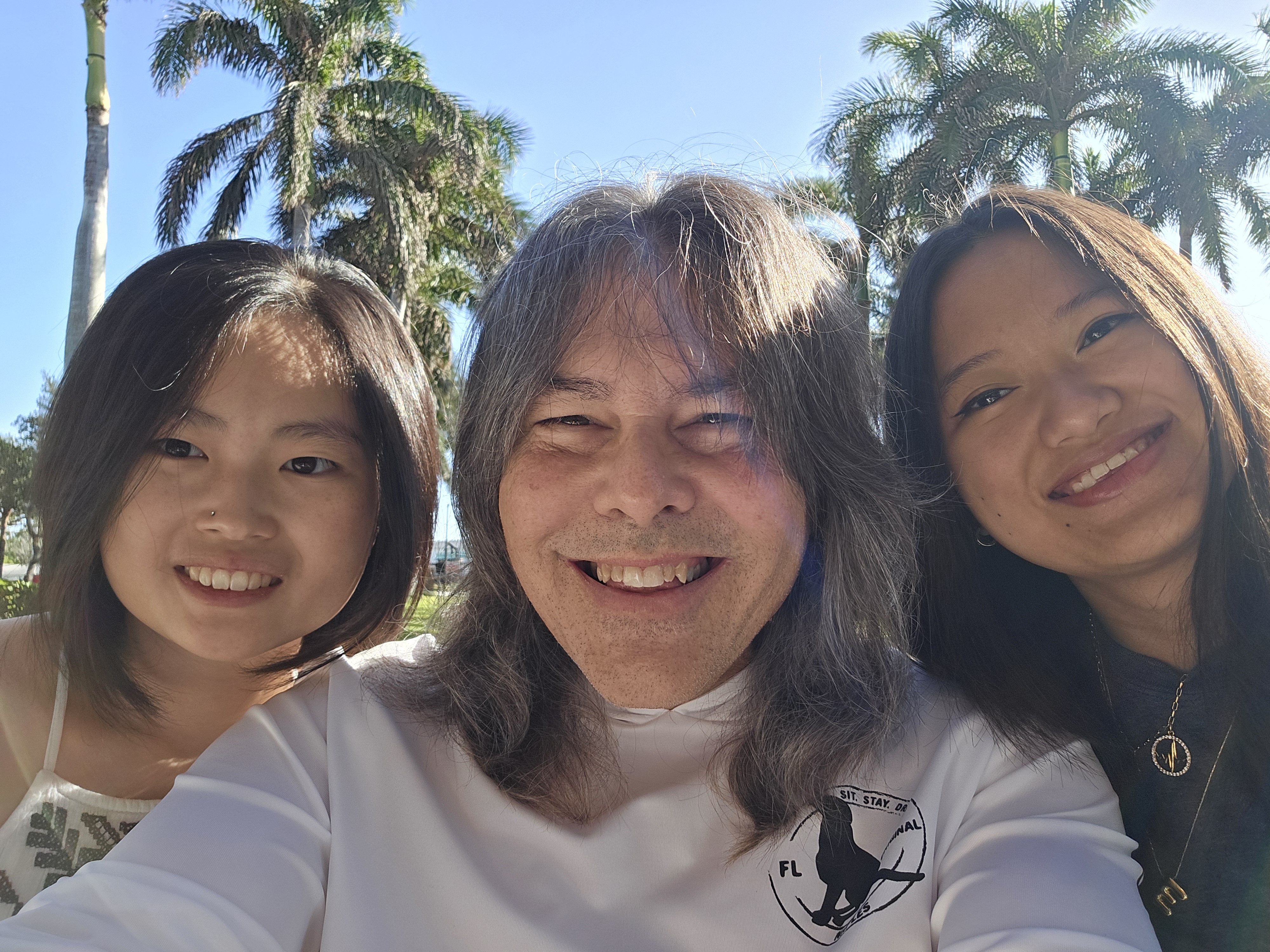
If I can attribute anything to my longevity, and though they were not yet born when I dealt with my Hodgkin’s, my daughters were there, and have been there, with every health issue from my treatments that I have faced, my inspiration to keep fighting. Yes I know, I cannot control when my body has had enough, as evident by my friends and fellow survivors before me, but there are so many more milestones I want with them, and that definitely drives me.
To my fellow survivors, celebrate this awareness. Any of us who have taken on cancer, knows how hard it was to get through. And for those who are no longer here, you are definitely not forgotten.
I want to run something by you. I do not normally do this, but I want to see your reaction. If you follow “Paul’s Heart”, you know I have a long list of health issues related to my treatments for Hodgkin’s Lymphoma over 35 years ago. These health issues continue to progressively get worse, and yes, some new ones even develop. On a recent visit with one of my doctors, as my cardiac concerns have once again increased, a new prescription was ordered. The drug is particularly intended to deal with congestive heart failure, which I was diagnosed with several years ago. The cost for the prescription for a 90-day supply as I will be on it long-term? With insurance, $863!
WHAT THE SERIOUS FUCK! ARE YOU FUCKING KIDDING ME? THAT IS ALMOST AS MUCH AS I PAY FOR THE INSURANCE THAT ALLOWS ME TO SEE THE FUCKING CARDIOLOGIST THAT I DO!
So, the litmus test. Of course you know I very rarely if ever use curse words in my post unless I am quoting someone else. But seriously, which upsets you more right now, my choice of language? Or the situation of unaffordability of a life-saving drug for me?
The high cost of prescription drugs is nothing new. Big Pharm annually makes a huge haul at the patients’ expense. As patients, we are at their mercy if we want any chance of getting better. The thing that makes me go “hmmmmm” however, is that thirty-six years ago, when I was treated for Hodgkin’s Lymphoma, my health insurance covered more, cost less, and I definitely do not remember not being able to afford anything the doctor had ordered, especially my chemotherapy.
I am just a little guy, and I do not want to put a bullseye on my back, so I will not mention the name of the drug, but let’s just say, it is new enough that there is no generic drug available, which means the Big Pharm company can charge as much as it wants to, and does, at least here in the United States. Last year, in an effort to provide some help for my congestive heart failure, another drug had been prescribed, and just as this current order, was even more expensive to me.
So I do what I do best, research. I go to the various drug discount web sites, but at best I could only get the price down by $150, the drug, along with all of the other prescriptions I take, still remained unaffordable. And then, just as I did last year, I reached out to the Big Pharm company, threw myself at their mercy, for their benevolence, in hopes they could help me afford their drug. Nope.
While my cost with insurance for this drug is $863, according to a Reuters report, the cost in other countries such as Australia, Japan, and Sweden are all under $40 for a 30-day supply for the same drug and Canada’s cost is $60. How is this possible? A drug company from the United States selling its drug to other countries with it costing me 2100% more.
So I ask you, which upsets you more, this price gouging or the fact that I used naughty words in this post? We should all be outraged by this. And while this is capatalism at its finest, greed at all cost and at the expense of the most vulnerable, there clearly will not be any help from our government as long as lobbyists of Big Pharm are able to do what they do. And to be clear, it has not mattered who has been president or which party. Big Pharm and Big Insurance do not want their profits reduced and their money in Washington talks louder than the cries of those who cannot afford their medicines.
There are those who would try to defend Big Pharm, that the need to take advantage of not having generics available to keep prices high is to encourage and enable future research. Here comes another bad word. BULLSHIT! Big Pharm CEO’s are making more now than ever, and Big Insurance is no better. And besides, what good is any research if the treatments you make are out of reach financially to the patients who need the medicines.
Again, to be clear, this has been the situation no matter which president has been in office. But it is the current president’s attempt to make us think he is going to make the pricing better for everyone, that just does not make any sense. In a letter to 17 major companies, he wants drug prices slashed 1500% (which is mathematically impossible), and to do so, has threatened a 250% tarriff on pharmacueticals, which we know will get paid by the patients. And his demands are to make companies raise their prices for that same drug I need in other countries, not lower them here. We are supposed to believe if we are making other countries pay higher, then somehow that makes it fair to us. And if you think generics will help impact the costs with this type of action, guess again. Generic drugs will not only go up, but likely face shortages, again, to keep the profits margins for Big Pharm. We should begin to see the impact from the 15% tarriffs on the EU soon, and any pricing increases which would prove what will happen should a 250% tarriff be implemented.
The solution for me would be simple, find a way to import the drug from Canada, or Australia, but then our country does its best to discourage this by claiming the drugs could be unsafe, ineffective, or improperly marketed. I am not at the desperate point in my health yet, but if the time came, if my country were not going to help me, I most certainly would trust Canada or Australia. What would be my alternative?
I have found what I need in Canada, and with the assistance of some fellow survivors, I have figured out “how.” Now, the race against the clock and the 250% tarrif set to take effect on August 29th. The difference between $102 for the actual cost, and then me, not the country shipped from, not the manufacturer, ME!, if I want my delivery I will have to pay $257 in the tarrif. Yeah, that will teach Big Pharm a lesson. And the lesson is this, instead of Big Pharm making the profit off of a patient, now it will be my own government. But, by me paying less for the prescription, that actually does take away the profit from Big Pharm, in theory, forcing them to raise their prices internationally if they want to compete.
I try to keep politics off of this page at all costs. But the costs of prescription meds are now becoming a matter of life and death. Two years in a row, I have been prescribed a drug for my congestive heart failure, to attempt to help restore some of my heart function, and I cannot afford them, and it will be years before an affordable generic comes out (which of course will lower the cost of the original drug – see? They can do it if they want to!). All I can do at this point is what I have been doing, managing with diet, and any exercises that my body will allow me to do. Tarrif or not, if I can get the prescription cheaper than here, I will do what I have to.
Yes, I am fucking frustrated. But don’t be upset how I express that frustration, rather, be upset as to the reason.
Over the years, I have talked about the many physical late effects from my treatments for Hodgkin’s Lymphoma over thirty-five years ago have impacted my life. Unintentionally, I do not talk often about the mental or emotional struggles that also come along with survivorship. I cannot say that there is a reason I do not, as there is no reason not to, other than the physical aspects often take front seat when it comes to attention.
There are two issues that I deal with emotionally/mentally, survivor’s guilt and post-traumatic stress disorder (PTSD). To anyone who has not had to deal with survivor’s guilt, that opinion may be as simple as “why would you feel guilty about surviving?” While I cannot speak for others, in my case, it is not that I feel guilty for surviving cancer, far from it. But understanding what is behind that feeling, for which there are many factors, not the least of which is unfairness why one survives and another does not when the basis of the trauma, such as a type of cancer, can lead to feelings of remorse, anger, struggling to understand what makes my life so different or special than someone who does not survive. I get it, there are many factors that decide on remission of Hodgkin’s lymphoma from the type of Hodgkin’s, overall health of the patient, treatments, toleration of treatment, and even mental fortitude just to name some. So for me, I may be able to just say, it just is not fair. But then there is also at least some feeling of responsibility in today’s age of social media, could there have been some information that I could have gotten out that could have turned things into a more favorable income?
I have been dealing with Survivor’s Guilt for all of my survivorship. It is not always present, but always guaranteed to appear when I am in any communication with another patient or survivor. And it is not as simple as just “walk away from the world of survivorship and cancer, give your soul the break it not only needs, but deserves.” And that might help. It might not. But the truth is, that is not who I am. I am just one person. But as our society rarely ever puts the spotlight on survivors, including major cancer organizations, I have taken it upon myself, one person at a time, one Youtube or TikTok at a time, one private message at a time, to make that difference to someone who is struggling or needing inspiration. That is how I deal.
I also deal with PTSD. No, I am not a former military vet whom normally gets associated with this condition, resulting in flashbacks, nightmares, and horrible memories, as fresh as the day the trauma happened. But in fact, PTSD occurs to in any person experiencing any kind of trauma such as accidents (any transportation), natural disasters, assaults, and yes, health emergencies. I have several triggers from my days as a cancer patient as well as through my survivorship. Yes, I still deal with this PTSD to this day. My episodes can last weeks, or even months depending on the trigger. And while I consider myself a very positive minded person, these attacks definitely cannot be hidden from those around me. Because I know my triggers, I generally try to avoid them, which being a health advocate, is not always easy. Fortunately, I have resources to help me deal with my PTSD when it arises.
One piece of advice to those reading this, do not say this to anyone with PTSD, “just get over it.” To me, that is as hurtful and awful as being told I had cancer, or that “if you were going to get a cancer, Hodgkin’s is the one to get.” There is no just “getting over it.” Depending on the current event or episode, determines how long it lasts for me as I try to work through it. But understand this, when it hits me, and I am sure it is the same for others, the memory or flashback is as real as when it happened the first time. I wrote about one of my episodes in my book “Paul’s Heart – Life As A Dad And A 35-Year Cancer Survivor” available on Amazon.
I am currently in the middle of one of my more mild attacks. In fact, it actually might be a combination of both my survivor’s guilt as much as PTSD. It is really hitting me kind of surreal-like. I have no idea what day it started, other than recently, and no reason to have been triggered, though it might have been during a live stream I recently done where I am likely to mention that I was “diagnosed at the age of 22 with Hodgkin’s Lymphoma.”
For some reason I got hit with a realization out of nowhere, my oldest daughter is twenty-two years old. Again, this feeling hit me out of nowhere recently, nowhere near her actual birthday several months ago. Or even during a recent visit with both of my daughters, both adult age now. Twenty-two is when I was diagnosed.
To be clear, and if you follow my page, you can tell my daughters are adopted, so the plus side is that there is no chance of them inheriting any kind of chances of developing cancer, especially Hodgkin’s, a legitimate concern of many of my fellow survivors who are blessed to go on through life, having biological children. Though there is no confirmed studies on heredity and Hodgkin’s, I am aware of some instances of multiple family members having Hodgkin’s. But for my daughters, they are definitely in the clear.
And this is not about me thinking or feeling the worse for my daughter at her age, because that is what I experienced. After all, she is doing great, doing the things she wants and needs to be doing right now, and has her “shit” together or at least as well as someone her age can have. Again, I am a positive minded person, and as Dad to both of my daughters, I could not be happier for both and what they are achieving and what I hope for both. They both get as much positive energy from me as I can.
No, this episode of PTSD for me, mild or not, is a reminder of what I lost, no, what was taken from me. I remember my life very clearly at the age of twenty-two, good job, engaged, and just enjoying life, great times ahead. And then, gone. There is actually another concept I have not given myself to do that I have become aware of, and perhaps in this instance, it might actually help in closing at least this event, mourning or grieving that “life” that was taken from me. That will clearly be another post.
Regardless of my survivor’s guilt or PTSD, I am certainly glad for the thirty-five plus years I have lived, and grown with, and would not trade anything that happened over these four decades that have blessed me with my world, my two daughters. But like I said, while my life has worked out, it still is not possible to “just get over it.” And it is likely, for however much longer my survivorship will last, if I ever will.
American Cancer On-Line Resources
Internet support from peers, caregivers, survivors, and professionals in several hundred types of cancers and related issues
American Cancer On-Line Resources
Internet support from peers, caregivers, survivors, and professionals in several hundred types of cancers and related issues



 Paul's Heart