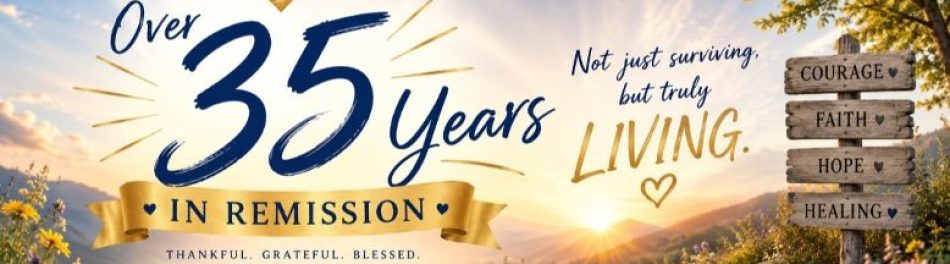
I am a 25 year survivor of cancer, Hodgkin’s Lymphoma. Unbeknownst to me, over the 17 years following my last treatment, my body was developing life-threatening issues, a.k.a. late developing side effects that would finally be discovered 8 years ago. From that point on, I learned that surviving cancer was more than just reaching a 5 year milestone.
One thing that has remained the same about me, pre-cancer, during cancer, and post cancer, is that I have stayed true to myself, and the way that I was raised. It was from my grandmother that I learned what was most important in life, and it has been a good thing, and a bad thing. When it comes to the “totem pole of life,” I am at the bottom. I will always make everyone else a priority, because there are just so many that, for whatever their reason, are unable to fight or stand up for themselves.
And on March 11, 1990 I took the first step in being an advocate, helping someone else. I became a peer to peer counselor with the American Cancer Society in their pilot program called “Cansurmount.” It was an appropriately named program because it matched up cancer survivors with other patients who shared similar cancers. As time went on, I actually met and counseled other patients who had other cancers, not just Hodgkin’s. And I visited with patients of both genders, of all ages. The ironic thing, as good a concept as the program was, it could not surmount the odds against having support from the oncology field.
But just as Cansurmount was slowly fading out, technology was revving up, and I was introduced to my very first internet support group, a list-serve of Hodgkin’s patients. And from there, I would be guided to other internet support groups dealing with all kinds of issues, not just of current cancer concerns, but life after cancer as well. I would never have thought that after all those years of helping others, at the same time, I would be building knowledge that would one day be critical to managing my own life and health issues, that developed from my treatments that cured my cancer.
First, to understand where I have come from, to support my diagnosis, I had surgeries done to me, that fortunately, are no longer done due to technology and imaging studies to help diagnose and stage the disease. Because the one diagnostic procedure that I was put through, left me with a devastating issue, that medicine would learn later on, was a mistake. My treatments were just as barbaric as I was treated with 4 times the lifetime maximum exposure to ionized radiation. To put that in perspective, I have a friend who works at a nuclear power plant, and when he told me the surveillance he goes through every year, and his exposure limits, and I told him what I was exposed to, he broke down into tears wondering why anyone would be exposed to that level of radiation. Because at the time, medicine know it cured cancer. But again, medicine would learn later on, cancer could be cured with less radiation exposure, and less risks. It was too late for me. And finally, no one would ever drink a bottle of Draino or a container of automobile antifreeze, but chemotherapy is just as toxic, but it also has a great track record of curing cancer. Again, as time went on, new cures have been found, and many without the brutal side effects short term, and long term. Great for new and current patients, not so much for us long termers.
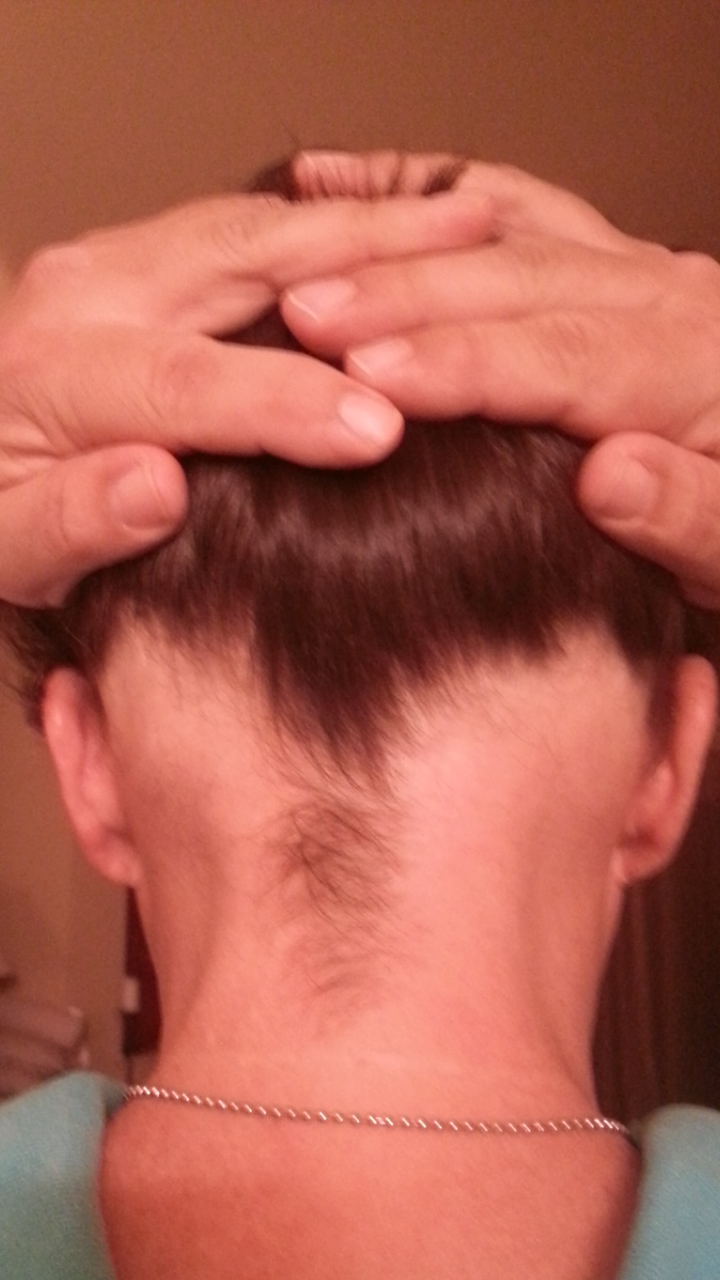
In the short term, this is what I knew following my treatments. Radiation therapy caused permanent hair loss on the back of my skull, most areas of my torso, and my underarms.

There was also a fairly good chance, that my thyroid was fried from the radiation. But it would be years before that was discovered, and I would eventually begin talking a synthetic drug to help manage my metabolism.
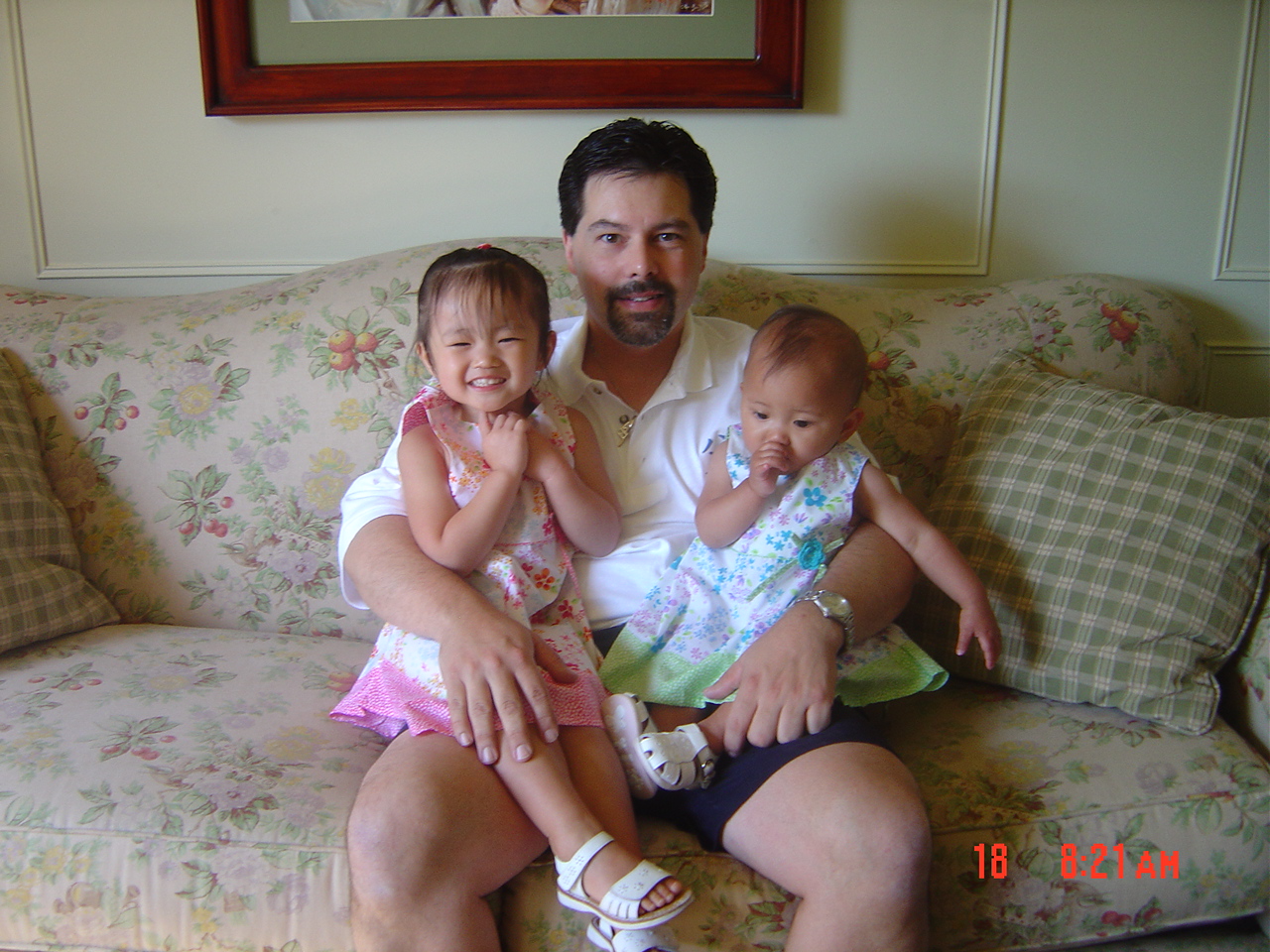
The one drug of my chemo cocktail, Mustargen, left me unable to have children biologically. Yes, this is the same component that makes up mustard gas, the same weapon used by Sadam Hussein on his people to kill them. But the same drug was also critical in the early years of treating Hodgkin’s. While it helped to cure Hodgkin’s, it was discovered only after my treatments, that infertility did not have to occur with the drug, if the doses were kept below a certain number, such as six treatments. I had eight. But I am not sad about that. While I was disappointed I could not have my own children, the Government of China helped bring two beautiful young ladies into my life, my daughters Madison and Emmalie.

Yep, that would open another door for advocacy, adoption. There are all kinds of adoption. But just as I was an advocate for cancer patients, I felt this was another cause I could represent. Other than counseling cancer patients, my life was fairly quiet, and I had no problem juggling the two causes.
But then my daughters would take on a much bigger role in their lives than they ever thought, and probably to this day have no idea the impact they have had on my life.
In 2008, I learned that I was never done with cancer after all. I had more side effects to deal with. It is just that there was no protocol to follow me up with, after I had passed my 5-year mark of survivorship. But you see, radiation has what is called a “half-life”, which is what I discovered upset my friend earlier. “Half-life” is what is referred to as the amount of time it takes for radiation to leave your body. Every time you have an x-ray, either for the dentist or illness, you are exposed to radiation, but fortunately, that “half-life” is so short you will never realize it. But ask anyone what they “half-life” of 4000 grays of radiation is, and their look turns to disbelief, horror. I will never see this gone. And just like the sun burns your skin, the radiation I have been exposed to, long term cancer survivors often call radiation, “the gift that keeps on giving,” that radiation continues to burn inside, only it is not skin that is burning and being destroyed, it is body vessels, and organs. And because I had not been followed up in over a dozen years, I was at a near fatal level when the damage to my heart was discovered, not a question of “if” I would have a fatal heart attack, but “when.”
And so, I became an advocate for the American Heart Association and cardiac disease. Of course, this was just the beginning. After not being followed up for late effects for so long, a survivorship clinic at Memorial Sloan Kettering Cancer Center took me on as a patient, and would discover so much more that was happening with my body, that no one had any idea was happening. And of course, that meant even more advocacy, because I would learn about the many issues facing cancer survivors from physiological issues to emotional issues, especially “survivor’s guilt”.
Now if you recall the picture at the beginning of the post, that was taken just a couple of nights ago. That is what you see on the outside, what I let most people see. But here is what is beneath.
From the laparotomy (diagnostic procedure for Hodgkin’s back until the early 1990’s and permanent)
I am asplenic. That means that I have no spleen. It was removed as part of the staging process. What that means for me, is that I am at a much higher risk for contracting illnesses from others, for developing infections, and of course, fighting both illnesses and infections. Which means that timing is critical, to the hour in fact, because if not discovered soon enough, blood levels of lactic acid would escalate to septic levels, and once sepsis hits, is often fatal. And probably more often than we actually know. My first brush with sepsis came in 2012 with levels high enough, it had been thought I was septic for close to two days before I finally sought help. Live vaccines, strep throat, flu and pneumonia, and many more illnesses all pose a high risk for me, that if I develop could be fatal. Hospital procedures, can end up complicated if my body does not react appropriately to fight off any developing infections, or if sterility of the environment is not perfect, the risk of dying from infection is so much higher.
From the radiation therapy (permanent conditions)
I have already discussed my heart surgery, but I have additional cardiac issues, such as carotid artery narrowing (both) that will eventually need to be replaced when the risk of doing so, is less than the risk of an actual stroke. It was discovered after my heart surgery, that I have valve damage to my aortic and mitral valves, which some day will also require replacement.
I have seen my lung capacity reduced to 76%, having no use of the lower lobe of my left lung. This is also a hot spot for developing pneumonia for me.
I have Radiation Fibrosis Syndrome, which is actually a compilation of symptoms due to radiation damage to the muscles in my neck and upper torso. My head hangs forward in the beginning stages of something commonly referred to as “drooping head” because the muscles in the back of my neck were destroyed from radiation, allowing the front neck muscles to pull my head forward. Exercises and physical therapy help me to avoid devices to keep my head lifted. My upper torso is more complicated because of muscle loss and atrophy. The goal is not to increase strength, but rather to prevent injury. I am at a higher risk of tearing my rotator cuffs, of which recovery would be so difficult to overcome.
I have gastrointestinal issues with my esophagus, one of which is believed to have been the cause of my septic pneumonia, called “asphyxiation pneumonia”. Instead of food decaying in my stomach, small enough amounts of food were trapped in what is called “Zenker’s Diverticulum”, a flap of the esophagus, that when it retracted, trapped the food, where it would decay there instead of the stomach, and I would inhale that bacteria directly into my lungs. As if that were not enough, I have also been diagnosed with Barrett’s Esophagus, a condition that has the potential to develop into esophageal cancer.
And of course, broken bones in my upper torso take more time to heal.
From the chemotherapy (permanent conditions)
It is unknown what roles the chemo cocktail played with my cardiac, pulmonary, gastrointestinal, and immunological issues, but it has been confirmed that I have osteopenia (little sister to osteoporosis) and facet joint arthritis in my lower spine.
All of these situations have created a deeper concentration on medical knowledge, and yes, more advocacy, now for cancer survivors. Because out of the 12,000,000 cancer survivors, probably less than 1% of them are even aware that mysterious issues that cannot be diagnosed by the average medical professional, are probably directly tied to late effects from cancer treatments. And for as many as I can, I will fight for them all whether it be taking on insurance companies who deny tests just because their books tell them to deny.
There has only recently been studies on long term survivors and the issues we deal with. So much attention is paid to current patients, and that is a good thing. But long term survivors need care too. We were cured of our cancers with barbaric methods, and then left to fend for ourselves, as if enough had been done for us the first time around.
To newer cancer patients, do not be overwhelmed by what you have read. Because of long term survivors, you have better and safer treatments. No, they are not perfect, and science is still working on better and safer, and it is because of the success of your treatments, that medicine will continue to progress. But for those like me, those that have passed away from circumstances related to our complicated medical histories, we need help.
And for my final role of advocate, as if I did not have enough to fight and stand for, in the process of my second divorce, I will fight for parental rights so that children are not caught in the middle of two people who forget that they will always be their children’s parents even though, no longer husband and wife. I will not go into the specifics of my case, but I will never give up my rights for the two of the most important people in my life, my daughters. Because if it were not for them, I would not be here today. And as their role model, as they get older, they are understanding all the battles that I have had to go through medically, and they are growing with a wealth of knowledge of compassion and empathy that I can only wish the entire world had.
But that is me… a simple man… just a complicated life.
Posted in
Adoption,
Animals,
Bullying,
Cancer,
Education,
Family and Friends,
Food,
Inspired By...,
Politics,
Recreation,
Side Effects,
The Heart |