Paul's Heart

Life As A Dad, And A Survivor

Archive for the category “Cancer”

What Does Ai Have Against Cancer Survivors?


(image courtesy of SciTechDaily)

It was a simple and innocent enough question I entered. Given my personal status, and my knowledge, I thought for sure, asking Ai would give me at least a similar or more accurate response to my question. But might I actually know more than Ai? Or might I just have the one characteristic that Ai lacks, the ability to care about the impact of the question?

“What is the average lifespan of a Hodgkin’s Lymphoma survivor?” It is a simple enough question, and if you have followed “Paul’s Heart,” you know at least one Hodgkin’s survivor of at least 35 years. And you would think medicine and other advocacy groups would have some sort of statistic to reflect others like myself, and there are plenty more, at least a thousand more that I am personally aware of.

I do not chase after this statistic constantly. The last time I looked, still the only number when it came to cancer survival rates, was still being based on a 5-year average. Sure, it gets acknowledged that survivors of Hodgkin’s Lymphoma can live longer, but there still is not any kind of verfiable or concrete information, mainly because it has never been tracked. A patient hits the five year mark post treatment, and then gets released by their oncologist, in theory, never to be heard from again, alive or deceased.

So since medicine and society do not have any solid stance on my question, I put it to Ai. The response was based on twenty-one sources, including ASCO, City Of Hope, NIH, ACS, NCI, Blood Cancer United (formerly Leukemia And Lymphoma Association), Lymphoma Research Foundation, NHS, Cleveland Clinic, and more. “While there is no single “average lifespan” for a Hodgkin’s Lymphoma survivor, most patients have an excellent prognosis, with long-term survival rates approaching those of the general population” was the answer. I guess “general population” refers to those with no history of cancer. Ai also does not seem willing to commit to any kind of number, whether it be by years of survival, or by the percentage of those having long term survival. Ai does admit to several factors influencing survival from age of the patient, stage of the cancer, and of course, treatments administered. But I already knew that.

My Ai search went on then, with the usual “survival measured in five-year and ten-year” relative survival rates (an improvement from just five-year), based on data from 2015 to 2021. Again, keep in mind, data was not kept on those of us treated in the 20th century and at least the first decade of the 21st century. Ai does admit that many live decades beyond their diagnosis, and that is because of documention by the medical community of survivors like myself, but there still are no solid numbers other than what has been documented over the last ten years. And I know there are other Hodgkin’s survivors out there in the world.

Age is recognized as one of the factors that impact survivorship. It took a long time to give myself credit for survivorship longevity as long as I have, but I am still so inspired by those in their 40, 50, and 60 years of survivorship. And if you are saying “WOW!”, you bet WOW!!!. These survivors were more likely diagnosed in their early childhood or teen years. But that does not mean that those diagnosed as adults cannot have longevity. It just means that the trauma to their body is affected differently by the already aged and susceptible issues of an older human. I was 22 years old when I was diagnosed, turning 60 at the end of this year. And I know many who were diagnosed in their 30’s and 40’s, now in their 70’s. But why isn’t this information coming up in my searches, even with the assistance of Ai?

The other major factor recognized by AI impacting survivorship, treatment complications. For those of us treated prior to the mid to late 1990’s, it was possible we were not even expected to survive the toxicity of the treatments, let alone worry about survivorship. But as medicine continued to advance and find better and somewhat safer treatments, its toxicity still exists today, however with increased survivorship numbers.

Here is the problem, and Ai does not even seem to have a grip on this situation. What happens to those survivors who develop treatment-related complications such as secondary cancers, cardiovascular disease, pulmonary disease, as well as other issues? Ai’s answer for this is less than a hundred words, lifestyle and medical surveillance. And I would bet donuts to dollars, being monitored following the five-year mark is still not mainstream advice to Hodgkin’s survivors.

Science and medicine knows this monitoring is crucial to survivorship. Well at least those that treat survivors like me, impacted by our treatments. Thirty-five years out, my treatments have had a lifetime impact on my heart, my carotid arteries, my lungs, my thyroid, my esophagus, the muscles of my upper torso, my spine, my pancreas, fertility, and of course dealing with several emotional issues, one being survivor’s guilt. So I am quite lucky, I have been monitored since 2009 following the discovery of these late effects, but still, this was thirteen years after my “five-year graduation” from cancer, unsurveilled, and clearly lucky, with the first issue I developed was caught just as I was about to have a fatal heart attack. Had I been followed up sooner, the situation would not have been as dire.

And there are many others, as I have said, at least more than a thousand that I personally know who did not have the monitoring until it was either near too late or just oncoming. So does everyone develop these issues? According to Ai and its resources, that number is “not definitively established.” And figuring this out is as difficult for humans as it is for Ai. With evolving treatments, varying studies, and longer latency periods, a bigger factor impacting this is human, and that is the ability to connect the health history of a Hodgkin’s survivor to any particular issue that has come up. But without a Hodgkin’s patient being told about later risks, and many still are not, survivors simply go on with their life, after Hodgkin’s, never giving it a second thought. And unless you are dealing with a known issue, you do not seek out that help, and that can erroneously affect statistics, diagnosis that make no sense for demographics, like when I was diagnosed with a widow maker heart blockage at the age of 42, due to my radiation treatments. Even the operating room was shocked to see someone “so young”. Medicine and science knows to look out for these things, yet it is not common recommendations to follow up lifetime with every cancer survivor for these types of issues.

And then there are those survivors who will simply bury their heads in the sand, like ostriches, ignoring the potential for problems or pretending it does not exist. After all, if you cannot see it, does it really matter? All a cancer patient wants is to live a long life after cancer, without cancer. Why doesn’t society and medicine recognize and more importantly celebrate when survivorship does happen? I am talking going beyond “ringing the bell” at the completion of treatment(which I never got to ring back in 1990 as this was not a thing back then). Our society frequently announces those who are diagnosed or battling cancer, and of course there are those that do not survive. But think about it, how many “celebrities” can you name who have survived cancer, let alone those personally in your life? Why do we not celebrate and recognize those survivors, giving inspiration to those newly diagnosed or currently in treatment, looking for support that there is so much to look forward to?

When I was diagnosed in 1988 at the age of 22, besides the chances of me beating cancer, my next question was how long I could expect to live after that? Would I live a long life? I have been writing “Paul’s Heart” nearly fifteen years, so you have seen all of my milestones and achievements so far in my survivorship. And I still have many more that I want to reach. But I am just one survivor. I love being able to share stories of other survivors and I have done this many times on this page. If you would like to share your story of survivorship, I would like to post it here, so that others could see more than just one survivor story.

Even if medicine and science never catch up, I have hopes that maybe Ai will.

Lung Cancer Awareness Month


November is Lung Cancer Awareness Month.

Waaaaaaay back when I was a pre-teenager in school, during “health class,” every year our teachers would teach us about the dangers of smoking, from emphazema to lung cancer. Heck, they even had a visual display of a blackened, diseased lung to hammer the point. Of course, we would go home and tell our parents that their smoking was bad for them. My parent’s response? “Won’t happen to me.”

Well, guess what. It did happen to my Father. Upon being given the diagnosis of lung cancer, his response to the oncologist’s news was, “so tell me Doc, what do you think caused this?” And my Father said it with a straight face! I jumped in, “Dad, you did not just ask him that question when you have been smoking since you were a teenager!” My Father responded, “I know. I was just hoping it could have been something else.” And it quite possibly could have been something else, though the odds of it being the cancer sticks were more likely.

And just as there are different types of Hodgkin’s Lymphoma as I was diagnosed with, and just as with different types of breast cancers (October being Breast Cancer Awareness Month), lung cancer is no different. I should know. It is all but official, pending a biopsy (or worse), I am likely to be diagnosed with lung cancer in the not so distant future.

Of the two treatment options I received for my Hodgkin’s back in 1988 and 1989, chemotherapy and radiation, back then, I was warned of the possibility of a secondary cancer, though it was thought to be in the way of a leukemia or something. In 2008, as I was being prepped for an emergency bypass due to progressive damage to my heart from that same radiation therapy’s late developing side effect, a small unidentified spot was discovered on my lung. At that time, it was of no concern, the doctor would just follow up on it for any growth. A few years later, not only had that spot grown every so slightly, there were a couple more that had been discovered. A CT scan would give only a slight more detail, but still unidentfied.

CT scans would become part of my annual surveillance and that one spot, now identified as a nodule was still growing, slowly, and a few more spots had popped up, and one of the other previous spots was now growing. Then it happened. A few years ago, that initial nodule, had grown enough, able to discern its characteristics better, now carried the comment, “presents as a possible indolent adenocarcinoma.” There it was, carcinoma, also known as cancer. I had to look up the word indolent, which means “slow growing, not producing any symptoms.” It was hard to believe, but my doctor still was not concerned at this point. A few questions later, I would understand as it was explained, many of those diagnosed with this type of cancer, often die of natural causes before this cancer becomes an issue. In other words, I would just live with this cancer, if it was cancer. We still have not made it official.

Until two years ago. The latest CT scan report changed from possible to “likely” as the nodule had grown some more, and at a slightly quicker pace. A referral to a pulmonologist had me being told I had two options, neither I would be thrilled with. He could do a needle biopsy but there risked a collapsing of my lung. And given my health history, I did not need to be taking any unnecessary risks. The other option, was to perform a “wedge” surgery, removing the portion of the lung with the nodule, and enough of the area around for any peripheral cells, but again, I have a higher risk with any surgeries, especially within the chest cavity.

My Father passed from lung cancer. He was staged at 1, but somehow following the surgery, which supposedly got everything, he underwent chemotherapy and radiation as preventative therapies, and ended up terminal. Anxiety and panic had now entered my head. My doctor had arranged for a second opinion with someone experienced with my type of health history. She had a totally different demeanor, and a much calmer direction. Together, we agreed that there would have to be a limit, a “line in the sand,” how much this nodule would be allowed to grow. There was no discussion on the other nodules and spots, but I am sure that those will eventually be included in any plan when the time comes. By my calculations, I have about three and a half years and a decision will need to be made then. Both the doctor and I are in agreement with this. And honestly, with all the issues I deal with related to my late side effects from my cancer treatments, a lot can happen in that time.

In the mean time, I continue on in life, living life, reaching for more milestones. I do not let these medical issues prevent me from my experiences. But at least with the awareness, I can have a plan. I can have hope. I can have time.

The Photograph


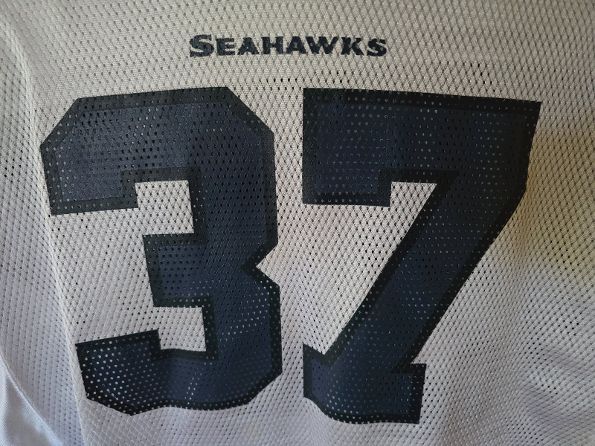
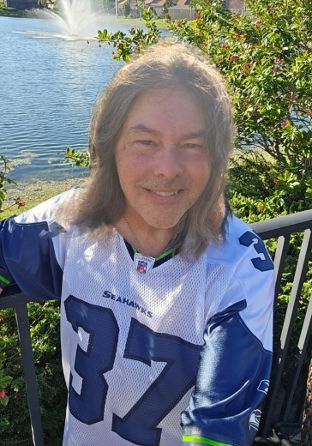
(top photo is mine, bottom photo is also mine courtesy of CHATGPT)

I swore I would not do it. I considered messing around with AI the equivalent to screwing around with a Ouija board. And yet, I did it. A recent diagnosis, yet another thing my body is betraying me with, put my mindset into a rare status yesterday, a feeling of worthlessness, something I do not let myself go to that place. If I am being honest, this new diagnosis does not change anything for me, well, with the exception of yet another medication I need to take. But the diagnosis was yet another reminder, not that I needed any, of what my body went through nearly 37 years ago, and because of that, must deal with the late effects today.

Myocardial ischemia, simply put, the lower chambers of my heart are not receiving enough oxygenated blood. It is a condition that is not cureable, but can be managed to a degree. This is now the eigth issue diagnosed with my heart since I was treated with high dose radiation (40gy) and MOPP-ABV chemotherapy for my Hodgkin’s Lymphoma back in 1988. In fact, I have now begun to nickname my heart “Timex,” after the advertising campaign decades ago, about Times watches “take a licking and keep on ticking.”

The status with my heart, is congestive heart failure. That was jarring the first time I saw those words in my chart. And it took a few moments for my brain to reset, CHF does not mean anything is imminent, just that my heart is working a lot harder than it should. I have now had a double bypass of the Left Anterior Descending artery (LAD), a main artery of the heart, a stent of the Right Coronary Artery (RCA), the other main artery of the heart, aortic valve replacement, a left bundle branch block (an electrical issue with the heart), an inverted T-wave, reversed septal wall motion, potential issues with my mitral valve, and now myocardial ischemia. And just for shits and giggles, I have a very pronounced murmur, which gets a lot of attention, and audience who wants to hear what a clear murmur sounds like. Yes, my heart is taking a beating. And whether by surgical intervention or medicinal maintenance, the things that have been done are not permanent, some will need to be redone again (my bypass, my stent, and my valve), and some will finally require intervention, again, none of these are permanent solutions. There is really only one option, one that I do not have, and due to the complications with the rest of my body, combined with the overall risks of another open heart surgery, the odds of me getting, or surviving a heart transplant are not favorable at all.

So, I need to do what I can, with what I know and am aware of, be kinder to my body. Unlike past situations, I am actually aware of the symptoms I am living with, shortness of breath (SOB), fluid retention, and a few others, all symptoms related to my CHF and current diagnosis of Myocardial Ischemia. I have a higher risk of having a heart attack, one thing I have yet to experience with all of my medical issues, and knock on wood, do not want to experience. Along with modifying my diet, best I can, and with mild exercise (limited to periods of walking), and medicine, there are other things I try to do to help my heart out, such as keeping my legs elevated to reduce the swelling. I live in Florida, so wearing compression socks is not an option for me.

And then yesterday, my meltdown. For the first time, these words have ever left my lips, “I am feeling worthless,” as I made a choice to allow my legs a break instead of taking on a task immediately, also focusing on not approaching stressing my heart to the level of a heart attack. Everything that I have been through, especially the last seventeen years of my survivorship, even being branded with the label “disabled,” I have never allowed myself to feel useless or worthless.

The thing is, I know I am stronger than that mentally. And that is what prompted my dance with AI. I asked to create a personna or spirit, from my image, of someone who has faced multiple challenges in life, health and otherwise. Because all of these years, I have had something in me, that has gotten me through everything. I wanted to see what “it” looked like.

I will not name it, but this is what the “fighter” in me looks like. And I can actually see it in me, and understand why I fight so hard. As I approach a major milestone toward the end of the year, and have other important milestones within reach, I am going to trust this “inner spirit” of me to keep on fighting. He looks like he can still do it. Being a big believer in “Positive Imaging” (thank you Norman Vincent Peale), this newest diagnosis is just something else for me to deal with.

Post Navigation