Paul's Heart

Life As A Dad, And A Survivor

Archive for the category “Cancer”

A Disappointing And Shocking Discovery


If there is one thing that I have been consistent at as a parent, it has been taking advantage of “teachable” moments when they arise. There are no better examples than those that are occur as they are happening. One of those moments is actually happening right now, and to be honest, I had no idea the situation was that bad.

I am of course referring to the looming railroad worker’s labor strike. Up until this point, all I really knew about railroads, were there were four of them in Monopoly, a favorite television character for children named Thomas, was created after a train engine, and I could enjoy a scenic ride into New York City on a train. Obviously, our railroad system is much more important than how minimal it appears in my mind. The possibility of a strike by railroad workers, just weeks before Christmas, would be devastating for everyone.

The first thing that comes to mind when you hear the word “strike,” is better pay. Nothing gets under the skin of someone who is not part of a union more, than hearing a group of workers striking to get more money, something that a non-union member truly cannot appreciate the difference being in a union would make. And if you look at the situation with blinders on, a reference to equipment horses wear to keep them looking in only one direction, the pay raise being offered looks outstanding and really, shocking, an immediate 14% increase with an increase to 24% by the year 2024. Now, if you look at just those percentages, it is easy to think, “sign the damn contract, how greedy do you have to be?”

There are two things to consider. First, it has absolutely nothing to do with greed. A normal union increase in wages can range from 1-5% as long as contracts are agreed to and the flow of the labor agreement is not interrupted. But the railroad workers have been working without a contract for over three years. And for the contract to only cover up to the next two years, financially, this contract is nothing more than “catch up.”

It is the second thing that caught my attention, working conditions. Improving working conditions is one of the biggest and most important features of belonging to a union. Just ask a coal miner, a police officer, a teacher, or a railroad worker. One of those working conditions that is being fought over, to the point that our government has actually had to get involved with, something that does not have a good history record (look up “air traffic controller strike”) in our country, is paid sick leave.

At one point, I belonged to the United Steel Workers Union. And if there is one thing I would think that any union would have included in their contract for their members is some sort of sick time policy, especially for one as vital as the railroad system. But railroad workers do not get sick time. In most cases, even to take unpaid sick time, you know, like when you are fighting a serious illness such as cancer, could result in reprimands up to and including termination. How is this possible, that one of the most powerful unions, one of the most vital unions to our economy, does not have a necessary benefit for its members?

To be clear, a company that provides sick time, does not guarantee that an employee will not get reprimanded or fired for using sick time. Over the decades of my life in the cancer world and survivorship, I have seen so many different situations on how sick time is handled from the truly compassionate to the reprehensible. The employer I worked for when I was diagnosed with Hodgkin’s Lymphoma 34 years ago, bent over backwards to make sure that I would not have to worry about lost time, hence, lost income, or losing my job. A different employer years later, provided no benefits, but simply allowed you to take whatever time you needed to get better or heal. But it was my last employer that shocked me to the level they would go to, to restrict sick time being used.

Following my emergency heart surgery in 2008, my doctor had ordered me out of work to allow my rib cage to heal properly, six months. Healing time took longer for patients exposed to radiation therapy. But as I approached my third month, I received a notice, and to put it in perspective, I was working for a major pharmaceutical company, that if I were not to return to work by the end of the following week, I would be terminated. I had a doctor ordering a recovery period, that my employer disagreed with, and per department policy, would begin the procedure to terminate my employment if I did not go against my doctor’s orders.

If you have followed “Paul’s Heart” long enough, you know I am a patient and survivor advocate, and one of the things I advocate for are employee rights. Long story short, I made sure my supervisor knew all about the Family Medical Leave Act, as well as the Americans With Disabilities Act, and that in no uncertain terms, I would fight to keep and return to my job when able. Anyway, no pun intended, I clearly have gotten “off track.”

Look, no one will argue, business owners need their employees to show up for work. It does not matter if it is a major employer like the railroads, or a small “mom and pop” store. And though no employer should be expected to absorb the extended costs of a lengthy absence, hence what short term and long term disability are for, it should not be unreasonable for an employer to provide a minimal amount of sick time, for example, three to five sick days per year, paid.

Finally, getting to the “teaching moment” for my daughters, it falls on the employee however, not to take advantage of that benefit, but rather to use it as needed. And if it is not needed, then do not use it. All too often, an employee might call out sick, because their employer denied a request for personal time off, or an employee just felt like “skipping” work that day. And no one can blame an employer for getting upset for the business interruption to upset the employer.

Up until my health decline, my daughters only knew one thing. I rarely called in sick. Numerous years, I would actually earn “perfect attendance” rewards. I had personal time I could use for necessary personal business, but I never used sick time to go on a vacation or just skip work for the day. As a parent, I led by example, and my daughters were kept in school. I did not, and do not believe in taking my daughters out of school to go on family recreational trips. As my daughters approached the end of their secondary education, I encouraged them, that attendance is an important factor with college plans and scholarship applications. Why is all this important? Responsibility and reliability. No one can blame an employer, or a college or donor, to expect a commitment, reliability. It is too easy to fall into the trap of impulsively abusing absence policies. That is why it is best not to start, which I have often stated to my daughters over the years. You never know, when you are going to have a serious situation to deal with in regard to attendance, and your reputation might just be critical to keeping your employment.

I do not “have a dog in the fight” for the railroad workers, other than the economic impact of course. But I do not think it is that much to provide employees with even a minimum and respectable number of paid sick days, no matter what the employment may be. Better working conditions should contribute to better attitudes of workers, which should correlate to better efficiency and profit of a business. Just saying.

Things My Daughters Have Seen


I have close to 300 stories “prompted”, just sitting in limbo. I decided to just go back to the oldest one sitting in my cue, and see if I could finish it. To my surprise, I had only the title started with a note on the topic, referring to things that my daughters have witnessed during my survivorship of Hodgkin’s Lymphoma. As it turns out, this post actually connects to something that just happened recently.

My youngest daughter was applying for a specific scholarship for her first year of college next year. She was doing so from a unique perspective as the topic dealt assuming it was the applicant herself who the essay would be about. The subject dealt with dealing with cancer, how it was overcome, and any impact on her life. My daughter has never had cancer, and I hope with every fiber of my being that neither of my daughters ever have to face cancer. But cancer has had an impact on her life, her entire life.

Obviously neither of my daughters were even thought of when I dealt with Hodgkin’s Lymphoma back in 1988. As they grew, and learned of the word “cancer,” there would be occasional small, appropriate conversations about “what their Dad went through.” It is always a difficult thing to decide, what and how much to tell a child about cancer, of course depending on age. Up until 2008, just having started school, both of my daughters were already sharing in classroom discussions that their Dad was a cancer survivor. They even knew the specific cancer to bring up. But the limited knowledge was by design.

As my daughter began to conceptualize her scholarship essay, on how cancer has impacted her, it opened a very uncomfortable door for her. Up to this point, we have never really talked in great detail about my health events that occurred due to the late developing side effects from my cancer treatments. All my daughters really cared about up to a certain point, was that Dad always came home. The details were kept to a minimum, the part of the body effected, and that it was fixed. But now nearly fourteen years later, memories of what she witnessed, and details of what actually happened, and could have happened, finally came to light. My daughter finally learned how close, several times, that she came to losing me.

The essay was not just about the actual events of what had happened to me each time, but the disruptions of her routines, the need to change plans, someone other than her mother or father having to pick her up from school, and all too often, what the inside of a hospital looked like. There were times that I was “not at home,” sometimes for days, as I was in the hospital, no explanation given just “Daddy will come home.”

But as I have one daughter of adult age, and the other almost, it has become important for them to understand what has happened to my body over the years, and what potentially lies ahead. This scholarship essay was finally the opportunity to discuss and reveal the unknown for them, and come to learn, contrary to what they had been told by some of their family members, that their Father has some health issues of great concern.

And so we began with the big one, my first heart surgery. This could have easily been the end, in reality it was just the beginning. In the “I was going to die” episode number one, my younger daughter aged three at the time, was finally told that I had what was nicknamed a “widow maker” blockage of my heart. At first there was confusion for her, because she knew what the word “widow” meant, but somehow this would have resulted in the death of her mother. After clarifying for her, she learned what I had been told by my cardiologist back in 2008, “it was not a question if I was going to die from a fatal heart attack, but when.”

Both of my daughter had childhood friends who lost their Father at a young age, also due to cardiac issues, but not cancer treatment related. My daughters could not relate to their young friends what it was like to have to visit their Father’s grave, not to spend holidays with their Dad, or do things with each other. My daughters knew their friends’ Father was dead, but the children really never let on, that it affected my daughters any further than the knowledge.

But now, as my daughter and I were on Facetime working on this essay, the potential loss of her own Father became a reality to her, of course not wanting to find out what it was really like, as with her friends.

In 2008, I needed to have an emergency triple bypass, that was downgraded to a double bypass (a big mistake later realized in 2019). It was the first time that I was ever away from my daughters. It could not have been under the worst possible circumstances. Again, faced with the “what and how much” do you tell a three and five year old, they were told that I was just staying overnight somewhere, and I would be “fine,” the first of many times my daughters were deceived about my health, and not by me. Four days into my recovery, still in the hospital, my daughters were brought in to see me. I was still connected to machines, and had at least one hose still coming out of me. My older daughter was not intimidated by anything, and quickly came to the upper part of my hospital bed, encouraged to go easy, that I had a huge “booboo” in the middle of my chest. However, my younger daughter, was clearly frightened and upset, having never seen me laid out like I was. After about a half an hour, she found her way, nestled against the left side of my upper body. Her excitement when I finally came home could not be contained.

My older daughter remembers most of that time period, my younger daughter does not. But now that it had been discovered that I had other issues related to my treatments, there would be more time away from my daughters,

In 2010, my daughters were confused when their “Poppop” was picking them up from school. I honestly do not know what they had been told. I was being rushed to the hospital, bleeding, and in extreme pain.

Then two years later, and for the first time, an episode occurred that my younger daughter is able to remember. At 3am, I was being rolled out of my house on an ambulance stretcher, screaming in intense pain, just having had a bout with uncontrolled vomit. I do not have many memories of that night, as I am pretty sure I was hallucinating. But as the paramedics rolled me out of my bedroom, there at the top of the steps, were my daughters, then aged 7 and 9, wide awake in their pajamas, standing next to a police officer who was assisting the emergency.

My daughters were never told how serious this situation was. But according to my doctors, I was dying from sepsis. My doctor, expressing frustration with me, chided me, “with as high as your lactic acid levels were, you were septic likely for at least 48 hours! What the hell took you so long to go to the hospital?” A lactic acid level of 4mmol/L is indicative of a sepsis infection. And at that level, the mortality (a.k.a. dying) rate is near 30%. I pleaded with my doctor, I felt completely fine when I went to bed that evening, other than being a bit exhausted from the hectic week I had just gone through. Unknown to me, I had developed a form of pneumonia, called “aspiration”. Unlike other pneumonias, following illnesses, aspiration pneumonia is brought on, by inhaling food, saliva, or stomach acid into the lungs. For the purposes of this post, I am not going to get into the technicality of this episode, but this event was brought on courtesy of late effects from my treatments.

I would have a relapse of aspiration pneumonia nine months later as doctors tried to figure how to deal with my esophageal issues causing this. But again, my daughter was hearing for the first time with this particular event, I had almost died. But again, some around her continued to blatantly lie to her, that nothing was wrong.

As both of my daughters got older, I continued to have health issues pop up. But now being divorced and not living in close proximity to them, and due to the complexities of custody, my daughters were no longer told when I had these extreme situations come up, for fear that my health would somehow get used against me in court to prevent me from seeing my daughters, and it did come up on at least two occasions, fortunately being ruled in my favor.

Just as the pandemic hit, I had to have two more major surgeries, that I felt needed to be kept from my daughters, for fear of being misrepresented by those close to them. They would only hear about them when I had recovered which of course only reinforced what they were being told, “your Dad is fine.” But a little over a year ago, I made the decision, as I said, with them getting older and needing to know, I let them know of my third heart surgery having to be done. And being apart from them, unable for them to be by my side in the hospital, courtesy of technology, I was able to Facetime them from the ICU, that they could see where I was, and learn what had been done. And I could see for myself, that they were at ease.

But it was not just medical events that they were faced with when it came to me, my daughters could actually see the toll that my cancer survivorship had taken on me over the years. Just a simple walk in the snow, would leave me gasping for air. I have lost the mobility of my shoulders from radiation damage, my daughters now “wrestle” me to assist dealing with their luggage when they come to visit. I know my daughters “get it.” They have been told most of their lives, by certain family members, that there was nothing wrong with me, that I was fine.

Now, as my daughter writes her essay, we both now understand how my cancer has impacted her life and will impact her in the future. As parents, we struggle what and how much to tell our children when faced with health crisis. And it becomes difficult when their lives and activities are impacted, and cannot understand why. This is why I encouraged her to go for this particular scholarship.

From The Beginning, “Over The River…”


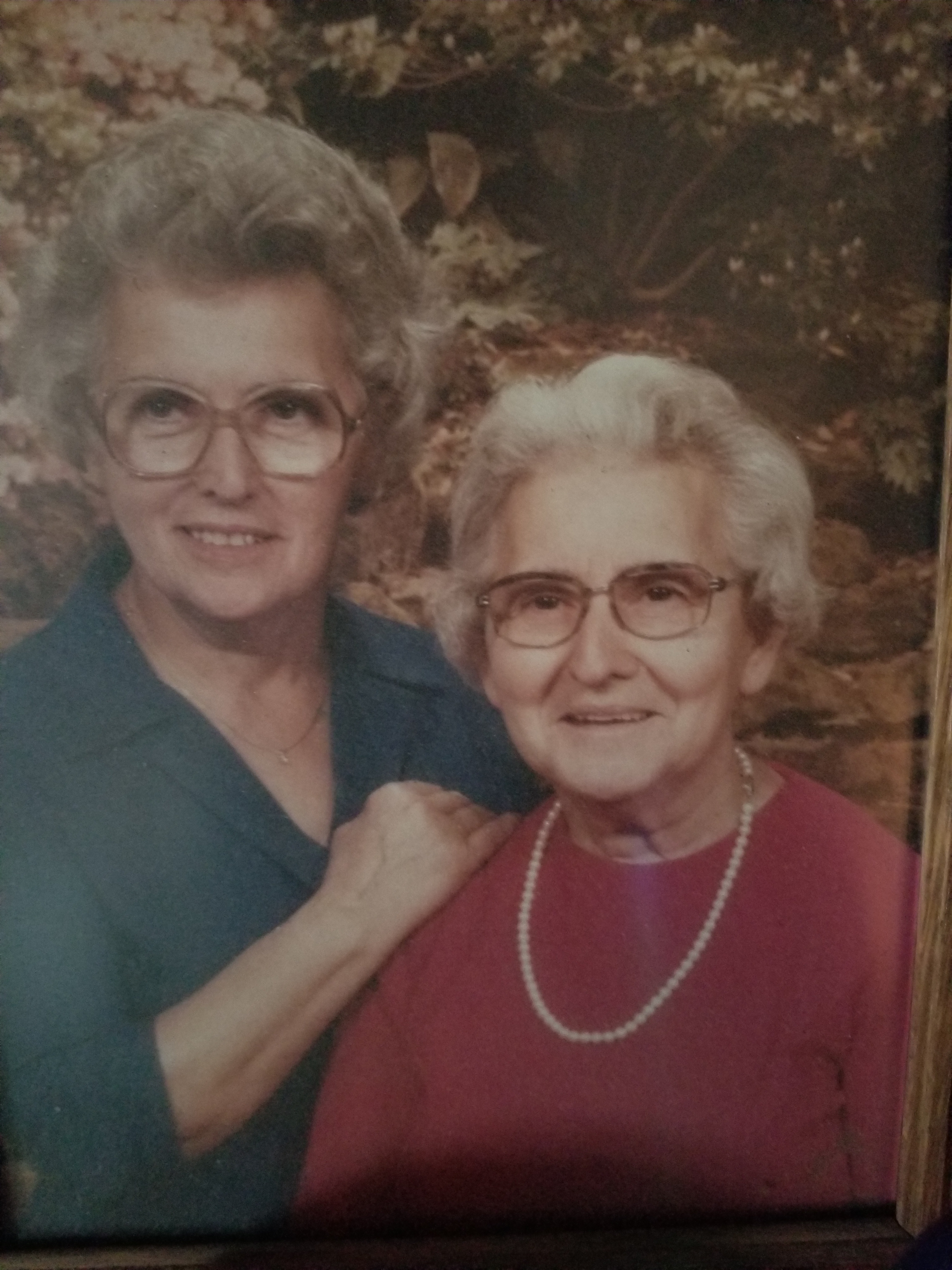
Thanksgiving with my Grandmother. I certainly have many memories. For most of my childhood, I lived with my Grandmother and her sister (pictured on the left), and come Thanksgiving Day, that meant the most wonderful smell in the world. Unfortunately, that smell began wafting up to my bedroom early in the morning, as the two of them began to make the holiday meal to feed a total of ten of us. Our kitchen table on sat eight of us, so that meant…

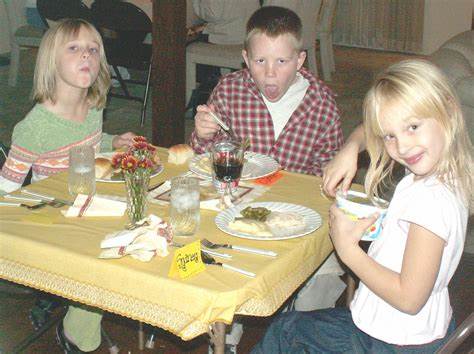
the dreaded “kids” table, usually a fold up card playing table. We had another full dining area, with another dining table, but since there were only two kids, the folding table is where we were put. Regardless of being in a different room for the dinner, I still got my hands on my favorite, the dark meat of the turkey, mashed potatoes, sweet potatoes, stuffing, and something called “stuffing from the bird.” This is when you take some of the already mixed homemade stuffing (it was never boxed), and stuff it into the turkey as it cooks. It was the same stuffing that was being served separately, but cooked inside the carcass, the “bird stuffing” basically is marinated with the flavoring of the turkey, an entirely different stuffing flavor, and SO GOOD! And I cannot forget the homemade pumpkin pie and pumpkin custard.

Eventually I would get promoted to the full table, which by then, was able to squeeze ten around, so perhaps the kid table had nothing to do with the capacity around the main dinner table.

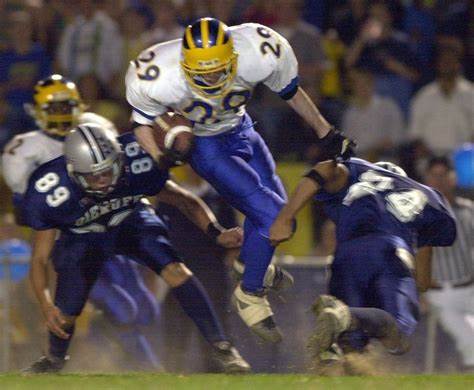
In high school, Thanksgiving would be delayed for us to be able to attend high school football games. The dinner was ready once I got home after the game. I discovered there was a big difference with smelling the dinner being cooked all morning, and walking into the wall of the aroma of the feast to come.

Fives years after my high school graduation, Thanksgiving would never be the same.

In October of 1988, I had an itch on the back of my neck. I had discovered what felt like a huge lump, much larger than what would have been left by a mosquito. I was confused by the mass, as I was a relatively healthy kid growing up. I made a call to the doctor, a general practitioner, who made the diagnosis of a swollen lymph node due possibly to the common cold. He prescribed an anti-inflammatory drug called Naprosyn and recommended I take a break from exercising to give my body some rest it likely needed.

Two weeks went by, and the swollen lymph node did reduce considerably in size. Back to the gym I went. As I am prone to do, I resumed back to the exercise routine I had been doing without easing back into it. The next morning, I believed I had paid for that judgement, as I had developed such a pain in my left armpit, whenever I stretched out my arm. Clearly, I had overdone it.

I had spoken to as co-worker about my new “injury” and how it was likely I was going to miss our city league basketball league game. I mentioned my frustration with having just missed two weeks of the season, and being left-handed and unable to shoot or toss the basketball. He had recommended his physician as being good with sports injuries, so I decided to give him a shot.

I gave him the synopsis of how I got to his office. I noticed a lump. Took a medicine for it. Took a break from exercising. Started exercising. Now my left arm hurts. Simple. Cause and effect, a sports injury.

The doctor examined me and was concerned about the lump more than my arm. The lump had increased in size again. I grew frustrated with the doctor as I was not there to see him about the lump, which had been getting better. I was there because I hurt myself weightlifting. He did some bloodwork, which showed nothing. And I recall throwing in his face, “of course, I know there is nothing wrong with my blood. I have a sports injury.” I would repeat that sentence several more times over coming weeks. The doctor was making a recommendation for me to go see a hematologist/oncologist. Now, if you do not know those terms, do not look them up. I will tell you what they are soon enough. I just asked the doctor, “do they see sports injuries?” and he replied no. But I needed to get that lump looked at.

I stormed out of his office. Two days later I had begun receiving phone calls from that doctor, leaving me voice mails, insisting that I follow through with his recommendation to see the specialist, who was not a sports doctor. I walked over to my co-worker, and asked what this doctor’s deal was, why was he bugging me? He told me, “my doctor is a good guy. If he feels something is of concern, I would trust him.” Looking back at that particular moment, would be a life-changing, life-saving conversation. I made the phone call to that specialist the next day, and made a humble phone call back to my co-worker’s doctor, to inform him that I was following through on his recommendation. Subliminally, I was not doing it because there was something wrong. I was doing it because I wanted to prove to this doctor that I was the one who was right.

It was a rainy, dreary Tuesday, just before Thanksgiving. I pulled in front of the clinic, and there was a sign in the front yard with the doctor’s name that I was going to see, along with the title “Hematology/Oncology.” Still not recognizing the titles, only knowing it had nothing to do with sports, I walked inside, soaking wet from the pouring rain. I was handed at least a half dozen papers to fill out which I thought was a waste of time for a sports injury. Truth be told, having never really been sick, I had never had to fill out all of these forms. As a kid, my mother did it for me.

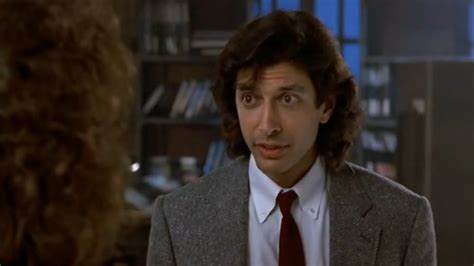
When I finished, a nurse had taken me back to an office, not an exam room, but an office. Moments later, in walked a man who resembled actor Jeff Goldblum, The Fly version, not Jurassic Park version.

The doctor sat down at his desk, took a glance through my folder. There was no way I was prepared for next. “Hodgkin’s Disease is a very curable form of cancer, especially when it is caught early.” I felt like the cartoon characters when they are caught shocked or in disbelief.

I honestly do not remember another word he said from that point on. I know that I argued that I cannot possibly have cancer. I had a sports injury. He had not even examined me. Who the Hell did he think he was? I have never considered myself an angry or violent person, but for the first time in my life, I felt pure rage. I could not have gotten any further away from what I felt was wrong. I do remember ending up in an exam room eventually, but not a single word of what was said. Literally, I likely only heard “blah blah blah blah blah” from that point on.

A few days later, I had begun receiving calls from the prior doctor, urging me to go forward with additional bloodwork and a biopsy. Biopsy? I do not remember that discussion, but as I said, I tuned everything out the minute the other doctor began talking about cancer.

I went through that Thanksgiving weekend in 1988, with my mind in turmoil and denial. But two more “2nd opinions” later, I had finally been convinced that I needed to undergo the biopsy, if for nothing more than to prove I was right and every doctor I had seen was wrong. Spoiler alert… I was wrong.

Every Thanksgiving after that, this memory gets triggered, the exact scenario playing over and over on an endless loop. I am not able to stop it, or as some have suggested to simply “get over it.” The next Thanksgiving, 1989, I was undergoing chemo for a relapse of my Hodgkin’s, and for the first half of the 1990’s, all I could think around Thanksgiving, “is this the year it is going to come back?”

Simultaneously, as I struggled with my survivorship, the dynamics of our family traditional Thanksgiving dinner began to change. Talk had begun about the bond that at least held us together on this day, my Grandmother. We soon began to realize that without her, we would likely no longer gather together. And in 1998, my Grandmother passed away from her 2nd battle with cancer, this time, ovarian cancer. And just like that, we no longer spent any holidays together with each other.

In the beginning of the 2000’s, if there would have been any hope of me finally getting a grip back on the holidays, it was going to be with the arrival of my daughters. But by then, I had developed a mindset as an employee and provider, that I worked every holiday offered by my employer. That in spite of having two young impressionable children who of course would have loved to spend time with me, it was felt that it was more important for me to bring home the extra cash for the family. We could spend time with each other after I got home.

And there you have it, why holidays mean nothing to me, especially around this time of year. Because even though I consider myself blessed in over 32 years of survivorship, I still carry the trauma of what happened 34 years ago.

Post Navigation