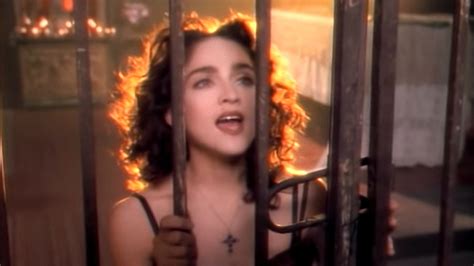
I really did not need the reminder. But there it was, loud and clear. Of course it was loud, it was my car stereo. I listen to my Apple Music source, which is loaded with over 10,000 songs that I have purchased over the last several decades. And out of those songs, the fact that this particular song came up today, of all days, is more than ironic and coincidental. It is a song that sparked controversy by a controversial artist. It was a song that came out in 1989, the same time I had begun my treatments for Hodgkin’s Lymphoma. In fact, back in those days, radio stations were notorious for overplaying their top songs, and this song was no exception. And I literally heard it, every day, on my way for my treatments, radiation and chemotherapy. Madonna’s “Like A Prayer.”
Today marks the 33rd year, that I took my last dose of chemotherapy, radiation completed prior, for Hodgkin’s Lymphoma. For those that understand, I was staged Nodular Sclerosing, 3b, not the worst stage, but pretty bad. I had completed 30 treatments of a ridiculous amount of radiation that haunts me to this day, and eight cycles (months) of some of the most toxic chemotherapy drugs, most of those drugs no longer used thanks to research and progress. Cancer anniversaries are determined by the individual, some on the diagnosis date, some on the date they are told that they are in remission. I count mine on the date that I finished my treatments.
It is amazing what I have been able to experience over the last thirty three years since. I have lost count on the number of cancer patients and survivors who have come in to my life. I would take on new challenges that I know I never had any original concept about prior to my diagnosis, patient advocacy. I took on a whole different direction in life, of course that was not by choice, and often times, having to fight for rights that I already had, and others that would eventually come. But the most important part of my thirty three years of survivorship, are the two days that I became a Dad.
I did not become a Dad by what some might call “conventional means,” because treatments left me unable to have kids. But the days that both of my daughters were placed in my arms for the first time, produced emotions that occur when a child is born biologically. All I wanted, was to become a Dad. But with cancer survivorship, nothing is certain. Time is not guaranteed. Yet, out of my thirty three years, my daughters have been there for seventeen and nineteen of those years. I got to experience so many things with my daughters, but most of all, I got to watch them grow.
It is hard for many to understand why I just “recognize” this day, and not celebrate it. Believe me, I do not take for granted what my longevity has meant. I know it is a huge accomplishment. But just as there were so many good things to come from my survivorship, so does some bad.
As I mentioned, I went through some pretty bad stuff between the radiation and chemo. Back in 1989/1990 (and before), medicine had no idea what would happen to survivors if they lived long after this magical “5 year mark,” if a patient got to that point. All that mattered, was that a patient got there. With Hodgkin’s Lymphoma being one of the highly treatable cancers, patients would be the first to discover what happened after five years, the hard way. And medicine was not ready for it either.
In 2008, I was diagnosed with a “widow maker” heart blockage, caused by my radiation therapy, requiring an emergency double bypass. The problem, no one was looking for it. Had it not been for my family doctor, on a whim, ordering a test that does not get done normally on a 42 year-old male, I would be dead. Over the years, more would be discovered about the progressive trauma my body had developed. This condition is not reversible.
The other thing that prevents me from celebrating, is the loss. Over the thirty three years, I have known too many who did not survive Hodgkin’s, relapsed – some, several times, and others develop similar late side effects as me. Many, just as I do, are still here, surviving. Others, sadly have passed.
Just this past week, one of my fellow survivors I know, passed away from complications of her Hodgkin’s past.
There is no rhyme or reason for who lives, and who passes. And there is no reason why, given such the high remission rate for Hodgkin’s Lymphoma, that so many should not live long lives, or decide who survives or who does not. This has left me dealing with something known as “survivor’s guilt.” No, I do not feel guilty for surviving cancer. I feel guilty because I do not understand what made my situation different.
In the end, I do not lose sight of what I have gone through, where I am today, and what it took to get here. I do not take for granted of all that I have and what/who means the most to me. I cannot celebrate when so many do not get that chance. But I do recognize that thirty three years ago, I had a choice to make. I made the right one.
And as I do every year on this day, I finish this post with an expression I have shared over and over again. For those battling cancer, “as I travel down the road of remission, I will keep looking in my rear view mirror to make sure that you are still following me. And if you are not there yet, hurry up and get there. It’s a great ride!”
Many times, I will get the subject of my posts from questions asked or comments made by fellow long term survivors. This will be one post, that not only benefits long term survivors of cancer, but those who have been fortunate to never have seen the inside of an oncologist’s office.
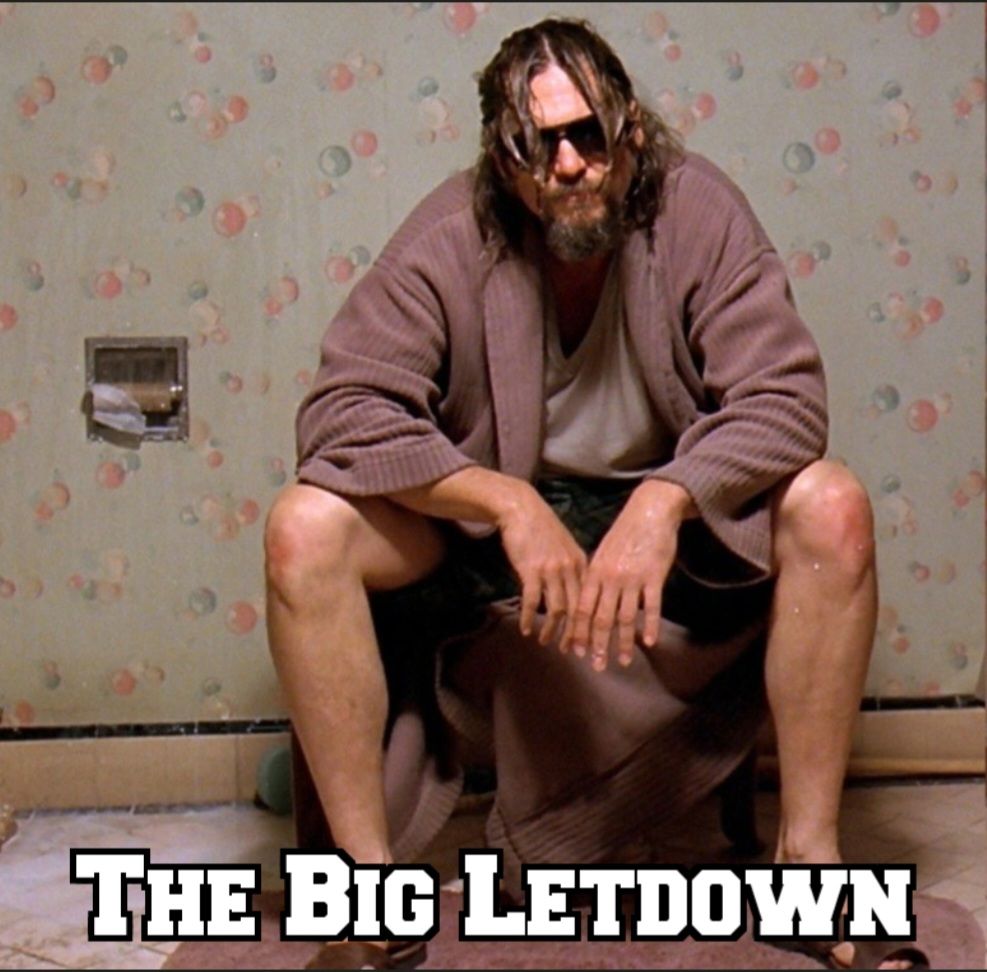
This is a very popular meme image that circulates around the internet. And since it fits in with my topic today, I thought I would make my own meme with the picture.
I am sure you have heard of the condition “reflux,” commonly referred to as G.E.R.D. (gastroesophageal reflux disease). It is the body’s reaction, a very acidic reaction brought on and aggravated by diet and stress. It is a fairly common condition, and its severity depends on the individual. Not sure if you have ever had to deal with it?
Comedian Rich Hall, gave a very clear and vivid description of reflux, using a term referred to as a “sniglet” decades ago on HBO during one of his comedic segments. A “sniglet” was simply a made up word, describing something that there was no other word for. In the situation of my post, he referred to a “vurp.” Care to take a guess at what “vurp” represented? It describes what happens with reflux perfectly, the combination of “vomit” and “burp” at the same time. If you have ever experienced this event, then you have had reflux at least once in your life. It is not pleasant, and the acidic aftertaste left in the mouth is just awful.
But there are those who must deal with this regularly. And its level of severity is determined by many conditions such as diet, stress, and other health conditions. Treatments can range from eating a diet with less acid (no tomato or orange products), or not eating fried or spicy foods, to daily routines such as not eating by a certain time of the day prior to going to bed or sleeping in a certain position, to using over the counter medications such as TUMS or stronger prescribed medicines.
A single event of reflux may not be such a big deal. However, if it is a situation that is repeated time and time again, it can be something quite serious. As I described above, if you are burping, and instead a small amount of vomit comes up instead of air, this is very acidic. We all had science in school, and know what acid does, eats away at things. Well, the more acid you have to deal with, the worse it will get. And for our bodies, in particular our esophagus, our throat, our mouth, and our teeth, this is a very bad situation. Because of the issues I deal with from my treatments for Hodgkin’s Lymphoma, this situation also almost killed me.
When most deal with reflux, it is often following a meal. We have an opportunity to do something about it, pop a TUMS or some other medication. Assuming we have not eaten just before going to bed, we are likely to stay vertical for a number of hours, allowing gravity to do what it needs to, to keep the stomach acid from creeping up into our mouths. If lucky, just a burp occurs or perhaps, a little bit of “vurp.”
If it advances to its worst timing, at night, while in bed, many problems can occur. Sure, your quality of sleep will be affected as you toss and turn, trying to get the GERD to stop. In my situation, I have two issues that I have to struggle with. Because of damage done to my esophagus from radiation therapy, I have a condition that not only traps food and particles in my esophagus, but also this stomach acid. This twice has led me to the emergency room with something called aspiration pneumonia, the trapped product bacteria gets breathed in to my lungs. My first episode of this, I went full septic, nearly dying. The other issue, is that I can actually “choke” myself out in my sleep as the acidic content fills my throat area. The problem is, I sleep through this event when it happens. So unless someone is around to hear me gasping, or my breathing gets interrupted that it startles me out of my sleep, the episode will not end well. Once I am woken up, it will be hours before I can fall back to sleep, and get the symptoms of the reflux event under control.
So, what can be done to help with this condition? Believe it or not, pretty much! As I mentioned, diet plays a major role. In spite of me being a picky eater, a condition that has me desiring the very acidic products that would aggravate the situation (tomato sauce, orange juice, buffalo wings, etc.), over the years, I have learned to do without these things. This does not mean that I no longer eat them, but it better well be damn worth it if I am going to pay the GERD price. And I do imbibe occasionally, and almost always will pay the price.
Stress, reduce and/or eliminate it. I do not need to go into detail. You know what this means.
Medications can help from over the counter TUMS and Pepcid to prescription level such as I have to take. Unfortunately, I am at a point where I take both, definitely not good to do, and certainly not as long as I have been taking them, nearly fifteen years now. But without taking them, this is not hyperbole, my quality of life is gone.
Timing, as I mentioned earlier, do not eat if you are going to be going to bed soon after. It is best to wait to go horizontal at least two to three hours, allowing for your food to travel where it needs to go, without coming back up.
And the final thing that can help with “vurping,” positioning. To prevent an attack coming on in my sleep, I have actually had to adjust the level of my bed, by about two inches, the headboard end of the bed only, so that my bed is in a downward slant, which allows for gravity to do what it must, to keep the acid where it belongs. All this takes is a simple piece of wood under each foot of the bed at the headboard. But, of course in my situation, this is not enough for me, and that is where the meme above comes in. This is also not the first time, the position that I sleep in, dictates my comfort level.
Back when I had my first heart surgery, done open heart through the breast bone, I was forced to lay on my back, just from the discomfort from the destruction of my chest and rib cage, not a position I normally sleep in. My favorite position has always been on my stomach. In the hospital, my bed was elevated, so being on my back did not bother me. Once at home, sleeping on my back did not work at all. And so, I began to lean to my left so as to change my position enough to get comfortable. A pillow would be placed behind me to hold me in that position. Seemed simple enough, just enough lean, not to be flat on my back.
Then terror struck. No, I had done nothing to my incision or rib cage. I felt as if I was on the verge of a heart attack, as if my heart were going to explode. The beat of my heart was pounding against my rib cage. I began to panic. I removed the pillow from behind me, allowing me to return, flat on my back. Odd, the pounding stopped. I really cannot explain why I did what came next, but I leaned to my left again. Again, that pounding had returned, and I leaned back flat again. Ok. This was weird. But at least I no longer thought I was having a heart attack. Now I was curious. I decided to lean now to my right. This time however, there was no pounding. I would return to my back, and once again, turn to my left. Sure enough, the pounding resumed. Flat, nothing. To my right, nothing. So I was not going to make an emergency phone call or a trip to the emergency room, but clearly someone forgot to fill me in on a very important detail. What the Hell was done to me, that my heart “shifts” when I go to lay only on my left side, that it feels as if it is touching my rib cage, making me feel as if I am sleeping on a bass drum?
An article on “healthline.com” explained that the apex of the heart being closer to the wall, when sleeping on the right side, the mediastinum (a thin lining), holds the heart in place separated from the lungs. Sleeping on the left side, the heart will shift slightly. Combined with my surgery, and things likely moved around internally, this is exactly what was happening. Though it has been studied, the website did not cite the study, but expressed that according to ECG (electro cardiogram) readings, there was a noticeable change in the heartbeat, when laying on the left side, and none, when laying on the right side. There is nothing reported if side sleeping is dangerous or not, nor does it contribute to any kind of heart ailment. For the purpose of this post, that is where I am ending this part of the left side sleeping discussion.
With reflux impacting my sleeping position, I found another discovery about me sleeping on what has become my dominant position now (with me ignoring the pounding heart beat). In spite of the prescription I take, watching what I eat and when, and position of the bed, all too often, that has not been enough for me to get through a night without either choking myself out from the rush of stomach acid, or worse, as mentioned above, developing aspiration pneumonia. I have found, sleeping on my left side, I do not have episodes of reflux. When I begin my night trying to sleep on either my right side, or even attempting my stomach, flat on my back has never been a consideration, my reflux fires up, and sleep is impossible. The problem for me occurs, if I successfully fall asleep on my left side, and if I fall deep enough, I have a tendency to roll flat on to my back, and then, you guessed it, my reflux acts up. This becomes a major issue, because I do not always wake up when this happens, hence, not until I am basically choking on my vomit, I normally wake myself up. If I am lucky, someone hears the gurgle and gasping for air before it gets worse. Once awake, I end up, getting up from the bed, going into the living room, and sitting in a chair for the next few hours, trying to get my chest and throat to settle down.
So of course, I am curious about the “left side thing” in regard to my reflux. According to a the NIH actually confirms the difference between sleeping on the left side versus the right side( https://pubmed.ncbi.nlm.nih.gov/26053170/ ). One hypothesis holds that right-side sleeping relaxes the lower esophageal sphincter, between the stomach and the esophagus. Another holds that left-side sleeping keeps the junction between stomach and esophagus above the level of gastric acid ( https://www.nytimes.com/2010/10/26/health/26really.html ).
There you have it, something from a long term cancer survivor that can actually benefit someone who has never had cancer, but has the nasty torture of reflux and lack of sleep. So yes, if I am laying on my left side, this is exactly what I am thinking about as I go to sleep.
The last time I felt like this, was back in 1991. I was approaching the first anniversary of my remission date for Hodgkin’s Lymphoma. Having faced a situation that easily could have taken my life instead, I realized that at the young age of 26, I should be better prepared in life. And though I was in remission, I could not help but think, this could have been a disaster for my family with me not having life insurance and not a penny to my name.
I called multiple agents to inquire about life insurance, which would be used to help with burial costs. Each and every one told me the same thing. “You need to be in remission at least five years. Right now, you are just too much of a risk.” This gave me a feeling as if I had been punched in the gut. Is this what my doctor meant when he told me at five years I could consider myself “cured?” And what did these pen-pushers mean “too much of a risk?” I beat my cancer! I was going to live a long time. Spoiler alert…
And so, since we did not have social media back then, desperate and angry to meet this need, I typed on a typewriter, a Letter to the Editor of our local newspaper (you know, the flat pieces of tree left on your doorstep every morning with the day before’s news). In that letter, I called out every insurance company that had turned me down, and challenged anyone not named, to step up, and sell me some life insurance. I was going to live a long time, and surely someone would want to earn money off of my money. As you can see from my front page, I am approaching my 33rd year in remission. 33 years, someone could be making money off of my investment.
A few weeks later, I was contacted by an agent, who had a thought on how to get me life insurance. A short time after, I purchased that policy, which I still have today. It is a small amount, but enough to cover my family’s needs when the times comes.
I wrote this post last night, and felt I wanted to sit on it because of the emotions I was experiencing. I found myself with the same feeling of abandonment that I was experiencing over thirty years ago. Last night, and still today, I am much more emotional about how I feel.
I am an advocate for many things, patient rights, adoption, survivorship, etc. I believe that any situation can be worked out, that it is just a matter of the right people working on it together. When it comes to my advocacy for cancer survivors, my efforts include finding information and resources, providing encouragement, and not stopping until everyone has the same level of care that has gotten me through to this day. This means that I do a lot of research. I participate in conferences, though because of Covid risk concerns for me personally, I now participate only via Zoom or other video means.
Over the years, I have expressed my frustrations time and time again, how disappointing it is, that medicine did not prepare for the fact, that cancer patients would live longer than the five year bench mark statistic that patients are given as a survival goal. Many of us went through life actually thinking, “okay, if I don’t die in year two, then by year five, my time will come soon after,” because no one talks about year six and on. But when it came to Hodgkin’s Lymphoma, the success rate for remission was one of the highest for a cancer. And with the invention of the internet and social media, we would soon discover, survivors would live many years after that “five year mark,” decades longer in fact.
And while surviving 20, 30, 40, 50, and yes, I am even aware of someone surviving 60 years from Hodgkin’s Lymphoma, for many, survivorship came with a trade-off. The problem? Nobody saw the potential problems coming. Or at least, was not doing anything or making anyone aware of the problem. Late term side effects. To put it in to perspective, think of any of the nuclear power plant emergencies that you have heard about over your lifetime. You heard stories about people developing issues long after the nuclear crisis, sometimes decades later, and the areas involved are still “hot.”
Well, for cancer patients, the situation is similar. For many, later on in their lives, health issues develop, related to their experiences with either chemotherapy or radiation therapy. These late side effects can be mild, or as in my case, life threatening. The problem was, there was no plan to deal with any of these issues. Hell, there was no knowledge of need to even look for these issues.
Back in 2008, when I got rudely introduced into this world of cancer survivorship issues, I was already aware of others, who had already had experiences. There were frustrations with doctors baffled by the mysterious symptoms that did not meet the demographics of the patient, for example, cardiac issues on a young, fit patient. And once discovered, doctors soon found other issues during corrective actions, complications during the procedures and recoveries not experienced by uncompromised patients who did not have the toxic exposures that cancer patients had. The problem, survivorship care was never taught in med school. This type of care was flying by the seat of its pants.
There are pioneers in cancer survivorship that have come along, individuals who saw something, and chose to make a difference. Over the years, I have been blessed to have been cared for by two of those doctors. But in a country alone of over 330,000,000 million people, society fell way short of meeting the need to care for us survivors. Since my initial surgery back in 2008, many more “survivorship clinics” have popped up, but we are still way short for the need. And the doctors that I referred to? They are still at it, trying to bring awareness to the needs of cancer survivors. Today, efforts are being made to bring awareness to primary care givers to help in this surveillance, the needs, the why’s, and the what to do about them. But the doctor’s attentions, are needed by the patients.
So yesterday, I attended yet another Zoom session, this one linked to cancer and heart health, which clearly I thought would be of interest to me. I had one question that I felt was important, and necessary, and might just make a difference. So I submitted the question right at the beginning to make sure once the question and answer period began, hopefully my question would get asked.
“I am a 30 year plus survivor of Hodgkin’s survivor, exposed to 4000 grays of radiation, and Adriamycin and Bleomycin. Naturally I have multiple cardiac issues. Does healthy diet and exercise improve the long term side effects of those toxicities, have no effect, or actually contribute to more progression of the damage? 2nd part, is there anything that can be done to reverse the cardiotoxicity of the chemo and rads, that would get a survivor to the level needed for a heart transplant, as opposed to band-aid repairs such as stents, valves, and bypasses?”
Now in fairness, I was fairly sure of the answers already. Because there are not any answers, not by this type of organization. There may be research being done, but not popularly being discussed or shared. While I am not a doctor, in my experiences over the last two decades, and of all the survivors I know who fall into the category of needing a heart transplant, I know of none. Because at least to my knowledge, none exist.
While the moderator of this Zoom and the guest speaker did provide valuable information and statistics, for general heart health and concerns, even with a small amount of follow up questions from viewers, plenty of time to ask questions, my type of question, was ducked, as always. The only part of my question that was answered, was that “issues could develop later in life, not just in the immediate sense.” And then the kicker came, as the guest speaker said that it was our “right to advocate for ourselves and for our care if we know that we have been exposed to such cardiotoxicity.”
Now I was pissed. NO! IT SHOULD NOT BE UP TO US TO FIGHT TO BE CARED FOR! MEDICINE SHOULD KNOW THESE PROBLEMS EXIST AND PATIENTS NEED CARE! We should not have to fight for this. YOUR ORGANIZATION IS ONE THAT HAS THE ABILITY TO BRING THIS ISSUE TO LIGHT! BUT YOU AREN’T DOING IT!
So, like I did in 1991, it is time to call people out. It is not enough to just research cures for cancer. But if you are going to cure us, you have to know that there is likely going to be health issues later down the line, know what these issues might be, when they could occur, and what needs to be done about them and how. Here is a fact, IT IS GOING TO HAPPEN! It should not come down to a trade off – does a person want to be cured of their cancer and just accept the health issues that come after, or accept a certain death, refusing treatment.
In elementary school, I learned of the American Cancer Society. We had annual fundraisers to support cancer research. Since then, and of course because of my cancer history, I have learned of many more organizations involved in cancer research and advocacy, even specifically to Lymphoma: The Leukemia & Lymphoma Society and The Lymphoma Research Foundation. There are plenty more organizations such as the National Coalition For Cancer Survivorship, which has cancer survivorship in its freaking name. I have approached each and every one of these organizations and more, at the very minimum for their input on long term cancer survivors. Crickets.
And sure, the NCI and NIH, both governmental agencies, and certain universities and some cancer hospitals have documentation on late effect issues, they receive no attention except from advocates like me who go looking for information. The list of organizations go on and on.
The media does not get off the hook either. Yes, it is great to see all the wonderful stories of people who have beat cancer on news bites or documentaries. But there is a whole society of people, cancer survivors who have been, and are being forgotten for whatever reason; apathy, lack of resources, lack of information, whatever the excuse. Will anyone step up and give decades long survivors with major health issues from their cancer treatments the help and the research we need? We need more than just the few that are doing all they can. It is unforgivable that we are being ignored or neglected.
There is one bright spot in all this. And it comes from the old adage, “if you want something done, you have to do it yourself.” Several years ago, long term survivors got together and created the first ever organization dedicated and committed to long term survivors of Hodgkin’s Lymphoma. It is called Hodgkin’s International, and it does just that, reaches internationally across several continents. Resources and information, support, survivor stories and more, can be found through this organization which hopefully help a long term surviving patient of Hodgkin’s, advocate for their own care. It is inexcusable that the ACS, the LLS, the LRF, and more have not taken more of a lead with all of their resources.
But with more cancers being cured, this likely also means that survivors of other cancers will live longer as well. And since late effects likely have not been studied for them, it has to be assumed that some day, those survivors of other cancers will experience what we Hodgkin’s survivors have with late effects.
It should not be up to the survivors to step up their game. We know what is wrong with us. We know the help that we need. Too many just cannot get the help or attention that is necessary. Will anyone step up? Anyone?
American Cancer On-Line Resources
Internet support from peers, caregivers, survivors, and professionals in several hundred types of cancers and related issues
American Cancer On-Line Resources
Internet support from peers, caregivers, survivors, and professionals in several hundred types of cancers and related issues








 Paul's Heart