Paul's Heart

Life As A Dad, And A Survivor

Archive for the category “Cancer”

The Stupidest Thing To Say To A Cancer Patient


It is not even a close call. You would think giving someone with cancer the news that they were dying would be the worst thing for a doctor to say to a cancer patient, I mean, yeah, it is a bad thing, but there is something that is said, has been said seemingly forever, and much to multiple objections, doctors continue to say this.

In 1988, as I was being diagnosed with Hodgkin’s Lymphoma, before my oncologist had even shook my hand or done any exams or testing, he said this to me. “Hodgkin’s Lymphoma is one of the most treatable forms of cancer with a high remission rate.” Here it came. “If you were going to get a cancer, this is the one you want to get.”

(photo courtesy of ElsaElsa)

What did he just say to me? The cancer I “want” to get? How about NO!?! I did not want any cancer, EVER!

I get it, there are many cancers that are treatable, and do okay with success. There are cancers that are not. And then, there are cancers with higher remission rates; testicular, thyroid, melanoma (when caught early), prostate, certain breast cancers, and Hodgkin’s Lymphoma.

At no time had I ever gone through life and thought to myself, “well, I know I am going to have cancer some day, sure hope it is this one.” Or how about prayer, “now I lay me down to sleep, I pray the lord my soul to keep. If I should get cancer, please let it be this one.”

Seriously! I never wanted cancer. I never wanted to have to deal with all these late side effects from my treatments, as if it were some sort of tradeoff for my longevity of being treated for the “cancer I would want.”

No one will appreciate a doctor wanting to be encouraging as much as I do. But telling a patient they got the “best cancer to have” is not it. Telling a cancer they have a butterfly cancer or a deer cancer, doesn’t make it any better just because you attach a cute description to it. As soon as we hear the word “cancer,” we automatically think death.

I know the doctor means well. A doctor would never say something to be intentionally upsetting. But it will be assuring enough to us, if you just tell us how confident you are, that with the current modes of treatment, you believe you have great odds (quote all of the stats you want) of getting us to long term remission. Do you see how inspiring that is? If you want, you can even add “one of the more successfully treated cancers” and “especially based on type and staging.” There is no reason AT ALL, that saying, “this is a cancer you want to get if you are going to get,” is beneficial or inspirational at all.

I can’t believe after nearly 40 years, and I know cancer patients are objecting to the comment, it is still being said today, and there is no reason to be doing so.

What If I Had More Time?


Don’t read too much into the title, especially if you are a regular follower of my blog. Though I am in congestive heart failure, my demise is not expected imminently. No, the question came across my feed as a conversation piece, both from the perspective of a cancer survivor and as a cardiac survivor.

Much like the “why” question, as in “what do you think caused it?”, this question, what if I “had more time to consider” the path I took, I have never really thought about either. I am more of a Budhist “here and now” kind of person, not spending much if any time wondering why, what, and if.

But I thought I would take the prompt, and see what I could come up with, if I really thought about it. I have two different extreme situations where I was faced with a rushed time constraint to make a decision, literal life and death, that would bring either reward, consequence, or both.

When it came to my cancer, Hodgkin’s Lymphoma, “what if I had more time to think about my options, if I would go through it again, or if I would even do anything about it?” First, the obvious, Hodgkin’s is one of the more treatable cancers versus almost always being fatal without treatment. That alone is the most powerful incentive. At the age of 22 years old, engaged, the last thing I wanted to do, was die.

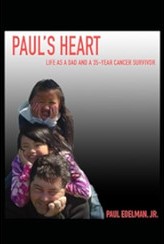
But as for my time to think, as I wrote in my book, “Paul’s Heart – Life As A Dad And A 35-Year Cancer Survivor,” I had already wasted so much time, months, when time is critical for treating cancer, in denial and fighting doctors opinions that I needed to start treatment. Nearly four months had gone by. How much more time should I have wasted?

What I should have been doing with my time at that point, was finding out more about the treatments the doctors wanted to do, instead of just picking a treatment, radiation (which I knew nothing about) and chemotherapy, based on stereotypes. It turns out, that it might have had a benefit, well, at least it would today. Back in 1988, any answers to questions I would have had about my treatments, likely would have been answered with a shoulder shrug, and an “I don’t know,” or “we don’t know.”

Given a binary option, get treatment and live, or don’t take treatment and die, there wasn’t really much to think about without details.

But here is what happened over the decades, giving reason to today’s patients to ask questions, take time, to be informed, before they make decisions. Back in 1988, medicine did not know, or at least kept quiet about the potential for late side effects from chemotherapy and radiation therapies. With studies only referring up to “5 year” survival rates, nothing really came up as far as late side effects because we were not expected to live this long. It wasn’t until decades later, that this became more of a concern. But even now, the needs of long term survivors to find care that knows how to diagnose and treat these late side effects, such as I have documented many over the years, it is still difficult to find the care needed.

If time was taken to tell me that I was likely to need heart surgery, have thyroid problems, develop immunity issues, have an increased risk in lung cancer and esophageal cancer, and more, would I have still opted to go through treatments? I believe that I still would have said, “yes.”

There was one thing that was missing from that opportunity however, were these risks being kept from us as patients? I would get an opportunity to see my oncology nurse and radiation tech decades later, both who acknowledged surprise to see me stand in front of them, followed up with “we just didn’t know,” and I believe them. But there are those that did know. Case in point, the Chernobyl disaster, the worst nuclear accident in the history of the world.

While I do not know anything about what medicine might have known about all of the risks with the chemo drugs I was given, I knew they were toxic, but they also were successful in treating Hodgkin’s Lymphoma, which without, was fatal. But the exposure to extreme high dose radiation was way different. And I am not talking about the radiation emitted sitting in front of a television that would have gotten you scolded by a grandparent. That was not the only place we could be exposed. The dentist? Getting x-rays of your teeth to find cavities, the dentist placed a lead blanket over you, because they knew the risks, no matter how minimal of that radiation exposure.

And then who could forget this? The China Syndrome (1979) starring Jack Lemon, Jane Fonda, and Michael Douglas, about a “fictional” meltdown at a nuclear facility and the coverup that followed (just as happened with Chernobyl). The spooky thing is, the movie was released just twelve days before an actual crisis, at Three Mile Island nuclear plant in Pennsylvania. I was thirteen at the time, lived about 45 minutes away from TMI. I remember the fear when the warnings of radiation exposure came out. But the movie, TMI cannot compare to what happened with Chernobyl. Do you know what can? The amount of radiation exposure used to treat Hodgkin’s Lymphoma back in the late 1900’s.

I am going to try to not get too sciency, so hopefully you will understand this. I was treated with 4000 rads of ionized radiation, what was considered “upper mantle, scattered field,” which meant my entire upper torso, including my jaw, both shoulders, and just below my rib cage, that entire area was treated. So as I said, to keep from being too sciency, let me explain 4000 rads this way.

100-200 rads, the risks are minimal. At 600-1000 rads (6-10 Gy), the risks are much higher, side effects are more serious, and mortality increases. But at 4000 rads (40Gy), massive destruction of the organs and body’s systems are possible, including late side effects, but survival of this exposure is unlikely. I was totally unaware of this back in 1989 when I agreed to go through my radiation therapy. The Hodgkin’s untreated would definitely kill me, but there was a chance, so would the treatment. However, this how the treatment risks were put to me, and I can prove it, in the picture below.

I realize it is hard to read, after all it was 37 years ago, but basically they noted the risks to be a secondary cancer (like skin), and a condition called “pericarditis”, and inflamation of the sac around the heart. If you have followed Paul’s Heart, you know they missed my risks by a mile. But only recently, I learned that there was the chance I would not survive the treatment. And medicine knew this.

I want to be clear, and I am going to switch to bold capitalized print so you see the difference, RADIATION THERAPY DONE TODAY IS MUCH DIFFERENT, MORE FINE TUNED AND PINPOINT, AND A LOWER AMOUNT giving the same success (the theory of less is better). It still carries risks, but not as high as my situation and others like me.

So there was the dilemma, don’t treat the Hodgkin’s, die. Treat the Hodgkin’s with toxic chemo or high dose radiation, the chance of dying is still there. But if I survived the treatments, I had a 96% shot at long term remission.

What if I had more time to think about it?

Then you take what happened with my heart at the beginning of my body falling apart from my cancer treatments. I was diagnosed with a “widowmaker” blockage at the age of 42, caused from progressive damage from the radiation damage eighteen years earlier. But the doctors were not aware of that fact until they went in. From the time I got on the treadmill for my stress test to thirty-six hours later on the operating table for an emergency double bypass, I was told I had no time.

Normally, I am all about getting second opinions, especially when it comes to such a traumatic surgery as this was. But I had no time. I was barely conscious with all the information thrown at me. I often wonder the torment that other cardiac patients faced with open heart surgery go through, when they have to wait weeks or even months to go through their surgery. On one hand, I was definitely glad that everything happened so quick.

But what if I had more time to think about having open heart surgery? What exactly would be the purpose of that? Are you hoping to make a lifestyle change to make it unneccesary? If you are at the point of needing open heart surgery, lifestyle change is too late, but necessary for recovery. Perhaps to find a better option? Again, good idea as long as you have the time. But if the end result is, without it you die, and with it, likely save your life, the answer is obvious.

Sure heart surgery is scary. I have been through three, and will likely have more in my future as my repairs will need to be redone at some point, and I have other things wrong with my heart that may require attention at some point.

My point is, it is okay to want to take all things into consideration, and that takes some time. But it is not good, if you are going to use that time to talk yourself out of what is in your best interest and recommended by the doctors.

Paul’s Heart Milestone – 100,000 Views!


It certainly took long enough, definitely longer than I thought it would, and then last night, as I realized it was going to happen real soon, it took even longer. I was taking screenshots of the counter, for just before, and then when 100,000 was hit. But as most things in life, not having control, my counter went cuckoo as multiple visits registered at the same time.

Though I am a 37 year cancer survivor of Hodgkin’s Lymphoma, I did not start the concept of Paul’s Heart until thirteen years ago, five years after I became aware of the complicated health issues I had and was developing due to the treatments of my cancer back in 1988 at the age of 22, just out of college.

I have always enjoyed writing. I actually have kept school assignments from elementary, junior high school, and high school. I always got good grades. In junior high school, I began writing song lyrics (though very tacky and cheesy) and poems, but it was documentary and testimonial pieces I enjoyed writing most. In college, I experienced my first bad and quite rude critique, and the way I handled it was definitely wrong. My professor not only handed me my first “F” (I had never had less than an “A” on any writing assignment), but my professor also wrote in big RED letters, “you don’t have the intelligence to get past a comic strip page.” And with that, I dropped out of her class. I was devastated. I felt I was a good writer. It was one thing to get a bad grade, after all, grading a paper is subjective, but the insult definitely crushed me. And I stopped writing, for a long time.

But it was during my later years of survivorship, my passion and my need for writing returned. As a patient and survivor advocate, I often encourage people to put their feelings and experiences down in writing. There is a catharsis, a releasing of pent-up emotions, stress, or trauma, resulting in a feeling of relief, renewal, or emotional cleansing that comes when you let those feelings leave your body. This is especially good if you have an aversion to speaking to a therapist, which I can tell you, is also a good option.

In 2013, I created Paul’s Heart originally with the web address http://www.pedelmanjr.com , later adding http://www.paulsheart.com . I have published 1323 posts over those years, averaging about 8 posts a month, sometimes a lot more, sometimes a lot less. I still have 285 sitting in a cue to finish, stalled by writer’s block or distracted by other topics that came up in the meantime, now sitting in their own purgatory. I have 48 pages, short stories also published on this site, as well as links to other resources. I have allowed comments to my posts, well, except for a few trolls (their comments are actually saved should I ever decided to approve them). I avoid only two topics by choice if it can be avoided, politics and religion, unless there is a tie to cancer, health care, and survivorship.

It definitely took a lot long to hit this milestone than I thought. At least in the beginning, average views to the page were around 20, and depending on the topic, there would be hundreds of views. It had been my hope, that in spite of Hodgkin’s Lymphoma being considered a rare cancer, Paul’s Heart would hopefully finally get Hodgkin’s on the conversation map. I am a small fish, not like the American Cancer Society or the Leukemia Lymphoma Society, but unlike them, I am solely focusing on Hodgkin’s and long term survivorship. Little ol’ me, not famous, not rich, and without the help of anyone famous who had also recently dealt with Hodgkin’s who had an opportunity to draw attention to the cancer we shared (Michael C. Hall “Dexter”, Martin Fry – lead singer of 80’s band ABC, comedian Dick Gregory, actor DJ Quals, literal “Survivor” Ethan Zohn, Pittsburgh Penguin hockey great Mario Lemieux, Kansas City Chiefs Eric Berry, and though he has passed, Microsoft founder Paul Allen), though in fairness, as anyone who has dealt with cancer, nobody wants to stay in the cancer world once they are done with treatment and in remission. I am an anomoly. For me, it is my way of giving back for the efforts of those who saved me.

So yes, I am doing this one post at a time, one person at a time. I am also doing this organically. This count was done with the efforts of those who follow or read Paul’s Heart, and then share it. Word only gets out, when it gets passed around. Not once did I ever pay to publicize any of my stories here. 100,000 views is a legit and honest effort!

I have also expanded Paul’s Heart with 2 Facebook pages, both titled Paul’s Heart, I am on Youtube at @paulsheart, and have a Paul’s Heart page on Tiktok at @paulsheart2022 where I rank in the top 10% of creators with the similar follower counts.

I have been doing peer to peer counseling with patients and survivors nearly my entire survivorship. I have given countless survivorship speeches and interviews on cancer survivorship, though still waiting for that one big opportunity with major media, but I realize the big ones don’t care about publicizing happy stories. And then of course, I got to publish so many projects, newsletters and book anthologies for other organizations (like Memorial Sloan Kettering Cancer Center). I even got to have one of my stories performed by broadway actors, that was way cool (see the link on this page “My Dad Was Just Like Me”). And then finally, my biggest effort, publishing my own book, called “Paul’s Heart – Life As A Dad And A 35-Year Cancer Survivor,” available on Amazon. And I have four more book projects started and undoubtedly will either need to do another book on my survivorship as I have lived even longer, or at least do a second edition. I am also working on doing an audible version of the book. One other thing I would like to do, is create a podcast.

I have tried to balance my topics here not just with things related to cancer and survivorship, but with all things, life after cancer, a life that definitely was no longer like what I was doing before cancer. I have shared stories of other survivors, and memorialized those who have passed. I have dealt with everything from relationships (married twice, divorced twice), to employment issues, and even dabbled in local politics as a school board candidate (an interesting experience). But perhaps the biggest thing that I got to share here, was my experiences with parenthood. The BEST THING hands down about my 37 year cancer survivorship is being the Dad of two of the most wonderful, intelligent, beautiful, kind, empathetic, all around, best daughters a Dad could ever hope for. They were not there when I dealt with my cancer, but they have witnessed the last 18 years of my difficult survivorship with all the health issues that I face. Only in recent years do they understand the gravity how serious some of these issues are, because now as adults, they are included in all of my appointments. There is no one that matters more to me than my daughters and each and every moment I get to spend and witness with them. This unconditional love has been the bond that has kept us together, and going, and keeps me going wanting so many more years of time with them, to see what else they accomplish.

Today is a big day for Paul’s Heart. It is a compilation of so many things that have come together, hopefully achieving what I set out to do when I was told I was in remission, making a difference, wanting to inspire others facing cancer and survivorship, even if one at a time.

And though I am sure that old battleax of a professor is no longer in this time and place, whereever she is, I am hoping she can see the two finger salute I am giving her. Her words did not stop me forever and I am quite proud to have done what I have. And finally, my daughters have their legacy of their Dad to be immortalized forever, right at their fingertips.

Post Navigation