Paul's Heart

Life As A Dad, And A Survivor

Archive for the category “Cancer”

“LIMA” Attacks


You can relax.  I am not referring to the capital of Peru.

A different world completely, I am referring to the world of cardiology, LIMA, known as “left internal mammary artery”, used in coronary artery bypasses in certain circumstances.  And in my case, my life-saving bypass procedure was done via “LIMA.”

The surgical procedure of redirecting blood flow around a blockage, using a grafted vein, is called a bypass.  A patient may need to have any number from singular to five bypasses to avoid a fatal cardiac event.  Typically, the patient’s own body will supply a vein from their own body to be harvested and used to perform this bypass.  This vein may come from the arm or the leg.  Depending on the circumstance, like my unique health background, upon removing a vein from my leg, realizing it had been compromised due to radiation therapy for my Hodgkin’s Lymphoma decades ago, my surgeon had no other choice than to use a “mammary artery.”  In fact, the mammary artery used, was actually split to bypass a second blockage, not just the major blockage of my left anterior descending artery.

There are pluses and minuses to this option.  A big minus to the LIMA is, there are no other options from my own body for any future bypasses.  The condition of my veins in my body leave them unusable.  So, if I were to need any further bypass procedure, I would guess I would either be looking at cadaver or pig veins.  But I am not going there, at least not yet.

The plus to using the mammary artery, the one end is already attached, meaning only the end on the other side of the blockage needs to be attached.  Plus, being an artery, it can handle a higher pressure than that of a vein.

That is as technical as I am going to get on this post.  Because as the title suggests, something has been getting my attention.

Prior to my bypass, I had symptoms for four months.  I ignored them, but they definitely got my attention.  My father had a major heart attack.  So I understand following my bypass, I need to listen to my body when it gives warnings.

For the first three or four years, my recovery from my bypass was flawless.  Of course I was dealing with my other late developing side effects from my treatment now making themselves known.  But in February of 2013, I developed a pain in my left breast, that left me paralyzed where I stood, afraid to move.  Afraid that one simple step towards help, might trigger a fatal cardiac event.  This pain lasted about a minute, and upon its relief, I went straight to the hospital.  Doctors all agreed that something had happened, but were unable to determine just what, and sent me home.

Fast forward to the end of the summer of 2019, I would have several of these mini episodes of that similar pain.  Knowing that it was nothing of real concern based on the last episode, I was not worried.  And again, these “attacks” subsided.  However, in September, one of these attacks came on, and it did not stop.  I was afraid, this was going to be “the real thing”.  At the half hour point, I made the decision to go to the emergency room.

Treated with nitroglycerin (not enough to explode me to pieces) to open up my circulatory system rapidly (warning… major headache was a side effect), the pain was relieved.  But once again, extensive testing revealed nothing.  Repairs that I had done previously were all in tact.  Doctors did not doubt that something was happening.  They just were not able to pinpoint what.

So, as I qualified for cardiac rehabilitation due to the stent I had placed in another major artery earlier in the year, I complied with the 3-day-a-week regimen for the last several months.  And again, being monitored, my body is acting and behaving the way it is expected to.  And then on Sunday, another one of those attacks came on, but like the older ones, minor and short in duration.

As I am prone to do, and as I have mad respect for them, I find that you can get a lot more information, and time, in talking to a nurse than your actual doctor (I am lucky that I am able to have this luxury with both doctor and nurse).  It was during a recent cardiac rehab session that I mentioned this “attack” to the cardiac nurse.  And that is when she told me about… “LIMA attacks.”

She described them perfectly as “lightning strikes.”  Now, while I have never personally been struck by lighting to explain how that feels, the description of quick and short in duration, and attention getting, fit perfectly to a lightning strike.

It turns out, these attacks are actually common for those who had LIMA bypasses.  Who knew?  She assured me that while they are uncomfortable and alarming, they do not foreshadow any pending cardiac event.  I have an upcoming appointment with my cardiologist, when I will ask and get a much more detailed explanation of this phenomenon.  I want to make sure that I explain it accurately, not just for those reading this, but for my sake as well.

More Than Just A Resolution


I stopped making New Year’s resolutions long ago.  I simply do not like obligating myself to do things.  My inspiration is simply my will to want to do it.  Exercise is one of those things that is often challenged as a resolution, and as a survivor of so many different health issues, I do not need any incentive to make exercise a resolution.  That does not change the fact, that it is something that I should want to make a part of my every day life.

Even with my physical limitations, there is nothing really stopping me from daily walks except for when climate is involved.  Range of motion prevents my arms from elevating to a certain point, but it does not prevent me using my arms.  So that means really, any kind of limit or prevention that I have to doing any exercise, is mostly mental.

Up until my emergency heart bypass back in 2008, I would consider myself an average exerciser.  Average in that I  would exercise, now and then, and again, and so forth.  Being somewhat overweight, and hearing regular lectures from my doctor about “being shorter” than my doctor, meant I needed to “weigh less” than my doctor, while I was very much interested in building strength, I knew I needed to burn calories in order to lose weight.

I had gained over 70 pounds since my last chemotherapy (and radiation).  Although the pieces of the puzzle at that time had not been put together, it was just assumed that my thyroid had something to do with the weight issue.  Of course it would later be discovered how badly my thyroid was affected during my cancer days.  Anyway, that is another post.

In January of 2008, I made my final resolution ever, to get into shape, to lose the weight, once and for all.   I would spend about an hour doing cardio, and another forty-five minutes in the strength training.  Having done weight training before, I already knew the plan I wanted to follow.  But in order to burn calories, I had to do a little investigation first, which would help me to burn more, and faster.

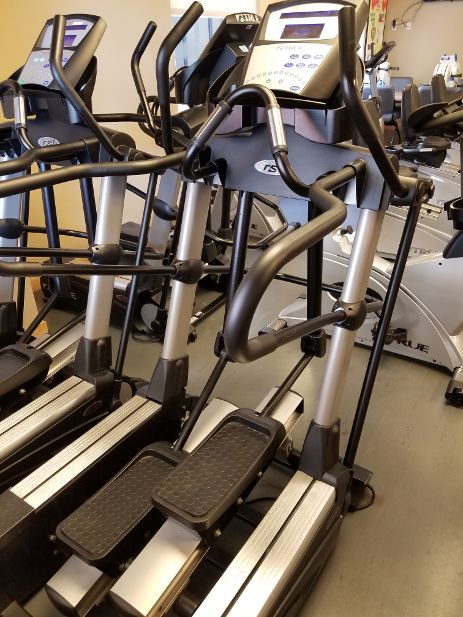
The eliptical, stepper, or stryder, would be the equipment I would use for that purpose.  With different levels of effort, due to either speed, or tension, I estimated I would be able to burn close to a thousand calories in an hour.  I would spend an hour on the machine, then head over to the gym for strengthening.

On the center grips, there are two metal grips, that sense your heart rate.  Obviously, getting your heart rate to increase to a targeted range, is what would help burn the calories.  That is all I knew.

Here is what happened.

I would start to step, increasing my speed, and tension.  Within less than a minute, I would have a tightness across the left side of my chest, almost like a cramp, much like a side sticker when running in cold weather.  As uncomfortable as it felt, I followed the “no pain no gain” mantra.  After all, the heart rate display was showing, my heart rate was indeed increasing, which I needed it to do.

That said, I am NOT a physical fitness expert, and the level that my heart rate was not only increasing, but the actual rate it got to, was not only safe, it could have been fatal for me.  (please read  my page, CABG – More Than Just A Green Leafy Vegetable and you will read what happened).

My heart rate went from the mid-70’s to 152 within less than a minute.  Unfortunately, that discomfort that I had, went away after a minute.  And with my heart rate elevated like I thought it was supposed to, I just kept on going, for the remaining 59 minutes, and then over to the gym.  No pain, no gain.

I did this for five days a week, until the middle of April when it was discovered that I had a “widow maker” blockage to the main artery going to my heart, blocked 90%.  I would discover this was caused also by my treatments for Hodgkin’s Lymphoma.

My cardiologist gave me the somber words, “it was not a question of ‘if’ you were going to die, but ‘when'”.  Some how, I got through 100 sessions of exercising with a near fatal condition, not dropping over dead.

Why am I bringing this up?

Because, as a cardiac patient and survivor, I have annual follow-ups, and have had additional issues.  And just as I had to complete cardiac therapy following my bypass, I found myself recently being required to go through additional therapy.  The goal, to get a better control on my blood pressure and perhaps help with my circulation.  In the beginning, it seemed similar to what I had gone through previously as far as exercises… a treadmill, a hand bike, a bike.

After two weeks, I was informed of an additional exercise.

I stood there paralyzed with an unrecognizable fear.  As with other issues that can trigger my cancer-related PTSD, this moment was one of those moments.  This machine literally nearly killed me.  And I was expected to get on it again.  I had refused to even go near this machine with the numerous gym memberships I had, since April of 2008 because of what happened.

I was not being given any choice in the matter.  The cardiac therapist wanted me to maximize my routine and health benefits, and just like before, this was going to do it.

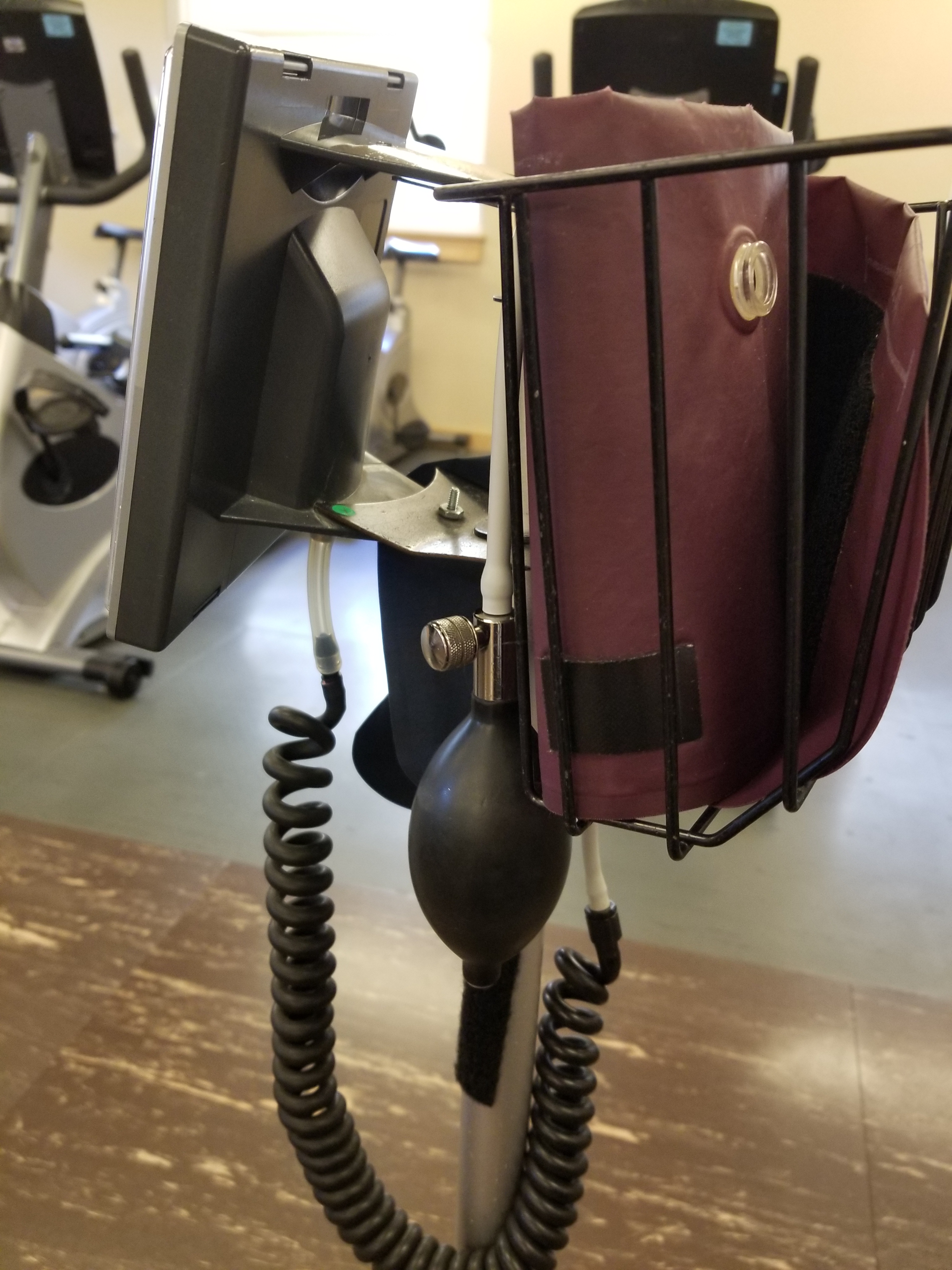
But unlike the last time I stepped onto this machine, I was being monitored.  My blood pressure, and my heart rate were all being monitored by a nurse sitting at a computer station.  And I needed to trust my therapists.  I had seen them in action when someone’s vitals were not right, and they interceded.  I really had nothing to fear.  I needed to get back on to that machine.

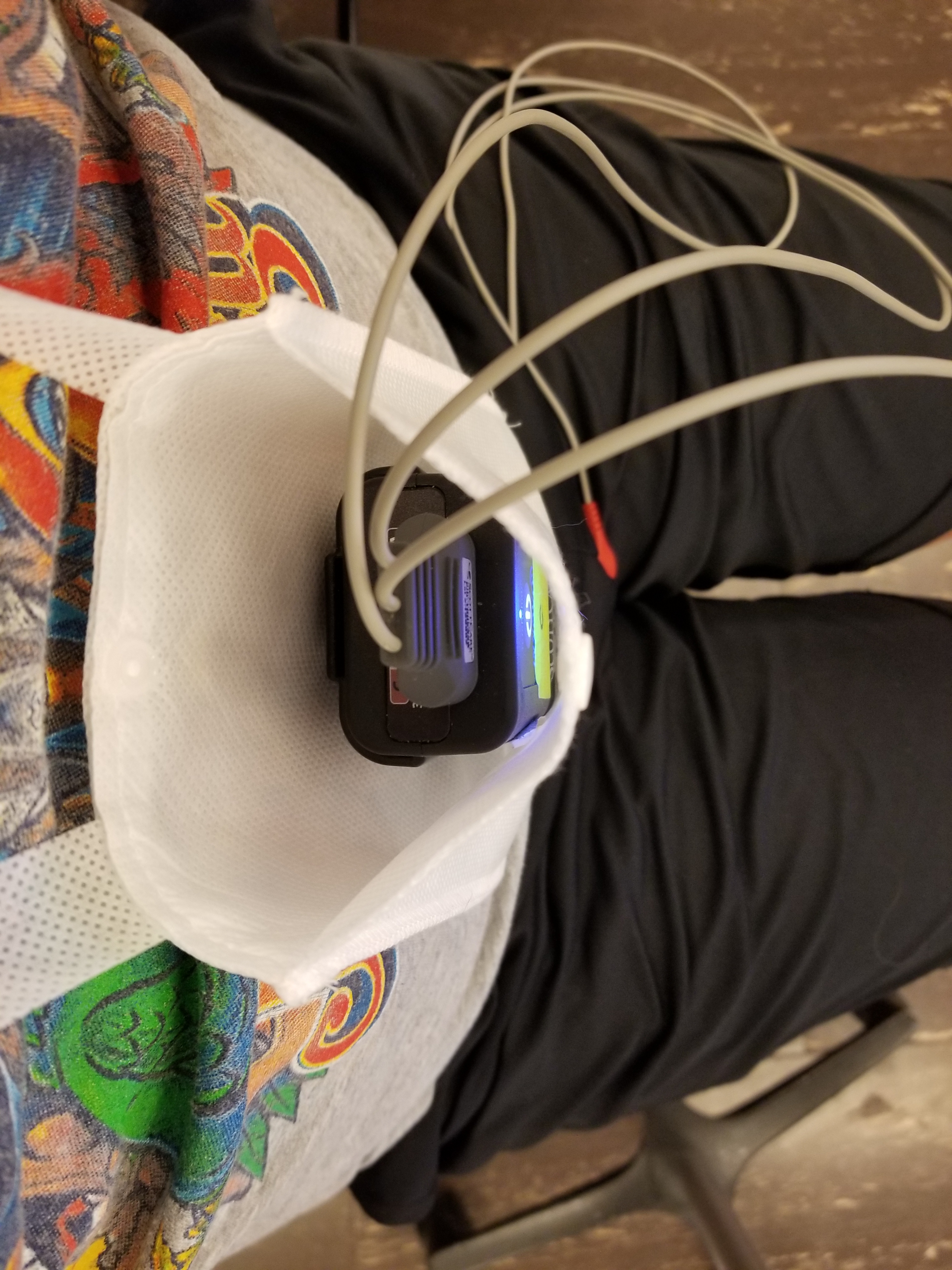
It has been over a month now, and this is the result.

That is right.  Exercising at the speed shown, and the tension shown, my heart rate was 121 at the five minute mark, just 7 beats below my maximum.  This was a huge hurdle for me to get over.  I am no longer intimidated, um… afraid of this machine.

The records kept while I have been going through this program show I have been doing the right thing.  The results physically may not show (as far as my weight), but blood work and physiology are showing that I am doing the right thing.  This cannot be a resolution for me.  Resolutions are not kept.  This is a lifestyle I need to keep up when my therapy program is over.

Because (Struggling To Understand And Accept Survivors Guilt)


The following is a story that I had written for an annual book compilation project.  I submitted two pieces.  This was the piece that was not chosen.  The other piece I will share at the end of March after publication.  In the meantime, I must thank my good friend, and fellow survivor Lara Vaughan Lazenby for being my mentor on this piece, challenging me to write as deeply and personally, and of course, grammatically correct.

Survivor’s Guilt.  Two words that make no sense being put together.  These two words combined make the ultimate antithesis.

Surviving cancer should be celebrated.  But for many, like myself, the fact that I am here, sharing this story, others are not.  Medicine could not save their lives.  This leaves me with a daily struggle of “why me, why not them.”  That is right, I carry guilt because for whatever reason, for whatever cards were dealt, whatever fate has decided, I am still here.  Others are not.

This feeling is not to be confused with that of “It’s A Wonderful Life,” the movie whose main character George Bailey, wonders what the world would have been like without him.  Quite the contrary.  I have much to be thankful for over these past thirty years than to wonder in that way.  Especially to be blessed with two wonderful daughters who mean the world to me.

The feelings I have are for those who either were unable to get through their fight, or faced additional challenges caused by treatments or late side effects.  Why them and not me?  Many of us went through the same treatment regimen.  Some were exposed to less of the toxicity than many of us from decades ago.  Technology and advances in medicine are supposed to provide better and safer success, yet I continue to say good-bye to too many.  And even with my own multiple and severe health issues from my treatments, here I still stand.  Why?

I am nobody special.  I am not a celebrity or professional athlete.  I was not in the middle of discovering anything earth-shattering.  I did not lead a squeaky-clean life.  Some of those who have passed never even got to experience life beyond childhood.  And though I lack the power to make the sun set and the moon rise, I will state this is not fair.  Between the doctors, the medicine, our bodies, reactions, and the multitude of other factors, why I am still here, writing this story, and others are not?

Over my thirty years of survivorship, I have personally met hundreds of other survivors, some from all over the world.  From the middle of my treatment schedule, others came to me and asked me, “what is it like?” trying to find out what to expect as they began their own cancer battles.

I soon found myself being someone other patients and survivors could talk to because I “got it” when it came to the emotions and struggles of getting through treatment, and issues with life after cancer.  In the social media circle of support, I often found myself between survivors who had misunderstandings about feelings as a result of support from others.  I found myself a voice of reason to help others understand that the mind of one person dealing with cancer, does not necessarily mean you automatically understand the mind of another.  Others simply view my day to day life as a longevity that they hope to enjoy with a family and a productive life after cancer.  Most importantly, to advocate for yourself and your health.

When it came to those who would pass away, I spent much time with them and their families just trying to offer the awkward comfort.  All the while wondering about their thoughts as I sat across from them thinking to myself, “why me and not them?”

I have spent several years in therapy dealing with my survivor’s guilt.  I do not know if I can ever let go of it.  Maybe I may not even want to.

A friend of mine, named Danny, shared a meme on Facebook that is relevant to all of us who have survived, no matter how long our survival has endured.  “One day, you will tell your story of how you overcame what you went through, and it will be someone else’s survival guide.”

My name is Paul Edelman.  I was diagnosed with Hodgkin’s Lymphoma thirty years ago.  I went through six weeks of radiation therapy, one day at a time.  I endured eight months of chemotherapy, a total of sixteen treatments, one dose at a time.  I took each day of my remission one day at a time.  I fought every challenge of discrimination in the workplace, in the insurance industry, and even in medicine, one day at a time.  And when I did not feel well, and all doctors could do was shrug their shoulders in puzzlement, I made them look harder.  When I was told I could not have a family because of my treatments, I became one through adoption of two beautiful daughters.  I enjoyed a lengthy career doing what I loved.  And I have been blessed to meet and know so many other survivors.

But still, why me?  Why not them?  Because.  Just because.

Post Navigation