
Fatigue – The Other “F” Word
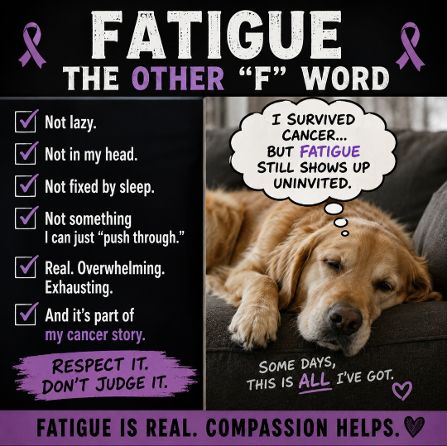
Fatigue is one of the most common and most frustrating parts of cancer treatment and survivorship. I would even go as far as to say it is harder to cope with than any pain, because pain can be medicated, while fatigue affects nearly every aspect of life – the body, the mind, emotions, and even our sense of identity.
Fatigue can happen at any stage of cancer or survivorship. During treatment, fatigue can be caused by any of the following: chemo and radiation, anemia (lowered red blood cells), poor nutrition, weight loss, sleep disruption, pain, stress, anxiety, and just the overall demands of fighting for life.
Even after treatment, fatigue can still persist. The body needs time to repair the damage from the treatments, and this can take months, even years. Heart and lung problems related to the treatment can contribute to fatigue. Hormonal problems such as with the thyroid, chronic inflamation, depression, anxiety, PTSD, and normal aging are all mentally exhausting.
The common question asked by nearly everyone is “how long does it last?” And honestly, there is no one answer. Many people recover within 6-12 months, while others can take several years, usually battling some sort of intermittent fatigue (good days and bad days). Even 37 years out from Hodgkin’s Lymphoma, I still battle fatigue every now and then, as a long term effect from my treatments and various health conditions that I deal with.
Why is fatigue so hard to get over? Because it is not normal “tiredness.” Sleep won’t make it go away. It can appear suddenly, even with the smallest of efforts. Mental concentration and memory can be hindered, sometimes we refer to it as chemo brain or brain fog. It is frustrating because on the outside, we look fine, and those looking at us cannot understand why we feel so bad, and just can’t push through it.
So, what does help? Doing as much as you can, when you can, if you can, and if not, that’s okay. Stay as physically active as you can with gentle exercise such as walking. Pace yourself. Let me repeat that, pace yourself, alternating activity and rest on your good days instead of overdoing it. Get good sleep. Eat right, I know, the obvious stuff. Don’t be afraid to ask your doctor to look for medical issues, such as anemia, thyroid, vitamin deficiencies, cardiac, or medication side effects. A big one which I occasionally struggle with, manage stress, whether through mindfulness, counseling, or support groups. And lastly, accept that your body’s limits may just be different than before the cancer.
But I want you to listen to this important message. FATIGUE IS NOT WEAKNESS OR LAZINESS! I repeat, just because you are fighting fatigue, does not make you lazy or weak. Fatigue is a real issue, a biological consequence of your cancer and treatment. So much pressure, often futile, to “get back to who you were before cancer” to building a fillfilling life around the body that you have today, many survivors find that once they stop measuring themselves against their pre-cancer energy level and instead learn to work with the current abilities, fatigue becomes more maneagable emotionally as well as physically.

