
Is There Really A Difference?
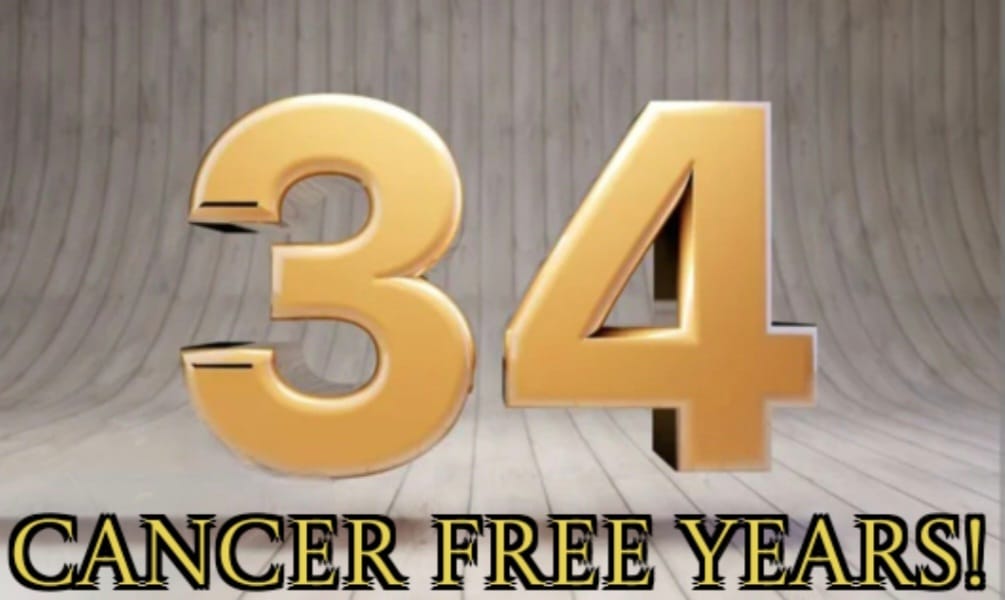
So earlier this week, I recognized my 34th year “in remission” of Hodgkin’s Lymphoma (in quotes for a reason I will explain shortly). As you can see, that coincides with the “countdown” on my page, now just six years away from what I am considering my next major milestone in my cancer survival, 40 years.
But several who follow “Paul’s Heart” on my various resources like Facebook, Instagram, and TikTok, noticed something confusing, perhaps a typo, or had I calculated incorrectly.
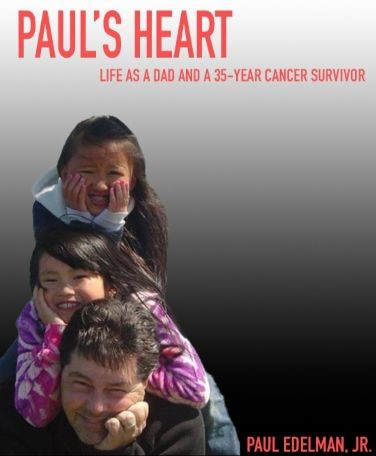
My book is titled, “Paul’s Heart – Life As A Dad And A 35-Year Cancer Survivor.” But I am recognizing 34 years in remission. So which number is correct? Actually, both are correct. In fact, there is a third number to consider. And a cancer survivor would be correct to refer to any of those three to be honored.
The question gets asked often on social media, “what do you consider your ‘survivor’ date?” And honestly, it is up to the cancer survivor what they choose, with three options available; the date diagnosed, the official date of remission (will get into the technicality of this one momentarily), and the date finished with treatments.
I have many medical anniversaries that I recognize each year, of course not all of them good. I never forget those dates. One of those darker dates are coming up next month in fact. But as far as my cancer history, I do remember my actual diagnosis date, well, at least the time period, because I fussed around and delayed and denied getting diagnosed so long (I dedicated a whole chapter in the book to this behavior).
And without spoiling the book, I mentioned an “official” date of remission. This happens usually when “halfway” scans are done halfway through the treatment schedule. If doctors, the treatments, and body have all done according to plan, a patient may hear the word “remission” even before the completion of all of the rounds of treatments. This was an exact date for me. I remember that moment very well when I got that phone call. This announcement creates another situation, and very complicated at that. Patients hear “remission”, and having likely struggled through the treatments they already have gone through, seek to end the rest of the remaining treatments, something nearly all oncologists will recommend to ensure long term remission. As I remind those patients, there is a reason I have hit 34 years in remission, because I followed my doctor’s advice, knowledge, and skills, and finished my treatment plan.
Finally, there is the date that you take that last dose of treatment, whether radiation, or chemotherapy (IV or pill).
So why did I choose to recognize the third option, actually a lower number than years since my diagnosis? I mean, I could do that. In fact, many cancer organizations clearly state that a cancer patient is considered a survivor from the moment they are diagnosed, and that is regardless of the prognosis. For me, this was a time period I would rather forget. While I cannot forget having had cancer, nor would I really want to, I simply do not think about the “when it happened.”
As for when I was declared in remission, that is also a reasonable date to set, but I do not use that date. In the book, I mention I actually hit remission following radiation treatments, but soon after, new disease was discovered (not considered a relapse as it was not in the radiated field). So when I heard “remission” again, this time halfway through the chemotherapy, I wanted to make sure that I was in remission, and that meant waiting until taking my last dose, which happened to be a couple of pills for the last dose (so before anyone fact-checks on March 3, 1990 is indeed a Saturday, I took the last IV dose the prior Friday, February 23rd and had only the pills to finish at that point).
And on March 3rd, it was 34 years since those last pills were taken, what I consider my official “remission” date.
So then why does the book refer to me as a 35-year survivor? Well, because I can. And besides, from an optic angle, the title would have just looked weird saying “34-year survivor” and I did not want to wait another year to publish the book. It took me nearly four years just to get it done.
Whatever date a cancer patient chooses to recognize and celebrate, is up to them, as are their reasons. But no matter if one year, five years, ten years, thirty, forty, or fifty, being a cancer survivor is a big deal. Many of us talk about not wanting cancer to define us, but we definitely find out a lot about who we are, and find out a lot about those around us. And every year that follows is a great one.
 Paul's Heart