Paul's Heart

Life As A Dad, And A Survivor

Archive for the month “April, 2022”

A Super Hero Effort


Continuing on with my post from yesterday, on the 14th anniversary of my emergency double bypass, the fog had worn off from the prior anesthesia, and all I could do was look at the clock. It was now after 8pm, I had just gotten a slight appetite, but now not allowed to eat because of the need to fast prior to the surgery.

With the pre surgery testing complete, not being able to eat, all I could do is wait. I could not sleep as my nerves definitely were getting the best of me. How could this be? I was only forty-two years old, and in fairly good shape. I had been exercising regularly. I was active. I did not smoke.

Per my request, an orderly came into my room around 3am, I was not able to sleep. I had asked to be taken down to the hospital chapel for a few words. I do not believe in organized religion, but I do believe in a higher power and that is as far as I will go with that. Upon my return back to my room, a large figure, I could only compare to the actor Michael Clarke Duncan, feeling specifically like I was in my own movie of “Green Mile.”

He was there to prep me for surgery, as well as take me there. Why did I get the feeling there was a need to have someone so much larger than me and more powerful than me, as if necessary to make me comply? In reality, one of the few people in my care during any procedure, never a word spoke between us, hence, never knowing his name. And for as big as he was, he was a gentle giant of a man.

I was placed on a gurney to go down to the operating room. It was 4:30am. Other than the pre testing, I was completely unaware of what was about to happen, other than the simplistically put, “having open heart surgery,” which I clearly understood. Unlike other patients who would have days, weeks, or even a couple of months to dwell and think about what they needed to go through, I had no time to worry or obsess, or stress.

The actual operating room that I was delivered to, was twice this size, and filled with so many television screens, multiple pieces of equipment, and of course, the operating table, which I was transferred to upon my arrival. I could see piles of materials and surgical tools, I knew all of them meant for me. I was scared, but I was also amazed by the clear effort that was about to take place.

Of in the distance, I heard one of the nurses make the comment, “he’s too young for this.” I normally do not respond to conversations I was not meant to hear, but this time I did. “I am young. Quite young. And I want to get through this. I need to get through this. My daughters need me.” Still, they were my focus on this, even more than the surgery.

As they continued to position me, and organize everything, the last thing I remember, was them removing my hospital gown. Yep. Just laying on the table, all sprawled out, in my glory, also now being restrained. Nowhere near ready to begin yet, my anxiety must have been registering, as I remember nothing after that moment.

But clearly, a lot was about to happen. And it was only by reading the operative report, that I could not only see, but appreciate the extraordinary efforts that went into saving my life.
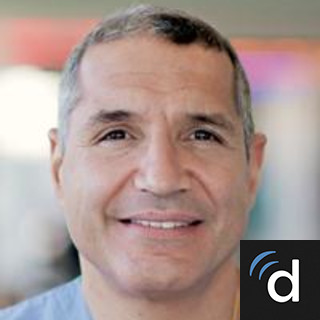
This was my super hero. He did not wear a cape or mask. But he did have the most steady hands, nerves of steel, and the best skills necessary. Reading through the operative report is an amazing story, and quite surreal. This stuff was actually done to me. I won’t post the entire report, but some of the highlights:

  • a median sternotomy incision was made, exposing the sternum. Simultaneously, a vein was being removed from my left leg to be used for the bypass
  • a decision was made to use a different artery, the mammary artery for the bypass

This next part is what still shakes me to this day. It is extraordinary.

  • “The patient was placed on bypass, cooled, and emptied.”

In other words, I was put onto a heart/lung machine, that would do everything for me, my body about to be unable to do it on its own. Cooled and emptied? Yep. My heart was drained of all blood. And then came the ultimate moment, planned and necessary of course.

  • “The heart became asystolic.”

My heart no longer had any electrical activity. My heart was no longer beating. My mind is still blown seeing these words. Clearly I am here, as I am writing this post. But technically, on my own, I would have been dead. To keep risks against survival from this process, patients are intended to not be on this machine more than one to three hours if possible. My documented time was forty-five minutes.

  • the bypass process had been completed

And then the really cool parts:

  • “hot shot of warm oxygenated blood solution was given.”
  • “the heart was allowed to fill.”
  • “the heart fibrolated at this time.”

My heart was beating on its own again. How chilling that is to see in writing. And I survived this.

And finally:

  • “I closed the pericardium loosely, rewired the sternum, and closed the wound.”

The surgery had been a success. I was off to recovery.
My doctor was a hero once again.
The “Oh Sh*t!” Moment


Continuing on from yesterday’s “anniversary” post, as promised, I arrived at the Cardiac Cath Lab at six in the morning for what the cardiologist had described as an “in and out” procedure, “a stent or two and would be good as new.”

Without getting too lost in the weeds, a catheterization process involves a thin tube being inserted through an arm or leg, in my case a leg, fed through a blood vessel to the heart with a small camera to look for issues such as blockages or irregular heartbeats. During this process, if the doctor sees something that needs correction, which was already assumed in my case, he fixes it, again, expecting to place a stent to open up what is expected to be a blocked artery. Textbook procedure.

My nurse Heather had prepared me for the procedure. I do not remember why, but a conversation about my surviving Hodgkin’s Lymphoma came up. It might have been, because I was only forty-two years old, way too young for heart surgery, and I had explained that I had already been through a major event, so, age really had nothing to do with it.

My biggest concern, was that I had no spleen, removed as part of the diagnostic and staging procedures for my Hodgkin’s. So, I urged Heather to make sure all involved, knew that I was at an increased risk of infection and to take all necessary precautions. I wanted this to go as simple as possible.

When I came to, in my room, I saw my cardiologist, and a friend/co-worker who had stopped by to see how I was doing. The looks on their faces were serious. Though I remember the conversation, at that moment, it was not sinking in.

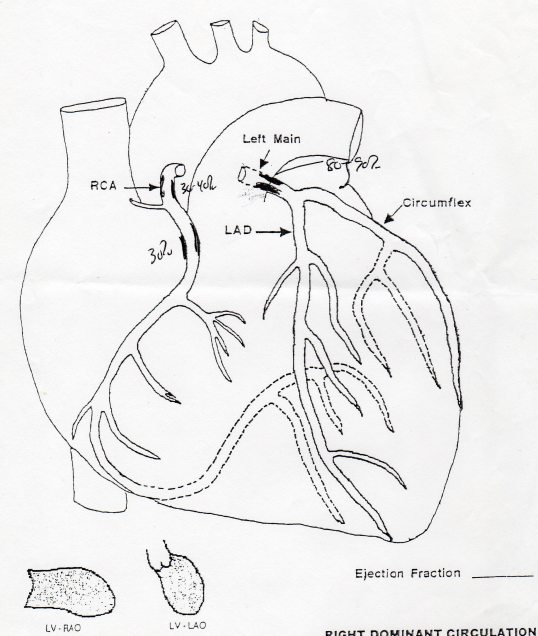
These are the actual images from my heart, and a drawing to make sure I could clearly see and understand the moment. A moment that was so extreme, and because of coming out of the anesthesia, I could not grasp how dire the situation was. Perhaps that was a good thing.

It was explained that I had three blockages that were of concern, one to the degree that even as a cancer patient I had not given the prognosis a possibility. The most serious of the blockages was the main artery, blocked between 80-90%. My friend, who also happened to be a paramedic, blurted out, “oh my God, it’s a ‘widow maker.'”

This simplified exclamation from my friend, though accurate, caught my cardiologist by surprise. “Yes, though we don’t like to call it that.” As I mentioned, I was fortunate to still be groggy from the anesthesia. I had no idea, that I could die at any moment, a fact that my cardiologist would tell me at my first follow up appointment a month later.

A blockage like this, nicknamed “a widow maker,” is referred that way, because the result is a major and fatal heart attack and unless it is able to be responded to immediately, the likelihood of survival is zero. The fact that I had symptoms for as long as I did, and did nothing about the situation, even more astounding as to my luck of survival. As my cardiologist phrased it, “it was not a question of ‘if’ you were going to die, but ‘when.'”

Oh shit! But as I was not understanding fully what was going on, my cardiologist was also confronted with his own “oh shit!” moment, clearly not expecting to have run into what he did.

I was scheduled for an emergency triple bypass the next morning, April 18, 2008, which was Friday, as in the anniversary of that day is tomorrow.

I thought the worst I would have ever had to deal with in my life, was going through cancer. My heart said…

As the anesthesia wore of, I discovered I had a busy twelve hours ahead of me in preparation for this surgery. The doctor had to find a vein to be used for the bypass, likely from either of my legs. Chest x-rays would be done, and tons of blood work. All of this had to be done quickly, as I was scheduled for surgery first thing in the morning. But there was one thing that I could not do before then.

See my daughters one more time. Hug my daughters one more time. It was an awful feeling. I could not even tell them I loved them one more time. And as long as the surgery was successful, it would still be days before I could see them.

A Heartbeat Away


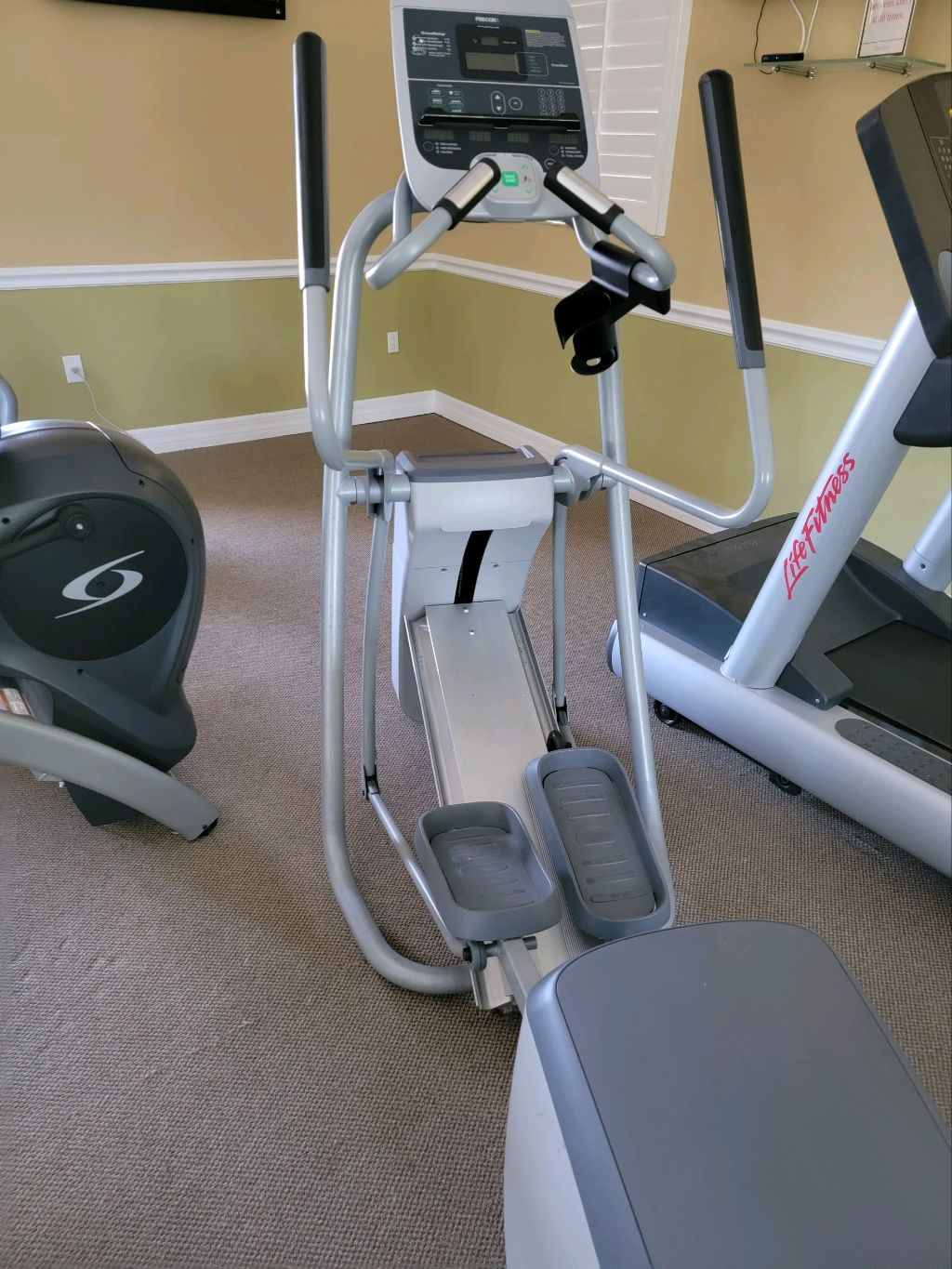
This machine almost killed me, literally. To this day, it still haunts me when I see it. Yet, repeatedly, I have had to face this demon, as part of the recovery from not one, but three heart surgeries. For at least four months that I can recall, I would climb up on the eliptical, begin, and moments later, develop such a tightness in the left side of my chest. The heartrate on the telemetry of the machine, had climbed from 83 to 152 beats per minute in less than a minute. And then, the tightness was gone. I continued with my exercise for a full hour on the piece of equipment, then proceed for an hour’s worth of strengthening and weight training.

But I was annoyed by the way my trip to the gym always began. Only in hindsight, did I discover, this issue developed anytime I was putting a physical stress on my body, such as snow shoveling, mowing the lawn, or certain tasks at work. And just as with the gym, the tightness would disappear soon after it began.

I reached out to my doctor, who, on a hunch, and I do mean a hunch, especially for a forty-two year old man, felt that given my past history with Hodgkin’s Lymphoma, and the treatments of radiation and chemotherapy, that a stress test on my heart was warranted. It made no sense to me, as I had no heart problems (spoiler alert, there is a reason they call cardiac disease the silent killer) that I was aware of.

Though the date was April 16th in 2008, today, it is actually today, Wednesday marks fourteen years since that stress test was given, and would change my life forever. Cancer survivorship took on a whole new meaning for me.

The following sentences and phrases were written on my report:

“Exercise stopped due to EKG changes with chest tightness, indicating some sort of ischemic response.”

“There is a large in size, moderate in intensity defect involving the entire anterior wall (of the heart), anterior apex, and anterior septum on stress images. This is consistent with significant left anterior descending artery territory ischemia. Ejection fraction is 38%.”

I was told I needed to speak to a cardiologist about what all this meant, because just as my first visit with an oncologist (aka cancer doctor), I knew what a cardiologist was. I just did not expect to need one.

The doctor did not mince words with me, completely confident that I was dealing with a blockage. It was not known how bad but he was certain I had at least one. Confident and casual about the situation, he assured me, “I want you checking into the cath lab right now. We will pop a couple of stents into you first thing in the morning, and you will be good to go in about a week.”

For the full conversation, check out the page “CABG, Not Just A Green Leafy Vegetable” here on “Paul’s Heart.”

I had an appointment to keep in the morning.

Post Navigation