Paul's Heart

Life As A Dad, And A Survivor

You Can’t Take It With You


If there is one thing that being a cancer survivor has taught me, is that life will carry on with or without you, and all the possessions you have mean nothing, if life carries on without you.  In a matter of minutes, you can go from thinking no one can get along without you.  And if you are lucky enough, that you get a second chance,  what hurts almost as much, is to see that as you recover, you may not be as valuable as you thought you were.

I get it.  Because it happened to me.  I was told I needed emergency heart surgery.  Just like that, all the money I had made, all the things that I had purchased, no longer mattered.  All I could think about were my two young daughters and the possibility that they could end up without their father.

My car, my house, vacations, all things material… nothing mattered to me at that moment, than getting through the surgery for my daughters.

Over the last week, in Southwest Florida, weather conditions have left the area prime for brush fires.  With windy conditions, drought conditions, and plenty of dead vegetation, it took no time at all for the fire to spread to 7500 acres.  But as fire fighters tried to contain the fire, winds pushed the fire towards urbanized areas.  Mandatory evacuations were issued.  And just as with any other natural disaster, there are always people who will defy those types of orders.  We have all seen people interviewed on television in situations such as being in the path of a brush fire, or hurricane, who insist on staying put in their homes.

It is sad and frustrating to watch.  Homeowners basically sacrifice their lives to protect their property.  They are willing leave their family and to die for their belongings.  Worse, as first responders are known to do, emergency personnel often find themselves having to rescue these people, putting their own lives at risk.  As one emergency personnel member put it during the recent brush fire, “if you choose to remain in your home, not only may we not be able to save you, but we will not be able to do flyovers dumping water and flame retardant over your home, for fear of injuring you with the impact of the liquid.  And yes, you can get hurt by the impact of the water down below.

Thinking about it, I never hear one person say what they will do to protect their home from the fire, or flooding.  They just say, that they are going to do all that they can.  They do not say “why” they are doing it, only that “it’s all they have.”  Could a homeowner actually prevent their home from burning to the ground with a garden hose?  Can a homeowner actually keep floodwaters from flushing out the contents of their home?  Of course not by themselves.  And they have to know that.  Though they do not state it, could they be afraid of looters?  In an evacuation area, police and sometimes national guard members are deployed to the evacuated areas to prevent looting.  Do they realize that they are putting others at risk to potentially need to save them or prevent other damage?

It is sad to say, that often through tragedy or crisis, we realize what is important, what we can really do without.  How many have attics packed with knickknacks that have not been seen in decades, but during an emergency, they become a priority more so than our lives?  It makes no sense really.  Having been there, in that life or death situation, I know my priority.

I went into a cardiologist office for a simple treadmill test (or so I thought).  I was told it needed to be corrected as soon as possible, like “tomorrow.”  And once on the table, it was discovered that it was far worse than imagined, and I would need open heart surgery.  I had explained to my daughters, that I was just going in to the doctor to have something simple done, that I would see them the next day.  I went through the next 36 hours without seeing them or holding them while I waited for my surgery.  Because of my late effect damage from radiation and chemotherapy treatments for Hodgkin’s Lymphoma, the surgery was going to be quite risky.  I might not make it through the surgery, and all I could think about was holding my daughters one final time, and not getting the chance.

Yeah, if I am told to evacuate because of fire or hurricane, you can bet your ass, I am out of there.  There is absolutely nothing more important than those in my life.  Everything else can be replaced.

Breaking Down The “New Normal”


I have written in the past, about getting back to life following treatment for cancer.  And as probably nearly every cancer survivor will tell you, there is nothing normal about getting back to life.  It is never the same.  Therefore, the phrase, “new normal” gets tossed around quite a bit.  On one of my support lists that I belong to, a post came through with a completely different explanation of what “new normal” meant to this individual writer.  And she did a great job probably explaining it in even more thorough detail.

I am always willing to share stories from other patients and survivors, especially when there is an opportunity to offer support and understanding.

I present to you, Brenda Denzler, from her daily personal journal, in her own words:

“Cancer treatment saves our lives-if we’re lucky.  But for those of us whose lives it saves, it doesn’t save ALL of our lives.  It saves bits and pieces of them.  The doctors call that partial life a happy, hopeful name: our “new normal.”

Most oncologists don’t pay a great deal of attention to this partial-life-left-to its quality or its features-among those of us (the majority) who are older when we get cancer. They are just beginning to pay real attention to it among those who were children when they got it.  Among the older set, they write off most of our comments and complaints about our
new limitations as the natural process of getting older, and they turn away without a thought given to the issue of how much older, how much faster. As if the only thing cancer treatment did to our bodies was rid them of cancer.
I just spent about 36 hours with my two grands.  It was a good visit.  I had prepared for it ahead of time, minimizing the amount of cooking and cleaning up of dishes I’d have to do. I took a nap with Sebastian on Saturday afternoon.  I propped my feet up and rested throughout.as much as having two small children around will allow.  And when they left, while I welcomed the chance to sit for 30 uninterrupted minutes, I was sad to see them go (as usual).
I quickly succumbed to a nap.  No surprise.  It lasted 4 hours.  That WAS a surprise.  I woke up from my nap feeling so fatigued I could hardly move, with that all-over body ache and tingling hands and feet that indicate I’ve overdone it big-time.  I oozed my way through the evening, trying hard to stay awake and not lapse into sleep again.  When a decent bedtime came, I allowed myself to succumb.  This time I slept for 11 more hours. And again, I have awoken feeling exhausted deep in every bone, every muscle fiber.
THIS is my “new normal.”
To hell with the “but you’re getting older” bromide.  I shouldn’t be THIS old, THIS soon.
Cancer treatment saves our lives, if we are lucky.  But not ALL of our lives.  It just saves bits and pieces of them.”

A Farewell… Lisa Will Never Be Forgotten


This one is tough.  I do not grieve well at all.  I generally keep stiff, silent, and strong.  Since my Hodgkin’s diagnosis, I have said goodbye to many patients and survivors, too many.  And like everyone before, there is a mark that Lisa will leave on me, forever.

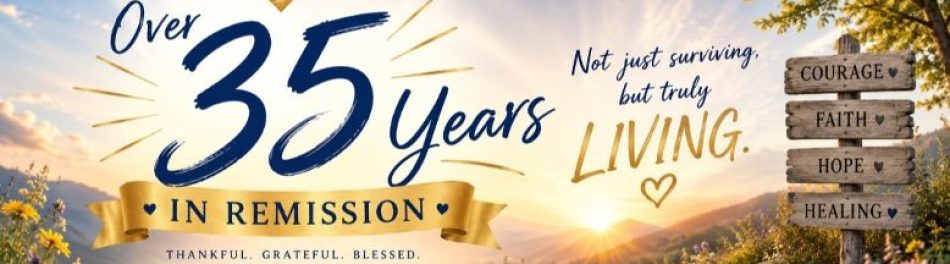
In 1988, I was diagnosed with Hodgkin’s Lymphoma.  In March of 1990, I was declared in remission.  In 1997, I discovered the internet after years of just chugging along on my own.  I found internet support groups consisting of other people who had Hodgkin’s Lymphoma and were living beyond their treatments.  One such list, was found on ACOR (Association Of Cancer Online Resources).  ACOR had a list for nearly every type of cancer, including the rarely diagnosed, Hodgkin’s Lymphoma.  One member on the Hodgkin’s email list, Linda (whom I wrote previously about in another tribute following her passing), had encouraged me to join a list for “long term survivors”.  I was only in remission seven years at that point.  And from what I saw on the list, it was not necessarily about longevity, but the people on this list had a lot of things wrong with them, seemingly because of their treatments that they were exposed to.

I would find myself signing on and off of this list, mainly to announce another remission anniversary, still with no other issues.  I did not feel it was appropriate for me to be on this list really.

Then in 2008, nine years ago this past Monday, I had open heart surgery due to damage developed over time from radiation and chemotherapy damage.  I could not get back onto the ACOR list soon enough for answers to the many questions I now had.

Linda was still there, but so was Lisa.  Lisa was diagnosed and treated for Hodgkin’s in 1984.  She went through similar chemotherapy and radiation therapy as I did, but she also had to undergo a bone marrow transplant along with additional chemotherapies due to the difficulty of achieving remission.  She had late term effects, as well as battling a second cancer.

I was introduced to the concept of a “survivorship clinic.”  Though Lisa lived in Texas, and I was living in Pennsylvania, she mentioned such a clinic, specializing in late effects from cancer treatments, at Memorial Sloan Kettering Cancer Center in Manhattan.  She mentioned a specific doctor who was there, who happened to originally be her doctor in Texas.  She urged me to go to MSKCC, especially to see this doctor.  I would get to see this doctor, who would be key, and still is to this day, in dealing with the nearly dozen late effect issues that have developed since my treatment days.  These issues are progressive, and irreversible.

But it did not stop there.  Lisa would be there repeatedly for me with information, or guidance.  The amazing thing was, she too was facing her own late effects at the same time.  I have never personally met Lisa, but we had talked several times over the telephone, via email and private messenger.  At no time, would she ever let on, when she was overwhelmed herself when she was not only guiding me, but helping anyone.  The only time most of us would be aware that Lisa had her own issues, was when she posted about herself.  This was who Lisa was.  The truth is, there are lots of “Lisa’s” on various internet support groups.

There were many times, when I was so scared about prognosis, side effects from procedures, and of course, the unknown of our futures.  While she dealt with her own health issues, she had a compassion about her which clearly came from her skills and knowledge as a nurse.

We never really got to discuss personal things, but I know she loved her husband John, and her family.  Like many survivors, she tried to do with her life what she could and was able to do, all the while balancing her life along with her family.  Oh, and helping us other cancer survivors.

Over the last year, things got more difficult for Lisa.  As with me, Lisa had her own cardiac issues, and she had developed congestive heart failure as a result of her treatments years ago.  Her only hope, would be a heart transplant.  But just as our late effects often mystify the medical community, these same late effects often played a role in such critical and life/death situations, as it did this time for Lisa.  Sadly, though a heart transplant was her only hope, she had been denied twice.  One reason given was that her body may not have been able to handle the side effects of the anti-rejection drugs due to her other issues.  Her body had come so far, only to be betrayed by the risks of post surgery.  So many of us, friends and fellow survivors reached out to Lisa to advocate for Lisa and find someone willing to due the heart transplant.

I last heard from her mid-March.  She was tired.  She knew that a transplant was not going to happen in time, even if approved.  The news of Lisa’s rapidly failing health culminated in the announcement that she had passed away this past Monday.  Lisa touched so many survivors with her care, empathy, information, guidance.  Her passing will leave a huge void for all of us who turned to her, when we could not find and answer anywhere else.

I promised Lisa that I would tell of her struggles to get this transplant, and that will be another post.  But for now, to her husband John, her brother Roger, the rest of her family, friends, and fellow survivors, my deepest sympathies and prayers to you all.

In closing, this was the last post that I saw from Lisa:

“My heart is breaking because I did not qualify for a new heart at UTSWMC.  I’m so grateful to everyone for all the kind thoughts and prayers. My words are limited right now. Still trying to process this disappointment. I really felt it was meant to be for me to have a new heart. Most of all I wanted this for myself, but in the meantime I thought how encouraging it would be for other survivors that may face this challenge someday and how I could help them. Praying daily for a renewed strength emotionally and physically.
Love,
Lisa”

Lisa, I promise you, you have encouraged so many of us.  Having spoken with the doctor that we both had taking care of us, I know that he will also continue his work to make treatment for us long term survivors more successful.  And so many of us, your fellow survivors, will continue as we have followed your efforts, to help others who struggle with getting the late term care so many need.

Post Navigation