Paul's Heart

Life As A Dad, And A Survivor

Archive for the category “Cancer”

More Than Just A Resolution


I stopped making New Year’s resolutions long ago.  I simply do not like obligating myself to do things.  My inspiration is simply my will to want to do it.  Exercise is one of those things that is often challenged as a resolution, and as a survivor of so many different health issues, I do not need any incentive to make exercise a resolution.  That does not change the fact, that it is something that I should want to make a part of my every day life.

Even with my physical limitations, there is nothing really stopping me from daily walks except for when climate is involved.  Range of motion prevents my arms from elevating to a certain point, but it does not prevent me using my arms.  So that means really, any kind of limit or prevention that I have to doing any exercise, is mostly mental.

Up until my emergency heart bypass back in 2008, I would consider myself an average exerciser.  Average in that I  would exercise, now and then, and again, and so forth.  Being somewhat overweight, and hearing regular lectures from my doctor about “being shorter” than my doctor, meant I needed to “weigh less” than my doctor, while I was very much interested in building strength, I knew I needed to burn calories in order to lose weight.

I had gained over 70 pounds since my last chemotherapy (and radiation).  Although the pieces of the puzzle at that time had not been put together, it was just assumed that my thyroid had something to do with the weight issue.  Of course it would later be discovered how badly my thyroid was affected during my cancer days.  Anyway, that is another post.

In January of 2008, I made my final resolution ever, to get into shape, to lose the weight, once and for all.   I would spend about an hour doing cardio, and another forty-five minutes in the strength training.  Having done weight training before, I already knew the plan I wanted to follow.  But in order to burn calories, I had to do a little investigation first, which would help me to burn more, and faster.
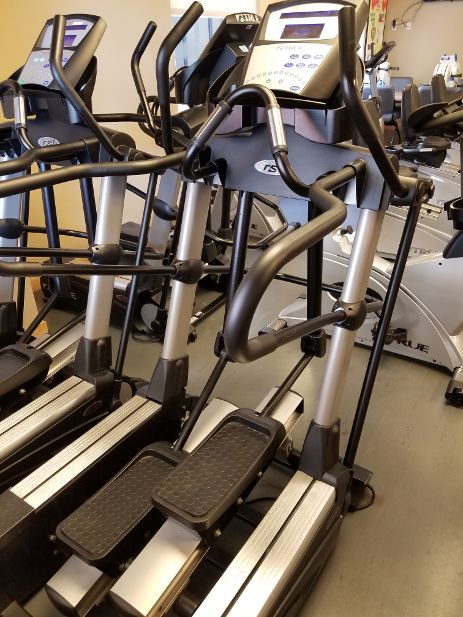
The eliptical, stepper, or stryder, would be the equipment I would use for that purpose.  With different levels of effort, due to either speed, or tension, I estimated I would be able to burn close to a thousand calories in an hour.  I would spend an hour on the machine, then head over to the gym for strengthening.

On the center grips, there are two metal grips, that sense your heart rate.  Obviously, getting your heart rate to increase to a targeted range, is what would help burn the calories.  That is all I knew.

Here is what happened.

I would start to step, increasing my speed, and tension.  Within less than a minute, I would have a tightness across the left side of my chest, almost like a cramp, much like a side sticker when running in cold weather.  As uncomfortable as it felt, I followed the “no pain no gain” mantra.  After all, the heart rate display was showing, my heart rate was indeed increasing, which I needed it to do.

That said, I am NOT a physical fitness expert, and the level that my heart rate was not only increasing, but the actual rate it got to, was not only safe, it could have been fatal for me.  (please read  my page, CABG – More Than Just A Green Leafy Vegetable and you will read what happened).

My heart rate went from the mid-70’s to 152 within less than a minute.  Unfortunately, that discomfort that I had, went away after a minute.  And with my heart rate elevated like I thought it was supposed to, I just kept on going, for the remaining 59 minutes, and then over to the gym.  No pain, no gain.

I did this for five days a week, until the middle of April when it was discovered that I had a “widow maker” blockage to the main artery going to my heart, blocked 90%.  I would discover this was caused also by my treatments for Hodgkin’s Lymphoma.

My cardiologist gave me the somber words, “it was not a question of ‘if’ you were going to die, but ‘when'”.  Some how, I got through 100 sessions of exercising with a near fatal condition, not dropping over dead.

Why am I bringing this up?

Because, as a cardiac patient and survivor, I have annual follow-ups, and have had additional issues.  And just as I had to complete cardiac therapy following my bypass, I found myself recently being required to go through additional therapy.  The goal, to get a better control on my blood pressure and perhaps help with my circulation.  In the beginning, it seemed similar to what I had gone through previously as far as exercises… a treadmill, a hand bike, a bike.

After two weeks, I was informed of an additional exercise.

I stood there paralyzed with an unrecognizable fear.  As with other issues that can trigger my cancer-related PTSD, this moment was one of those moments.  This machine literally nearly killed me.  And I was expected to get on it again.  I had refused to even go near this machine with the numerous gym memberships I had, since April of 2008 because of what happened.

I was not being given any choice in the matter.  The cardiac therapist wanted me to maximize my routine and health benefits, and just like before, this was going to do it.
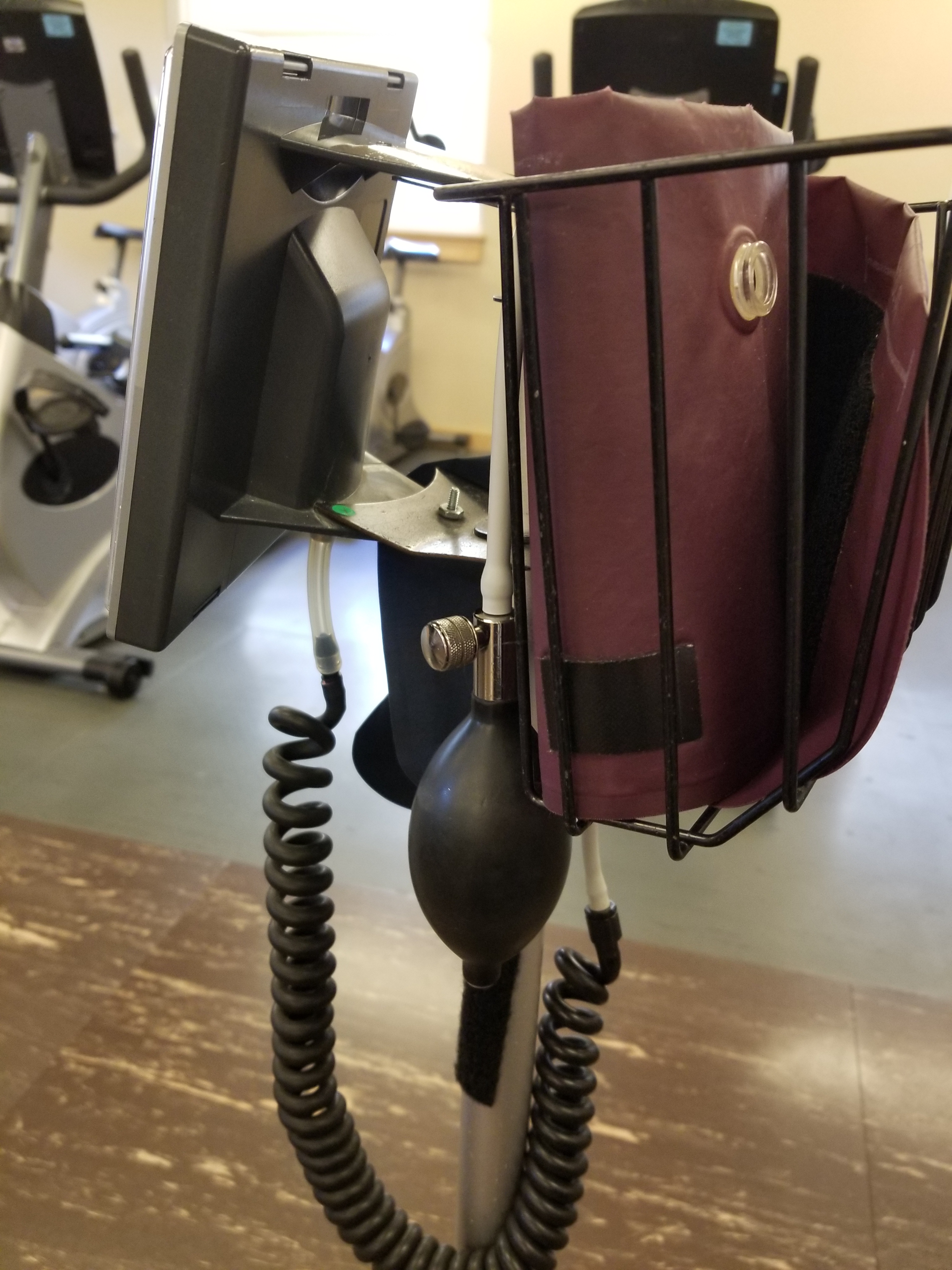
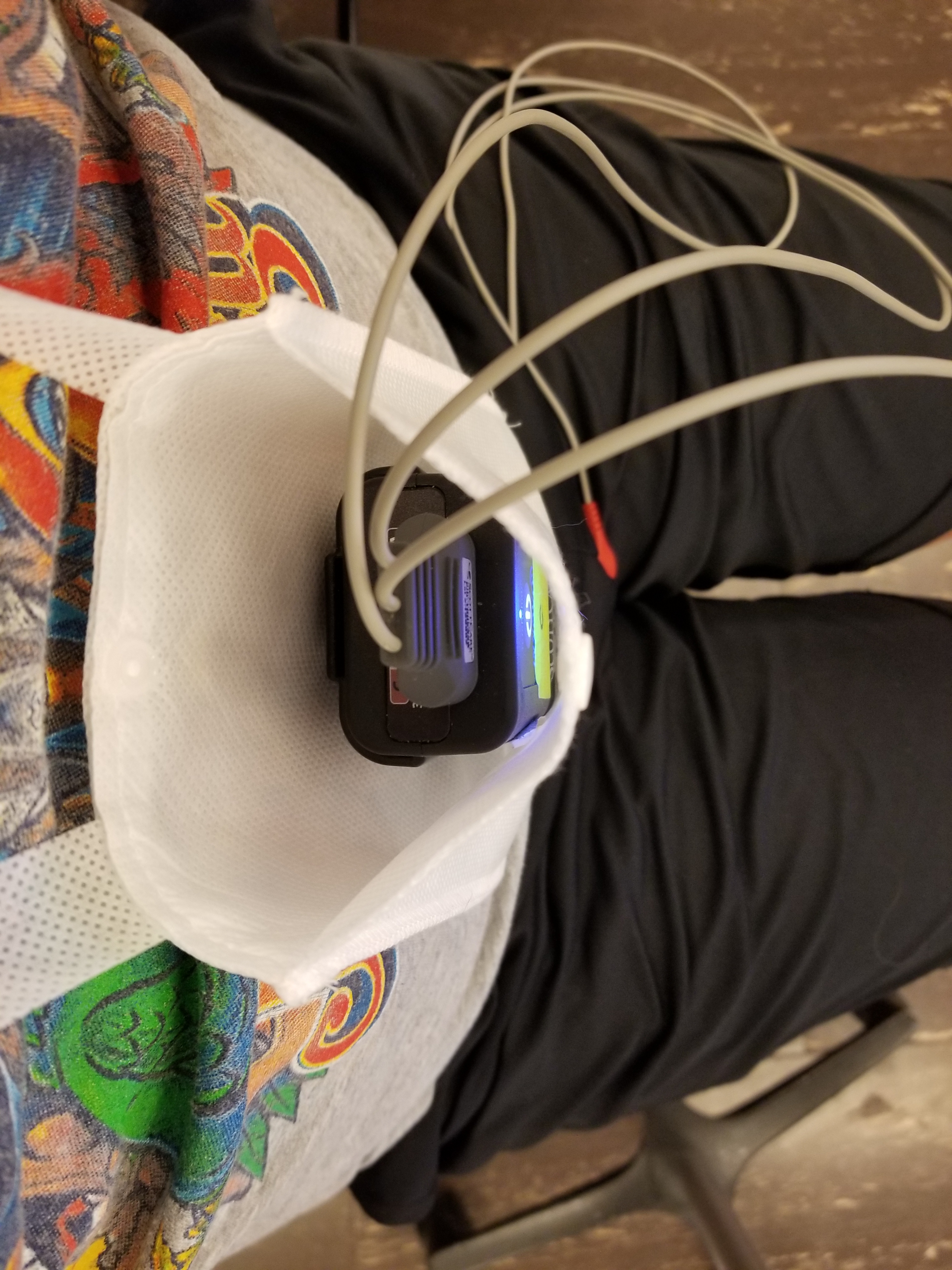
But unlike the last time I stepped onto this machine, I was being monitored.  My blood pressure, and my heart rate were all being monitored by a nurse sitting at a computer station.  And I needed to trust my therapists.  I had seen them in action when someone’s vitals were not right, and they interceded.  I really had nothing to fear.  I needed to get back on to that machine.

It has been over a month now, and this is the result.

That is right.  Exercising at the speed shown, and the tension shown, my heart rate was 121 at the five minute mark, just 7 beats below my maximum.  This was a huge hurdle for me to get over.  I am no longer intimidated, um… afraid of this machine.

The records kept while I have been going through this program show I have been doing the right thing.  The results physically may not show (as far as my weight), but blood work and physiology are showing that I am doing the right thing.  This cannot be a resolution for me.  Resolutions are not kept.  This is a lifestyle I need to keep up when my therapy program is over.

Because (Struggling To Understand And Accept Survivors Guilt)


The following is a story that I had written for an annual book compilation project.  I submitted two pieces.  This was the piece that was not chosen.  The other piece I will share at the end of March after publication.  In the meantime, I must thank my good friend, and fellow survivor Lara Vaughan Lazenby for being my mentor on this piece, challenging me to write as deeply and personally, and of course, grammatically correct.

Survivor’s Guilt.  Two words that make no sense being put together.  These two words combined make the ultimate antithesis.

Surviving cancer should be celebrated.  But for many, like myself, the fact that I am here, sharing this story, others are not.  Medicine could not save their lives.  This leaves me with a daily struggle of “why me, why not them.”  That is right, I carry guilt because for whatever reason, for whatever cards were dealt, whatever fate has decided, I am still here.  Others are not.

This feeling is not to be confused with that of “It’s A Wonderful Life,” the movie whose main character George Bailey, wonders what the world would have been like without him.  Quite the contrary.  I have much to be thankful for over these past thirty years than to wonder in that way.  Especially to be blessed with two wonderful daughters who mean the world to me.

The feelings I have are for those who either were unable to get through their fight, or faced additional challenges caused by treatments or late side effects.  Why them and not me?  Many of us went through the same treatment regimen.  Some were exposed to less of the toxicity than many of us from decades ago.  Technology and advances in medicine are supposed to provide better and safer success, yet I continue to say good-bye to too many.  And even with my own multiple and severe health issues from my treatments, here I still stand.  Why?

I am nobody special.  I am not a celebrity or professional athlete.  I was not in the middle of discovering anything earth-shattering.  I did not lead a squeaky-clean life.  Some of those who have passed never even got to experience life beyond childhood.  And though I lack the power to make the sun set and the moon rise, I will state this is not fair.  Between the doctors, the medicine, our bodies, reactions, and the multitude of other factors, why I am still here, writing this story, and others are not?

Over my thirty years of survivorship, I have personally met hundreds of other survivors, some from all over the world.  From the middle of my treatment schedule, others came to me and asked me, “what is it like?” trying to find out what to expect as they began their own cancer battles.

I soon found myself being someone other patients and survivors could talk to because I “got it” when it came to the emotions and struggles of getting through treatment, and issues with life after cancer.  In the social media circle of support, I often found myself between survivors who had misunderstandings about feelings as a result of support from others.  I found myself a voice of reason to help others understand that the mind of one person dealing with cancer, does not necessarily mean you automatically understand the mind of another.  Others simply view my day to day life as a longevity that they hope to enjoy with a family and a productive life after cancer.  Most importantly, to advocate for yourself and your health.

When it came to those who would pass away, I spent much time with them and their families just trying to offer the awkward comfort.  All the while wondering about their thoughts as I sat across from them thinking to myself, “why me and not them?”

I have spent several years in therapy dealing with my survivor’s guilt.  I do not know if I can ever let go of it.  Maybe I may not even want to.

A friend of mine, named Danny, shared a meme on Facebook that is relevant to all of us who have survived, no matter how long our survival has endured.  “One day, you will tell your story of how you overcame what you went through, and it will be someone else’s survival guide.”

My name is Paul Edelman.  I was diagnosed with Hodgkin’s Lymphoma thirty years ago.  I went through six weeks of radiation therapy, one day at a time.  I endured eight months of chemotherapy, a total of sixteen treatments, one dose at a time.  I took each day of my remission one day at a time.  I fought every challenge of discrimination in the workplace, in the insurance industry, and even in medicine, one day at a time.  And when I did not feel well, and all doctors could do was shrug their shoulders in puzzlement, I made them look harder.  When I was told I could not have a family because of my treatments, I became one through adoption of two beautiful daughters.  I enjoyed a lengthy career doing what I loved.  And I have been blessed to meet and know so many other survivors.

But still, why me?  Why not them?  Because.  Just because.

An Observation On Long Term Cancer Survivorship


As soon as I had completed my treatments on March 3, 1990, 30 YEARS AGO this upcoming March, I was prepared to close the chapter on my life that dealt with cancer.  It was done.  All I had to do was get through some follow up appointments for the next several years, and that would be it.

It was not joke what I went through between the chemotherapy and the radiation, but I did get through it.  And I was grateful for that.  It was all that I ever wanted.  The reality however, my body was damaged goods, not being able to do something as simple as donate blood or body organs due to the toxicities.  But still, I wanted to help.

I discovered a new pilot program called “Cansurmount” starting with the American Cancer Society.  The concept was simple.  Match a cancer survivor with a current cancer patient, and give peer-to-peer support.  As a cancer patient and survivor, an opportunity to meet or talk to someone else who has gone through what you have gone through is often more beneficial than common psychotherapy, because you are being helped by personal experience, not just someone in a suit and degree.

The program was slow to develop, so along with seeing other Hodgkin’s patients, I was also soon seeing patients with other types of cancers.  The program no longer exists, but I continue my efforts to help as many as I can to get through their cancer fights with guidance and emotional support.

It was during my initial year of remission, that I was approached by a woman, another survivor of Hodgkin’s Lymphoma.  Her name was Linda Zame.  And she was not just a survivor of Hodgkin’s, she was a long term survivor.  She had told me about a “listserve” of long term cancer survivors that she felt would be good for me to join.  I was touched.  But really, I was only months just having finished my chemo, hardly a “long term” survivor by definition.  She argued that my length of survivorship did not matter, I needed to be put on that list.

I went to the ACOR web page (American Cancer Online Resources) and signed up for the email list of long term survivorship of cancer.  It did not take long before I was shaking my head, “what the hell am I doing on here?”

Yes, this list was filled with long term cancer survivors.  But it was not a “happily ever after” web site.  These people had health issues caused by their treatments, and many, had nowhere to turn.  Medicine was not prepared for people who would live long enough after cancer, so studies were never done to see health issues that would develop (late side effects), and worse, how to treat them.  I was done with my cancer.  This site had nothing to do with me.  And off I went.

And then I got back on, around my anniversary, just to announce I had gotten through my first anniversary, and was clearly lucky not to have any of these issues.  But the site had not changed.  And again, off I went.  This cycle went on for several years.  And then I read about someone, treated around the same time as me, and was around the same age as me.  This was exactly the criteria I had been looking for to gauge my survivability.  But “Tammy” was not just like the others on the site, her issues were so extreme.  And worse, no one seemed to be able to help her medically.

I stayed on this site every since.  And during that time, Linda, would constantly be on me about “following up”, especially getting a colonoscopy, which to me seemed ridiculous because I was not even twenty-five years old.  But Linda knew what she was talking about.  She had Hodgkin’s Lymphoma, but was also dealing with colon cancer, most likely related to her exposure to the treatments for Hodgkin’s, known to have the potential to cause a secondary cancer.  Of course, I scoffed off the recommendation as unnecessary.  I was healthy.  I stayed healthy with no issues, year after year.

My fifth year in remission, also brought me the unofficial release from my oncologist.  I stopped getting reminders for my now annual follow ups, so I took that as my release.  I was done.  No more cancer for me.

I continued my efforts to reach out to those dealing with cancer.  Hoping to be that inspiration to others, “you can do this.  Look at me.”

Then in April of 2008, reality hit me, in a huge way.  I was dying.  I just did not know it.  My treatment history caught up to me with a “widow maker” scarring of my main artery to my heart creating a 90% blockage.  It was not a question of “if”, but when.  But clearly, could have happened anytime.  I had symptoms for over four months, just did not realize what was going on.

And with that, I became one of “those” from that web site, dealing with the sever issues also.  I was now “all in.”

Now I was going to experience the many frustrations of these other survivors as well.  Where do you turn to for care?  If doctors were not educated about us, how do we find out who can treat us?  Or is it a crap shoot?  At the time, there were only three or four known facilities, Memorial Sloan Kettering Cancer Center, Duke University, and Stanford University I know of for sure.  But there was no way for me to get there.

Again, Linda chimed in.  “Don’t let economics determine your care.  If you have the insurance, find a way to get that care.”  And I made my first appointment with Sloan Kettering.  You can see my many experiences there on this blog, so I want to keep moving forward on this particular story.

This was a game changer for me, not just in my care, but also in the support that I offered to other patients, and now, survivors.  Progress had been made in treating cancers, especially Hodgkin’s Lymphoma, but medicine was so far behind in caring for the long term survivors.

This ACOR list serve became a critical communication tool to teach and inform other survivors that there was help out there, if they were able to find it, and get to it.

But just like progress, one of the main problems in dealing with our late effects, was not in diagnosing the problems, but the care for them.  Many of us would go in for corrective surgeries that were diagnosed, but would shockingly die following the procedures.  We were able to get properly diagnosed, but the after care lacked because again, medicine was ill prepared to deal with our complicated bodies, especially when it came to immunity issues.

In the late 1990’s and early 2000’s, I said good bye to so many long term survivors, not because of procedures to correct a late developing side effect, but rather complications.  Linda was one of those that passed from complications of what otherwise should have been routine for a “normal and healthy” person.

Progress is being made.  There are more survivorship medical clinics, now all across the United States.  And medicine is slowly catching up.  But us survivors know that we still have to rely on each other, communicate our experiences to each other, so that when we are faced with an emergency pertaining to our complicated health, so that we can “teach” our doctors what needs to be done.

And that is having an impact.  I have noticed on various forums that I participate in, that although there may be complications, survivors are not only getting through their corrective surgeries, but surviving events and issues related to that.

Which leaves one more thing… awareness.  Of the various forums that I belong to, it is not an understatement, that it is likely, out of over a 1/2 million long term survivors of Hodgkin’s lymphoma, less than five thousand know what is happening to their bodies, leaving their doctors frustrated, scratching their heads, trying to match up symptoms to a patient with a particular age or health history, that just do not make sense.

Up until eleven years ago, I thought I just felt like shit.  I did not see anyone who could tell me different.  It is a different story today.  So now, while we have people finally getting treated for their late effects, and the necessary precautions now being taken, there are still too many that need to be seen, and just have no idea.

There is life after cancer.  And it can be a great life.  We just still need to take care.

Post Navigation