
When Art Imitates Life
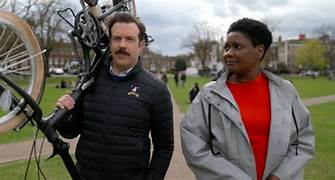
Though a fan of Jason Sudeikis, I was definitely a late-comer to his Apple TV show, “Ted Lasso.” I would describe it as a “dramedy,” a comedic drama, with the main character making obscure 1980’s and 1990’s references when dealing with the serious issues of mental health. I have watched the series twice now, and could probably watch it again, still learning things that I had missed the first two times watching it. For instance, you may not be aware that the books that Coach Beard is reading, make reference to the subject of that episode.
Lasso could be described as simplistic, optimistic, with a touch of “redneck Confucius.” Crossroads faced, odds overcome, and personality battles occur at a furious pace with the viewers likely thinking a different obvious solution, which after addressed by Lasso, leave us thinking, we might just be wrong in our thinking.

There are situations that I will remember from the first two seasons, one deals with a decision by the character Keeley Jones, who is given an opportunity to run her own public relations firm. The conflict for Jones, is that means she has to give notice to her boss, who just happens to be her best friend. Stressed by not wanting to disappoint her “boss,” she is given the advice, “a good mentor hopes you move on. A great mentor knows you will move on.” This is such a great quote that I have repeatedly shared with my daughters frequently, so that when the time comes, they should accept with pride, advancements in their careers that I know they will work hard for.
Another moment comes between Lasso and the soccer team’s shrink. The coach himself had begun seeing her for his own issues. Just as he had begun realizing the many things that weigh him down emotionally, the doctor informs him that she is moving on to another team. Lasso wants to organize a “going away” party and gift, but she pulls the rug from under him by leaving early, leaving him quite upset.
He finally finds the doctor and admonishes her for leaving him behind. He felt she was finally helping him, and now she was leaving him. As it turns out, just like his father, just like his wife. Don’t worry, I won’t spoil what happened with them. The point is, he struggled with what he considered abandonment. Was it these issues that made Ted Lasso tick and hence gave him the mechanism to react with bumpkin-level stories and advice? Maybe.
Lasso brings mental health front and center in this series. And for the most part, like many, he keeps his own issues to himself, a.k.a. private. But an incident occurs, and with him being a public figure, Lasso’s own mental health comes front and center, and for the most part, still manages to keep it under wraps. Lasso ends up betrayed, and that issue becomes public, and Lasso faces something just as difficult to deal with as the issue itself. As a leader of his soccer team, and surrounded by friends, he kept a secret from all of them. And all was discovered by them, from an outside source, not Lasso himself. While some may not have been bothered by it, some did feel upset that Lasso did not feel that he could confide in them for support. And that really is a big deal, whether a friend or relative.
I occasionally find myself being ridiculed about the disregard for my privacy, whether it be “Paul’s Heart” or social media. But I have reasons for being the way that I am. Not only do I benefit from those around me knowing what I am going through, all know that they are hearing straight from the source, commonly known as “controlling the narrative.” There is also another reason I do what I do. Whether it is cancer, adoption, or divorce/custody, and I know the struggles of all of these issues, if my story can help even just one person, then me exposing my privacy was worth it. I will never discover a cure or invent anything. But if this is how I can make a difference, then this is how I will do it.
Perhaps the greatest scene of the whole series, Lasso invokes a quote from poet Walt Wittman. “Be curious, not judgmental.” Memories of being picked on by others, he noted, were never curious about him. Had these others known anything about him, they might feel differently if they chose to get to know him. Instead they chose to just make assumptions about him and others. And because people make these assumptions, it leads to those people underestimating their target. Because all they had to do is ask him questions, be curious, and they would have discovered they might want to reconsider their behavior. “Be curious, not judgmental.” So many in my life could have learned that lesson, even some close to me. Because in the end, here I stand. And so did Lasso.
Truth is, there is likely something in the show Ted Lasso that many of us can relate to on a personal level. And when we see the results, as simple as they may be, the answers might just be what we were looking for.
 Paul's Heart